According to tradition they are eaten on Holy Saturday for lunch. But the elderly remember that their grandparents in ancient times they ate them on Saturday evening, when the bells were untied, tied after Mass in Cena Domini on Holy Thursday, so that they would not play even in the rushing wind, to honor the death of Jesus, whose sound announced to all the faithful the resurrection of Christ.
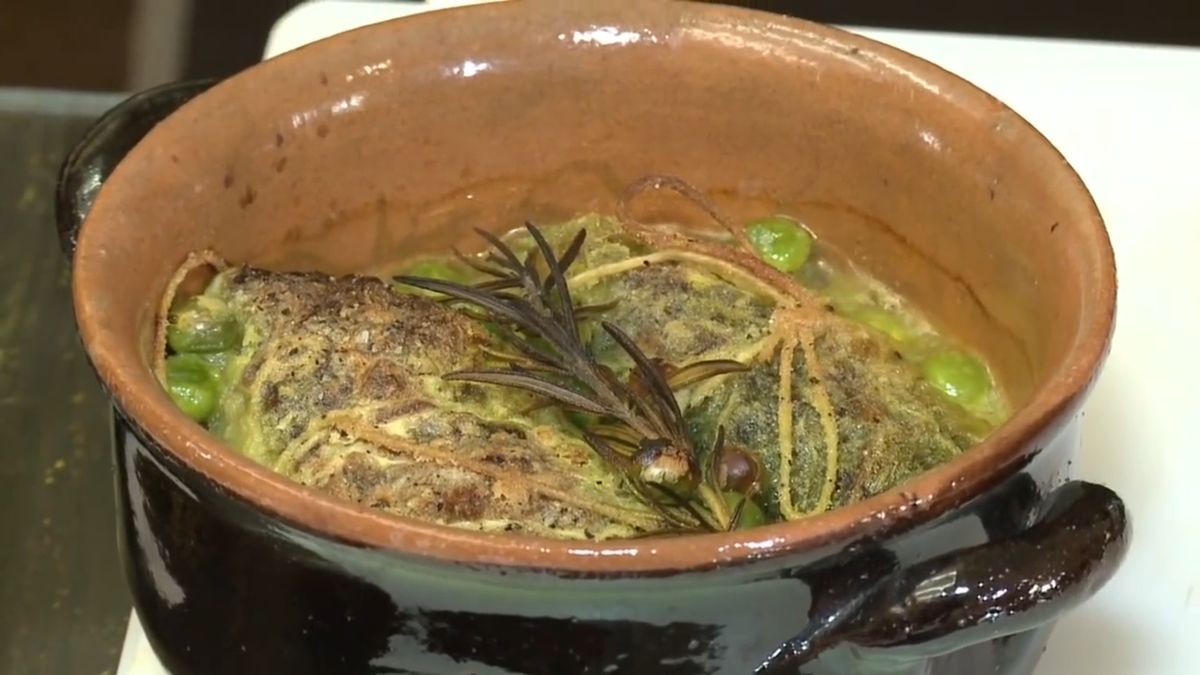
That joyful party sound it was the signal that one could “camarare”, that is, after the fasting period one could eat meat or fats. And the protagonist of this gastronomic moment that brought together all the families in Ragusa were the Turciniuna. There is no table in Sicily where lamb is not present for Easter, cooked in the oven, in a pan, on the grill, "abbuttunatu", "aggrassatu" and many other ways yet, but the Turciniuna, a dish for strong stomachs, they bring with them the authentic flavors of the peasant world, of ancient rites and traditions of the countryside people. Composed by lamb entrails (heart, lungs, kidneys and liver) the “turciniuna” which literally means “twisted”, which on the whole they recall the palermitan stigghiola, even if of course they are distinguished by the content and the way of cooking, they require a long preparation. It begins with Thursday when the lamb is slaughtered. Then the intestines are cleaned and left to macerate with parsley, salt, onion, pepper and spices. Some add wine, preferably white. With the innards, wrapped in coratella (calia or retina) rolls are made with cheese (strictly Ragusano) which are then baked on a Saturday in a wood-burning oven or on the grill. In short, a dish that comes from history and which today is increasingly rarely seen on tables and is in danger of disappearing.
La The tradition of killing the lamb at Passover is first of all linked to the Jewish religious holiday. The Jews used to eat lamb during Pesach, a holiday that coincides with the Christian Easter to celebrate the night in which God freed the Jews from Egypt by killing the firstborn of all those families whose houses had not been marked with the blood of a sacrificed lamb.
The reasons for the consumption of lamb meat for the Christian tradition are completely different. The lamb, for the Christian religion is the symbol of sacrifice par excellence refers to Jesus Christ in his role of sacrificial victim for the redemption of humanity's sins. John the Baptist welcomes Jesus with these words: "Behold the Lamb of God, who takes away the sin of the world", highlighting the sacrificial role for the redemption of humanity. And the lamb is seen as a symbol of purity, innocence but also fragility. So, for Christians, eating lamb at Easter was a way of proposing the sacrifice of the son of God made man. Indeed, according to an ancient belief, Jesus at the last supper would have consumed lamb meat following the Jewish tradition but in 2005 Benedict XVI denied this thesis by clarifying and contradicting centuries-old beliefs. It should be added that in recent years, it has developed a growing food awareness of the suffering faced by young lambs taken 20 days old from their mothers and their conditions of transport and slaughter.
The recipe of the "Turciniuna" from the Iblei mountains
Ingredients:
1,5 Kg between Liver, Lung, Heart of Lamb
gr. 500 of Retina (calia) and Lamb Tripe
New onions
Ragusa horse cheese
Parsley
Herbs
Chilli
White wine
Procedure:
Thoroughly wash the innards, rubbing them with salt and lemon. Cut the net into squares of 10 cm per side and the tripe a little smaller.
Cut the liver, lung, heart into small pieces and salt everything. Cut the Cacio Cavallo into strips
Now proceed in layers by superimposing tripe, liver, lung, Cacio Cavallo, onion, parsley, closing everything like a roll with a net.
Pour the oil into a pan and place the turciniuni on a bed of sliced onion. Cover everything with the rest of the onions. Drizzle with white wine
Salt and cook. Cooking can be done both on the fire and in the oven.