Has its roots in history, in the streets of its villages and towns, from the sea to the mountains, the Carnival in Friuli Venezia Giulia. Celebrations with an ancient flavor: carved and painted wooden masks, parades of allegorical floats, folk dances between Sappada, Sauris, Resia, Trieste and Muggia, in Carnia, in the Natisone Valleys, in the Carso and in Monfalcone: every city, each village claims an original authenticity of its ritual traditions which from folklore extend to the cuisine and its gastronomic specialties. And in all families these days leafing through old cookbooks to prepare sweet and savory desserts that will accompany the celebrations throughout the carnival period.
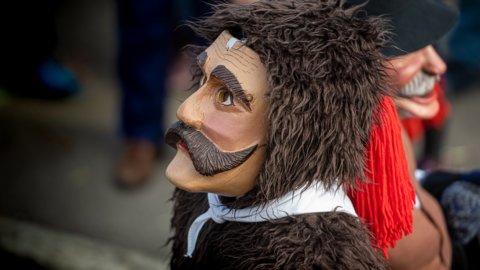
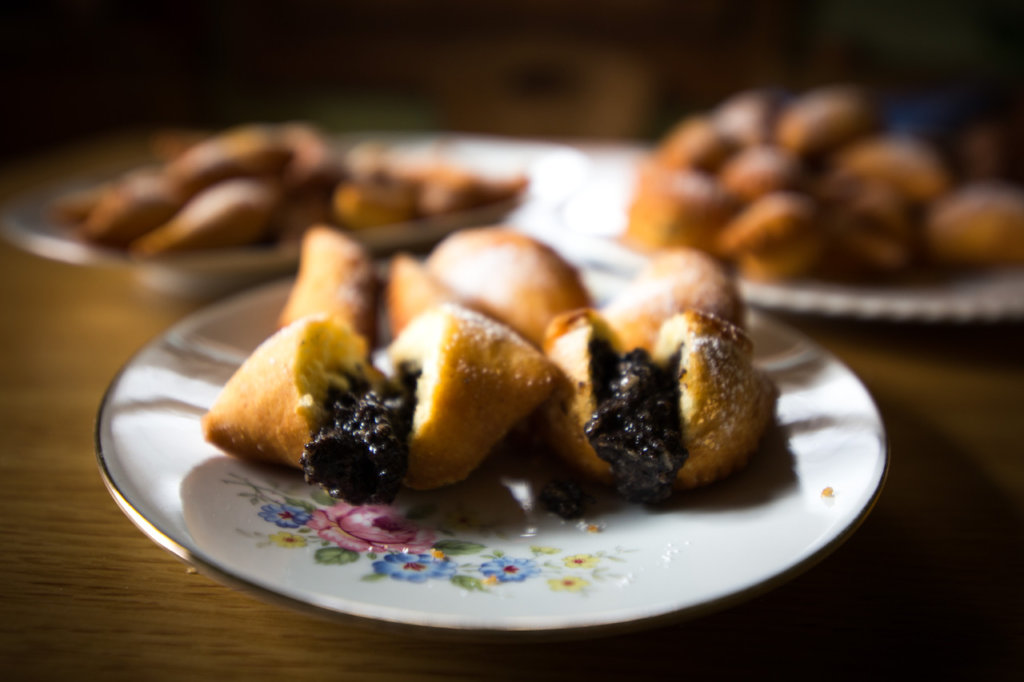
A Sappada/Plodn, linguistic island of German origin are the absolute protagonists the wooden masks carved by local craftsmen and handed down from generation to generation. The celebrations of the Carnival of Sappada take place as in the past on the three Sundays preceding Lent, dedicated to the three different classes of society: the "Sunday of the poor" (pèttlar sunntach), in which it is customary to wear humble clothes and carry out the humblest to earn a living; the "Sunday of the peasants" (paurn sunntach) which recalls the ancient agricultural works and the "Sunday of the gentlemen" (hearn Sunntach), an expression of the wealthy class and an occasion to show off the most refined costumes. In this period you can taste mogn kropfen and rabbit orecchiette. Finally, there are the krischkilan and the muttn, local variants of crostoli and castagnole. The mogn kropfen are delicious stuffed and fried tortelli that are distributed by the Rollates – the undisputed protagonist of the sappadine masks – during the parades. These particular pancakes hide a filling of poppy seeds and honey. There is also a simple version of fried ravioli without filling which is called hosenearlan, since the shape resembles rabbit ears (hosen).
From the old recipe books come orecchiette di rabbit, mogn kropfen, vledlan, sope and bujarnik, strucchi and gubana
A Sauris/Zahre, village nestled in the Carnic Alps, the tradition linked to the Carnival is among the most deeply rooted in the Alps: the protagonists of the festival are the Rölar (with his face covered in soot) and the "Kheirar" (with a large wooden mask). The Rölar is a magical and demonic figure, whose name derives from the Rolelan, i bells he wears around his waist, used to warn the inhabitants of the beginning of the masquerade, the Kheirar instead is the king of the masks and is in charge of carrying out the festivities. Tradition provides for the preparation of vledlan (pancakes with herbs), which in the hamlet of Lateis takes the truncated form of 'vlé' (in the local Germanic language it also means flea). For the preparation of vledlan flour, sugar, eggs enriched with grappa and aromatic herbs are used, such as wild mint and sage, dried and chopped, which give the pancake a delicate and unmistakable aroma.
Once isolated between the Musi mountains to the south and the imposing Canin massif to the east and north, Resia has a very important tradition linked to the Carnival (Püst), whose fundamental element is represented by the dance performed with the typical Resian musical instruments, the cïtira (violin) and the bünkula (cello). There are two types of traditional masks: te lipe bile maškire, the beautiful white masks, with a tall hat adorned with colored paper flowers and small rattles, and the babaci/kukaci, the ugly masks. During the Püst resiano the protagonists become two very particular desserts: the sope and the bujarnik, the latter counted among the typical agri-food products of Friuli Venezia Giulia. There sope is a pancake which in the past, being a substantial dish, was prepared for new mothers. It is prepared with slices of white loaf bread and a batter with eggs, flour, liqueur, sugar and salt. The bujarnik represents a true institution in the valley and is offered in two versions: the one for the Day of the Dead (a loaf wrapped in cabbage leaves and cooked in a wood-burning oven) and the carnival version, a dough made of cornmeal and wheat , eggs, sugar, cream, apples and/or pears, dried figs, sultanas, dried fruit, yeast, wild fennel seeds, cinnamon or carob.
Parade are wooden masks handed down from generation to generation, and the Rölar with bells, a magical and demonic figure
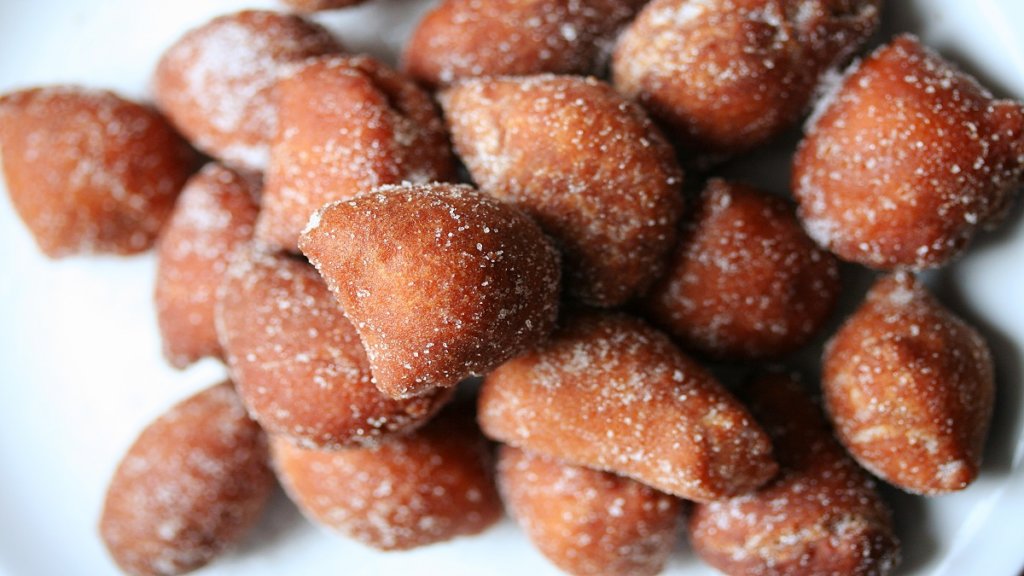
In the Natisone Valleys the Pust, a word that in the local Slovenian dialect means "joke", also directly assumes the meaning of "Carnival" and identifies the main mask of the valley carnival, protagonist of all the processions. It's about masks covered from head to toe in fluttering multicolored fringes under which cowbells are hidden which create a joyful din with every jump. Each village in the valleys has its own peculiarities and symbolic masks: the Pustje of Rodda with their bright colors and their playful impertinence, the rooster and the hen of Mersino, the Blumarji of Montefosca who, running in their white clothes, awaken the earth for spring. There are also the tin face masks of Stregna and from Montemaggiore you will not miss te liepe, the beautiful ones, with the characteristic flowery hats, finally from Clodig the spectacular wicker masks. The structure together with gubana are the typical sweets of the Natisone Valleys: soft fried bites of shortcrust pastry, containing a delicious filling rich in walnuts, hazelnuts, raisins and pine nuts. Born as a carnival sweet, in the past they were also served on the most important occasions instead of sugared almonds.
Masks and floats also parade in Opicina, on the Karst plateau a few kilometers from the center of Trieste. On Saturday afternoon the groups give life to the masked course to compete for the prize of the Carsico/Kraški Pust Carnival and then celebrate the victory with dances, music and shows. Fritters with soul (Fancli z duso) they are the protagonists at the table. The recipe originates from Contovello, a fraction of Trieste: once the "kontovelci", people of Contovello, were excellent fishermen and the women had the task of selling the catch. This is how the "frittole con anima" were born pancakes filled with salted anchovies.
Arriving at Muggia, let's discover the very ancient origins of the Muggia Carnival. The first official mention is found in the municipal statutes of 1420 in which reference is made to the reimbursement of a ducat to those companies, which would then undertake to spend at least three times as much to hire musicians. El Carneval de Muja was characterized by some customs, among which the bull hunt, of Venetian origin, and the vegetable dance, which took place on Shrove Tuesday in what is now Piazza Marconi. The women and men dance with their heads adorned with green garlands, holding in their hands a golden arch of leaves and oranges. The fashion show will take place on February 19th. Among the desserts we find the Trieste frittole, the typical sweet of the Carnival par excellence. They are "meatballs" with raisins and pine nuts, fried and in some cases filled with cream or chocolate. Crostoli also have a high position on the steps of culinary excellence in Trieste: the sweet dough that is fried is very reminiscent of the better known chiacchiere. Then there are the donuts, a sweet of Austrian origin, but which in Trieste are smaller in size.
The recipe of Mogn Krpofn (SAPPADA)
Ingredients for the dough:
4 egg yolks,
4 egg whites whipped until stiff,
4 tablespoons of sugar,
5 tablespoons of butter,
1/8 of rum,
500 gr white flour
Ingredients for the filling:
100 g of ground poppy,
100 g of carob flour,
4 tablespoons of honey,
2 spoons of jam,
Milk to taste
Procedure:
Mix the flour, eggs, sugar and a pinch of salt, make a hole in the center of the dough and insert the butter, egg whites and rum. Mix everything by hand until you get a smooth and soft dough. Roll out the dough and make 10 cm circles (or rhombuses). Fill the circles with the filling, close in a semicircle and compress the edges. Then fry in boiling oil and garnish with icing sugar
Strucchi recipe (VALLI DEL NATISONE)
Ingredients for the dough:
250 g. of flour, 1 coffee spoon of yeast,
75 g. of sugar, 8
0 gr. of butter,
1 egg and 1 egg yolk for the dough, 1 egg,
1 vanilla,
grated peel of 1/2 lemon (untreated),
warm milk to taste,
Salt to taste,
fry oil.
Ingredients
For the filling:
250 g of shelled walnuts,
300 g of sultanas,
50 g of pine nuts,
100 g of lemon verbena,
150 g of almonds or hazelnuts,
50 g of dark chocolate,
cinnamon,
1 small glass of rum,
1 small glass of pomace grappa,
1/2 glass of breadcrumbs.
Procedure:
Roll out half of the dough to obtain a thin sheet, place a teaspoon of filling evenly spaced on the rolled out dough, wet all the edges with the beaten egg white, so that the dough adheres better, cover with the other half, press down on all the edges , cut with the pastry wheel along all the edges. Fry the strucchi in boiling oil until they turn golden on both sides. Remove them from the pan, put them in a bowl and sugar them.