After i vineyards of Pompeii and Boscoreale, of the archaeological areas of Stabia, after the vineyard of Vigna Barberini, on the Palatine Hill, in the heart of the Colosseum archaeological park, dopo the oil of ancient Pompeii bottled to support the candidacy of Italian cuisine as a UNESCO heritage site and the cultivation of cereals, einkorn and Piave wheat in the archaeological area of Altino (Venice), from now on you can taste it the oil of the ancient Greeks of the archaeological park of Selinunte
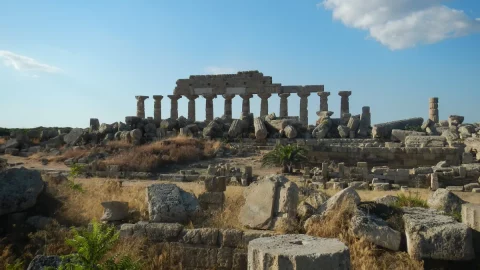
A product that will be certified organic and will be packaged in tins bearing the words "oil from monumental olive groves". The operation of caring for and restoring the productivity of these centuries-old trees is lCentonze farm in Castelvetrano which has put the olive trees back into production since last year Nocellara del Belice cultivar and who obtained the assignment of management of the olive grove for six years. The olive grove of the ruins of Selinunte is spread over three plots for a total of 18 hectares which are home to 1.500 trees and they needed radical intervention regarding the cleaning of the area from trunks and dry branches and pruning. “For us, cultivating the olive trees of the archaeological park is like closing a supply chain” – explains Nino Centonze – “precisely because inside our company, a few kilometers from Selinunte, there are the quatomies from where the rock for the temples was extracted. This is how we combine a good product by also offering our customers a visit to this extraordinary area."
Not just oil, ancient grains such as Tumminia, Mallorca, Perciasacchi are also planted
In the largest archaeological park in Europe, initiatives to bring uncultivated green spaces back into production have been multiplying for years. Large lots of arable land in the Malophoros area are managed by the “GP Ballatore” consortium and guarded by the Castelvetranese miller Filippo Drago who has planted ancient grains (tumminia, maiorca, perciasacchi) to then make Selinunte brand flour and pasta. For a year, however, space has also been given to beekeeper Vito Salluzzo who has placed 40 hives of bees inside the Park.
Similar the undertaking was also carried out in the Archaeological Park of Segesta which is 60 kilometers from that of Selinunte.
They were collected in Segesta 300 kilos of olives from which 100 liters of oil were obtained. This is the fruit of 25 olive trees that were in a state of abandonment and which from this year, thanks to the attention of the director of the Park, Rossella Giglio, have been cared for and "made profitable" in the logic of recovery and protection of that landscape which, together with the monumental remains, contributes to making the area archaeological site of Segesta, a place of timeless beauty.
The first 300 kilos of olives from the Segesta Archaeological Park produced 100 liters of oil
“Our archaeological parks – underlines the councilor for Cultural Heritage, Alberto Samonà – are located in environmental contexts that time seems not to have changed. Today the visitor has the opportunity to discover unique places in the world where archeology and landscape become one. The recovery, not only of the monumental heritage but also of the environmental one, is a sign of the attention that the management of the Segesta Archaeological Park, in line with the guidelines of the regional government, is paying to the landscape context, gradually recovering its full usability and beauty. After the wheat of Selinunte, the wine and the oil of the Park of the Valley of the Temples of Agrigento, the oil of Segesta represents the sign of a new look, through the recovery of an agricultural dimension of the territory, which is also told to us by history".