Libum, the savory cheese-and-flour focaccia from ancient Rome, used as a ritual bread, a sacred offering to the gods, and later entered everyday cuisine (baked on a bed of bay leaves and often served with a drizzle of honey). Its original recipe was handed down by Marcus Porcius Cato in his treatise De Agri Cultura (On Agriculture Culture), is making a comeback in the kitchen of Davide Pulejo, the Roman Michelin-starred chef who presented it at the Roma Bar Show in a culinary and mixology pairing inspired by the gastronomic culture of ancient Rome. The chef and maître d' and sommelier Gianluca Tronci created a pairing based on ingredients and botanicals from Lazio, a dessert inspired by an ancient Roman preparation combined with a cocktail based on a Lazio vermouth.
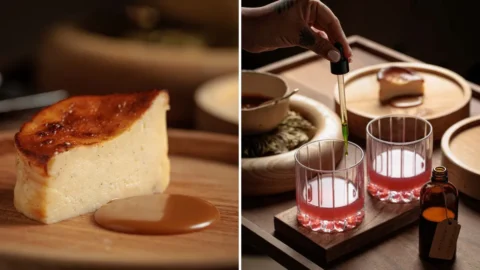
Libum is a contemporary reinterpretation of the ancient Roman dish of the same name: a focaccia made with sheep's cheese, traditionally baked on bay leaves. A recipe of rural origins, Davide Puleio reinterprets this dessert with a texture reminiscent of cheesecake. Sheep's cheese, eggs, and vanilla define its texture and flavor, in a naturally gluten-free recipe.
Pairing Libum, maître d' and sommelier Gianluca Tronci creates a cocktail made with strawberry grape extract, Tenimenti Marotta's winemaker vermouth, and drops of bay leaf oil, prepared and mixed right in the dining room. The vermouth, produced in Sabina, is made from 100% Malvasia Puntinata, flavored with local botanicals and an infusion of dried olive leaves, which characterizes its vegetal profile and elegant, bitter finish. In the drink, the freshness and fruitiness of the strawberry grape meet the herbaceous, bitter texture of the vermouth, while the bay leaf oil closes the sip with a lingering aromatic note. This pairing is designed to complement the lactic acid and smoothness of the dessert, bringing the ingredients and aromas that inspired the recipe to the glass.
"The theme of memory is central, both for the sensorial evocation the dishes aim to convey and for the intent to 'bring home' by welcoming diners in a warm and familiar environment," says Davide Pulejo, who took his first steps in high-level cuisine at Il Convivio Troiani in Rome, then went on to gain important experiences abroad, in London and then at Noma in Copenhagen, in Milan at the restaurant L'Alchimia, before returning to his native Rome, where the restaurant that bears his name earned its first Michelin star four years ago.
According to the Chronicle, Marco Porcio Cato in De Agri cultura also provided the original recipe for Libum: Libum hoc modo facito. Casei P. The well disterat in mortar. Ubi bene distriverit, farinae siligineae libram aut, si voles tenerius esse, selibram similaginis eodem indito permiscetoque cum caseo bene. Ovum unum adito et una permisceto bene. Inde panem facito, folia subdito, in foco calda sub testu coquito soniter. (Translation: The libum is made like this: Crush two pounds of cheese well in a mortar. Once they are well reduced to crumbs, add a pound of soft wheat flour, or half a pound of similar flour if you want it softer, and mix it into the cheese. Add an egg and mix well. With this mixture, make a loaf: place bay leaves underneath and cook slowly under the pan on a hot hearth.)