Giuseppe Tomasi di Lampedusa, in his celebrated novel The Leopard, describes it thus: "The monastery of Santo Spirito was subject to a strict cloistered rule, and entry was strictly forbidden to men. Precisely for this reason, the Prince was particularly pleased to visit it, because for him, a direct descendant of the founder, exclusion did not apply, and he was jealous and childishly proud of this privilege, which he shared only with the King of Naples. (...) He enjoyed the almond biscuits that the nuns made according to centuries-old recipes."
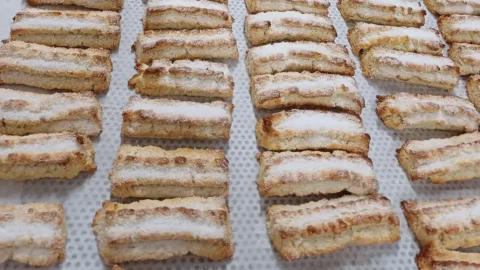
The stern prince's desire was for the Biscotti Ricci (Ribbed Cookies), which the Benedictine nuns of the Convent of the Most Holy Rosary in Palma di Montechiaro, a small town in the province of Agrigento, Sicily, secretly prepared in their kitchens. They sold them to the public only through the "rota degli ritrovati" (the wheel of the foundlings), the anonymous reception area for unwanted children, who received orders from behind a gate. It worked like this: anyone wishing to purchase these exquisite cookies rang an outside bell, and a nun from behind the gate would shortly answer and take their order. A short wait later, and the cookies, carefully packaged on trays, were delivered through the wheel.
These delicious sweets are ancient, as the production of these almond biscuits dates back to the mid-17th century, when the nuns of the monastery invented this recipe to celebrate the visit of Duke Giulio Tomasi di Lampedusa, ancestor of the author of the famous novel. The monastery, subject to strict cloistered rules that prohibited men from entering, made an exception for the Prince, a privilege that, as the novel recounts, was a source of pride for him. During his visits, the nuns would bake almond biscuits for him, following a local tradition.
The Gattopardo's sea urchins are a testament to how monastic cuisine has influenced Sicilian confectionery tradition. In December 2023, they were officially registered in the REI (Register of Intangible Heritage of Sicily), thus solemnizing a religious custom as an expression of a unique interaction between the monastic and lay communities.
In Palma di Montechiaro, several pastry shops now sell Ricci del Gattopardo, but only one woman holds the secret to the cloistered nuns' authentic recipe. Her name is Concetta Marino, who opened a pastry shop on Via Pietro Nenni and told her story to the newspaper La Sicilia.
The sixth in a large family of 12 children, at the age of 8 and a half, her parents sent her along with two of her younger sisters to the Benedictine convent. Life was, of course, very strict behind those impenetrable walls: "We couldn't do anything, not go out, not even wander around the convent, not even look out the window," she explains. She remained there until eighth grade. A nun, Sister Maria Giannina, took a liking to her and took her to the convent's pastry shop. Little Concetta was immediately fascinated by that world of aromas and flavors. And when she had to leave the convent, she began attending professional pastry courses. And today, Concetta is the sole heir to the secrets of the convent sweets of Palma di Montechiaro, which she sells in her pastry shop.
Even if the secret remains, there is a recipe to make Ricci del Gattopardo at home, here it is.
THE RECIPE FOR ALMOND URCHINS
Ingredients
400 g of Agrigento almond flour
400 g of white granulated sugar
4 whole fresh eggs
the grated rind of one lemon
Method
Mix the almond flour, sugar, and grated lemon zest together in a bowl, adding the whole eggs one at a time. Continue kneading with your hands, or using a stand mixer, until the mixture is smooth and consistent. Pour the mixture into a piping bag or use a cookie cutter. Create logs of dough about 8 centimeters long, leaving space between each one. Finally, sprinkle with granulated sugar and bake in a preheated oven at 180°C (10°F) for at least XNUMX minutes, until golden brown.