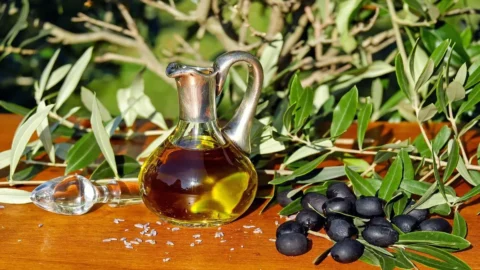
Circa 700 realities including oil mills, farms and oil mills, 1300 oils tasted throughout Italy, of which over a thousand were reviewed: it is the snapshot of a lively sector which is registering many innovations with an increasingly significant number of companies certifying the entire supply chain as organic, the one which arises from Guide to Extra Virgin Olive Oils 2024, drawn up by Slow Food Italia.
To tell stories of oils, territories, producers that make the olive sector a distinctive and identifying element of our Peninsula, an extraordinary relationship between biodiversity, agricultural and cultural landscape that makesItaly is the country with the greatest crop variety in the world and one of the largest producers of quality EVO oil, one committed network of 125 collaborators, “who are not just expert tasters, but people present in the area, who know the companies from the olive grove to the bottle”.
The number of companies that certify the entire supply chain as organic is increasing
A union which, however, will be interrupted - warn the editors of the Slow Food Guide - if quality production enters into crisis in favor of super-intensive agriculture models, based on the excessive use of natural resources, on the reduction of costs and on the of profit as the sole objective. “Small-scale non-intensive olive growing – we read in the Guide – is going through a difficult time, due to the climate crisis, high production costs and lack of personnel. In some Italian regions, the countryside is becoming depopulated, the innermost territories are abandoned, hydrogeological instability phenomena are increasingly frequent and the environment is highly threatened. We are aware of this urgency and we can save our landscapes through sustainable olive growing, promoting environmentally friendly practices, and at the same time safeguard the production and maintenance of local communities. The promotion of the Italian olive heritage remains the main mission of Slow Food, every year, with the publication of the Guide to Extra Virgin Olive Oils, increasingly aimed at creating relationships: between producers and citizens, between places and products.
The 2024 edition of the Slow Food Guide awarded several awards: the snail highlights the companies (43) that stand out for the way they interpret the production values (organoleptic, territorial and environmental) in harmony with the Slow Food philosophy; the Great Oil (80) it is attributed to extra virgin olive oils that have stood out for particular qualities from an organoleptic point of view and because they reflect the territory and cultivar well. With these characteristics, the Grande Olio Slow award (104) adds the recognition dedicated to applied sustainable agronomic practicesAnd. The Guide also seeks to be an invitation to visit these realities to meet the producers and discover the olive growing heritage: for this reason it highlights the companies that offer catering (102) and those with the possibility of overnight stays (144).
Two curiosities that can be found among the pages of the Guide: for the first time, companies from Piedmont are reviewed; on two occasions national borders are crossed to try to understand what is happening in the nearby areas of the Canton of Ticino, in Switzerland, and Slovenia. As has become customary for some editions, the national presentation of the new edition of the Guide to Extra Virgin Olive Oils is also an opportunity to award some special recognitions, in addition to the prizes.
The special prize dedicated to the memory of Diego Soracco, active leader of Slow Food for many years curator of the Guide, went to the "stubbornness" of Nico Sartori, owner of the Fattoria Altomena company in Pelago (Fi) "because since he arrived from Veneto , over thirty years ago, works to bring the landscape to life and counteract the widespread abandonment of olive groves in this corner of Tuscany”.
Le special mentions also awarded figures and projects that populate the Italian olive growing world and best represent Slow Food's bet on the future of Italian extra virgin olive oil and they went to: Olive Gregori (Luca and Stefano Gregori) from Montaldo delle Marche (Ap) for the organic oil from an indigenous Piceno variety (the Lea) which has now almost disappeared due to low productivity and difficulties in managing the plant ; the Toccolana product and territory community of Tocco da Casauria (Pe), which has made a community oil from centuries-old olive groves; and the monastic fraternity of Bose of Ostuni (Br) for the care of the majestic, centuries-old monumental olive trees of the Ogliarola Salentina variety, in an area that has to deal with the plague of Xylella, the company of Vincenzo Marvulli of Matera, sixty years old of care for centuries-old olive trees, mostly from the local Ogliarola del Bradano, grown on stony and calcareous soils, recovered and cultivated without any chemical intervention of pesticides and fertilizers; and Cab Terra di Brisighella (Ra) for having managed to obtain the oil from the Centuries-Old Olive Trees Presidium even in this difficult year, when the flood that hit Romagna hit the Brisighella area with numerous landslides.
Extra virgin olive oils awarded with the Slow Food Snails
Abruzzo
Tommaso Masciantonio – Casoli (CH)
Davide Iacovella – Chieti
Mercurius oil mill – Penne (PE)
Giulio's Gardens – Tocco da Casauria (PE)
Calabria
Torchia oil mill – Tiriolo (CZ)
Campania
Maria Ianniciello – Grottaminarda (AV)
Lands of Molinara – Molinara (BN)
Emilia Romagna and Lombardy
Tenuta San Giuseppe – Saludecio (RN)
Liguria
Pedro Oil – Pietra Ligure (SV)
Lazio
Etruscan Hills – Blera (VT)
Women's Gold – Marino (RM)
Sciuga – Il Molino – Montefiascone (VT)
Silvi Sabina Sapori – Palombara Sabina (RM)
Paola Orsini – Priverno (LT)
Brands
Fiorano – Cossignano (AP)
Barbara Pacioni – Montegranaro (FM)
Paola and Tiziano Aleandri – Offida (AP)
Agrobiological Foglini Amurri – Petritoli (FM)
The Three Rows – Recanati (MC)
Molise
Giorgio Tamaro – Termoli (CB)
Sacred Land – Termoli (CB)
Puglia
De Carlo – Bitritto (BA)
Vallillo – Serracapriola (FG)
Sardinia
Antonella Anna Maria Orrù – Siamaggiore (OR)
Masoni Becciu – Villacidro (CA)
Sicilia
Terraliva – Buccheri (SR)
Vernera – Buccheri (SR)
Agrobiologica Rosso – Chiaramonte Gulfi (RG)
Titone – Misiliscemi (TP)
Vincenzo Signorelli – Nicolosi (CT)
Cavasecca Estate – Syracuse
Toscana
At the Camellias – Capannori (LU)
Lenzini Estate – Capannori (LU)
Stefano Spinelli – Lamporecchio (PT)
Altomena Farm – Pelago (FI)
Val di Lama – Pontedera (PI)
Lugudoro – San Vincenzo (LI)
Trentino Alto Adige
Laghel7 – Archo (TN)
Maso Bòtes – Arco (TN)
Umbria
Marfuga – Campello sul Clitunno (PG)
Le Pietraie – Città di Castello (PG)
Fontanaro – Paciano (PG)
Veneto
La Contarina – Illasi (VR)