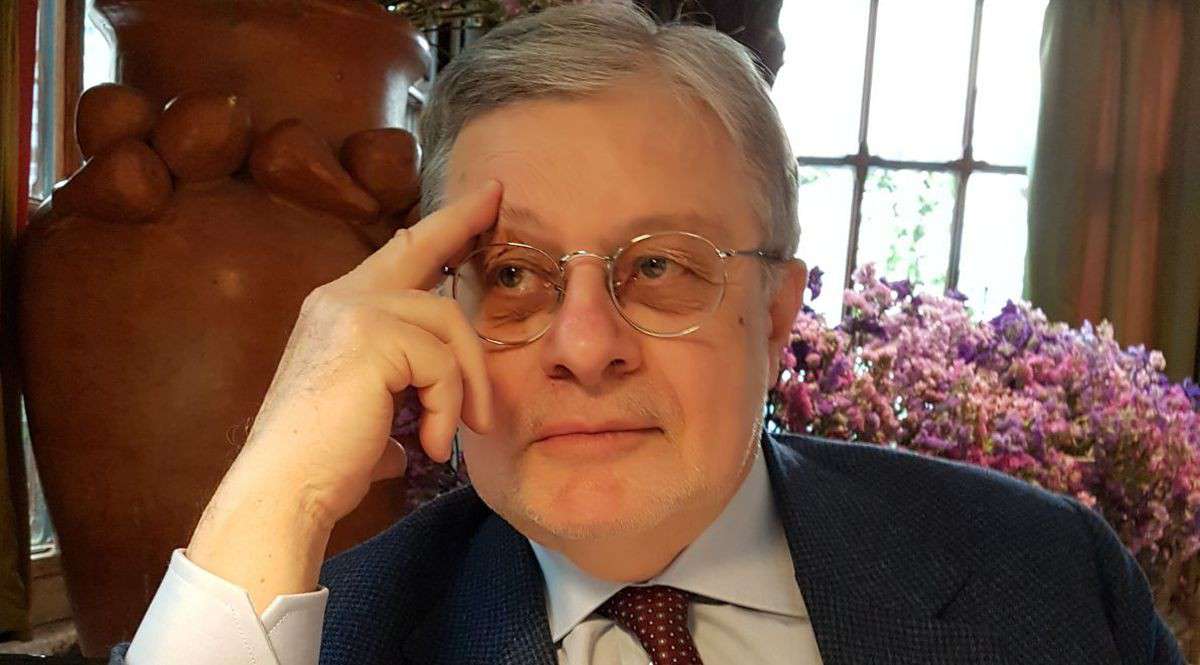
"In Milan, we're not experiencing a repeat of Tangentopoli. In February 1992, Mario Chiesa was caught red-handed with bribe money in his hand; corruption was palpable, and the problem of illicit party financing was devastating. Today, the prosecutor's office is investigating allegations of "uncontrolled real estate expansion" and forms of "circular corruption," but there's no certainty about the crimes so far. Back then, it was a tragedy; today, it resembles a farce." The speaker is Piero Borghini, former mayor of Milan in the early 90s, right on the eve of the Tangentopoli scandal, and today a disillusioned reformist but open supporter of Mayor Sala: he has great respect for the judiciary, but rejects the judicial republic that seeks to steal politics's job. In this interview with FIRSTonline, Borghini doesn't shy away from the political considerations raised by the Milan investigation, and he doesn't mince his words with the Democratic Party, and even more so, the Five Star Movement. Here are his thoughts.
Borghini, the prosecutor's investigation into alleged "circular corruption" linked to the real estate boom, with Mayor Sala's inclusion in the register of suspects and the request for house arrest by the Urban Planning Councilor and the real estate kingpin, was and is a shock to Milan. Assuming that due process must also apply in this instance, have we returned to the Tangentopoli era of the early 1990s? What is similar and what is different from then?
No, this isn't a repeat of Tangentopoli. Tangentopoli was a tragedy; today's case in Milan, as far as we know, seems like a farce. The only similarity is that today, like yesterday, the judicial Republic seems to be asserting itself due to the weakness of politics, but otherwise, the two cases are not comparable. Behind Tangentopoli lay a very large problem—illegal party financing—to which politics failed to provide an effective response, paving the way for the collapse of the First Republic. In February 92, Mario Chiesa, whom Craxi himself called a "rogue," was caught red-handed with bribe money in his hand. The corruption was palpable. Today, we are facing a different horizon. Back then, corruption was real; today, it remains to be proven.
And why on earth would we be in this farce?
"Why is the judiciary today challenging 'uncontrolled real estate expansion,' but where is the crime? It's not up to the judiciary, but to politicians, to regulate the expansion of a metropolitan city. The judiciary is right to ascertain whether there are crimes and to punish them harshly, but for now – from what has emerged from the investigation by the Prosecutor's Office – I don't see any certain facts, but literary suggestions."
Don't you think that the enormous real estate expansion and significant influx of money that has circulated in Milan in recent years around real estate have ended up eroding anti-corruption measures and fueling the arrogance of builders, real estate developers, and star architects towards the municipal administration, as seems to emerge from the initial wiretaps of the prosecutor's investigation?
What you mention are serious problems, but they must be placed in a broader context. The starting point is that, after the resounding success of Expo 2015, Milan embarked on a path of globalization and became a truly global city, capable of attracting ever-increasing investment, but primarily based on real estate investments and the growth of tourism. Milan's critical point was and remains the failed marriage between research and industry, although it should not be forgotten that the Expo's main legacy was the creation of the Human Technopole in Milan, Italy's most important research center.
Borghini, your analyses of Milan's development are very interesting, but they're not enough to address the poison of corruption, if and when it arises.
I certainly don't want to shy away from the issue, and as I said before, the judiciary is right to investigate whether corruption is emerging, whether crimes are being committed, and to arrest the culprits. But it's to be hoped that it doesn't interpret reality through ideological lenses and doesn't encroach on politics. What does it mean that Milan's real estate expansion is uncontrolled? Milan has chosen to grow vertically, and it has chosen to expand into the surrounding municipalities of the metropolitan city: where is the crime? There's a planning law that regulates investments. Is there arrogance among professionals and real estate developers? Perhaps, and this too is the result of the lack of adequate industrial backbone. But we expect the judiciary to identify and prosecute crimes, if any, not literary and sociological analyses. Crimes are one thing, opinions are another.
However, the fact that there were some doubts surrounding Milan's real estate boom had already come to light with the tormented parliamentary affair of the "Save Milan" decree: was it a mistake to conceive of such an amnesty measure or to withdraw it?
That measure wasn't an amnesty but an interpretative law, drafted by jurists and experts in the field, of an antiquated urban planning law that required adequate clarification. The mistake, as I explained to Mayor Sala, wasn't in presenting the so-called 'Save Milan' bill, which had already been approved by one of the two houses of Parliament, but in withdrawing it. The task of politicians is to make clear laws that don't hinder development and reduce the risk of corruption.
Mayor Sala expressed his shock at the Milan Prosecutor's Office investigation and distanced himself from it, arguing that his interpretation of the facts differs from that of the magistrates. How do you assess the mayor's behavior, and what should he do to defend his reputation and that of the city? Resist or resign?
Resist, without a doubt. It would be absurd for the mayor of Milan, a leader of the center-left, to be turned into a lame duck by a judicial investigation that is only just beginning and has so far proven nothing. If anything, Sala's problem is finding the energy to address the real problems of Milan, which has become a global city but with Italian wages, and to implement effective policies in the areas of social housing and modern urban planning.
Some people link the Loro Piana case to the investigation into the real estate boom, arguing that the Milan Prosecutor's Office has rediscovered a role that, beyond the necessary investigation and prosecution of potential crimes, can interfere in Milan's administrative and political life. Is this a real threat or an unfounded suspicion?
"It must be acknowledged that the Milan Prosecutor's Office is staffed by serious and competent magistrates, but judicial protagonism is always harmful and can cause damage. I hope that wisdom and balanced judgment prevail."
Expo 2015, thanks to Mayor Sala's excellent work, was the launching pad for the Milan model—a combination of public and private sectors geared toward speed of decision-making and efficiency. However, in recent years, this model has seemed to lose momentum. Will the prosecutor's investigation, and the shadows it casts over the real estate boom, undermine the Milan model or provide an opportunity to rethink it? In which direction?
Milan is a unique metropolitan area in Italy and the world, requiring intelligent and continually updated policies. There's no doubt that the so-called Milan model is currently in trouble, not because of the prosecutor's investigation, but because of underlying problems such as the lack of an adequate industrial presence. The question is: how to develop modern and effective training for workers, how to attract talented people, and how to connect all this to industry. This is why attractive and welcoming social housing is essential, and why I hope Mayor Sala has the strength to face this challenge.
The Milanese right, but not Prime Minister Meloni, and the Five Star Movement are calling for the resignation of Mayor Sala without waiting for the conclusions of the judicial investigation and in a few months there will be elections in six very important regions of the country: what political effects could the Milan case have and how should the centre-left respond to the right-wing attack?
The Democratic Party, the main center-left party in Milan, must step up and defend Mayor Sala without any ifs or buts, without repeating the mistake it made in 1993 when, at the outbreak of Tangentopoli, it refused to defend the civic-minded city council I had the honor of leading, paving the way for the right-wing coalition that then governed Milan for twenty years. I hope the Democratic Party doesn't repeat such a shortsighted political error as it did in '93, because it would once again open the door to the right-wing coalition, with disastrous consequences not only in Milan but likely in other parts of Italy.
But within the center-left, Giuseppe Conte wasted no time in calling for Sala's resignation...
"But is there still anyone who believes Conte is left-wing? The Five Star Movement leader is a populist playing his own game, but Milan is Five Star Movement-free because in the 2021 municipal elections, Conte's party garnered 2,78% of the vote, compared to the Democratic Party's 33,84% and Beppe Sala's mayoral list's 9,14%. Everyone knows that the Five Star Movement means nothing in Milan, and it would be truly bizarre for the Democratic Party to support them in their crazy demand for Mayor Sala's resignation."