We live in a phase, unfortunately not uncommon in human history, in which after a surge towards the new geographic and technological, we tend to withdraw into our shell. The generous hope for a better future gives way to the fear of losing what we already have. Conservation prevails, you don't want to take risks, innovation must be viewed with caution. globalization It is seen as a danger because it takes away businesses, jobs, but above all identity, culture and religion. And instead, to try to overcome this phase of defensive regression already clearly visible in many Western countries for some years and which the US president Donald Trump has exploded on a global level, we must resume calmly discussing the benefits of globalization and how to restart the process with new rules and capable of avoiding the inconveniences we have experienced in the recent past.
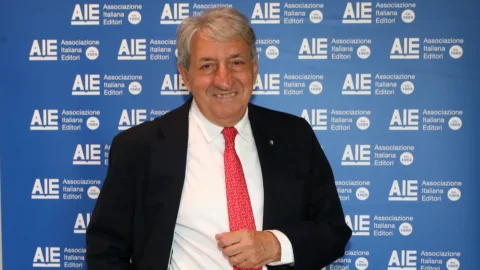
Innocent Cipolletta, economist, former president of FS and current president of the Italian Publishers Association (AIE), is not afraid to go against the grain. In his latest book, After Trump: The Future of Globalization (published by Laterza), Cipolletta explains with great clarity that the various crises are leading all countries to seek "security" replacing the objective of maximum economic efficiency inherent in the expansion of world trade. In perfect agreement with what was stated by the Governor of the Bank of Italy, Fabio Panetta, in his final final considerations, Cipolletta states that if the search for security is resolved in the obligation to bring back home the necessary productions (considered strategic), all the raw materials essential to the functioning of the economy and civil needs, in protecting one's own technologies, then there is a risk of having lower production efficiency as the specialization of the various countries that has allowed them to operate successfully on global markets is being destroyed, ultimately resulting in higher prices, worse financial conditions and thus a reduction in citizens' well-being.
The book illustrates in detail the connections between the various economic crises that have occurred since 2008, the drawbacks attributed to globalization of the social problems that have emerged in several more advanced countries, the political difficulties arising from the shortsightedness of various governments in promptly addressing crisis points, the emergence of an identitarian and nationalistic reflex among large segments of the Western population seeking protection from a world that, by moving so rapidly, was undermining absolute certainties and points of reference considered at least reliable. The return to nationalism did not begin with Trump but arose before his first presidency, both in America and in Europe.
Many factors have contributed to this change in public opinion, other than the economic question: immigration considered out of control probably had an influence, school which, despite having expanded its range of action, it did not train young people to understand and address the problems of modernity, the spread of social media which, together with the decline in traditional information, have “given new respectability to uninformed opinion” as a great American journalist said years ago.
The fact is that there has been a decline in the credibility of traditional culture (also contributed to by the collapse of political ideologies), while a progressive distrust has spread towards elites of all kinds, accused of occupying their social positions not through merit, but through various schemes. Trump (but the same thing is happening in Europe in France, Germany, and even Great Britain) has collected the resentments of all these people who have been penalised by globalisation (such as the US steelworkers) or they believe they have not had sufficient benefits from the expansion of international markets, and have channeled them towards a nationalistic policy which, in his opinion, should lead to a new golden age.
Cipolletta demonstrates that many of the accusations leveled against globalization are unfounded. No developed country has suffered an increase in unemploymentOf course, there have been changes. Some traditional jobs have disappeared, but others have been created by new companies that have grown, partly driven by production specialization. GDP has grown everywhere, although so-called Third World countries have galloped faster. But if you read the statistics carefully, you see that the absolute position of developed countries has not worsened, even though their relative position—that is, their percentage weight—has obviously decreased due to the emergence of new countries, starting with China.
We've entered a very dangerous downward spiral. The protectionism Trump has exaggerated with tariffs and other trade restrictions is leading to government intervention, which provides subsidies to companies it deems "strategic" or imposes various constraints on business freedom. The so-called "national interest" is being flaunted by everyone without clarifying what exactly it consists of and whether it makes economic as well as political sense.The suspicion is that it serves primarily the political clique, which hopes to consolidate its power in this way. The end of multilateralism and the growing nationalism of each individual state inevitably leads to an increase in conflicts, not only economic ones. Russia's aggression against Ukraine certainly isn't motivated by economic factors. But it's the exaltation of Russian nationalism that pushes dictator Putin to see himself as the restorer of Stalin's and the Tsars' empire.
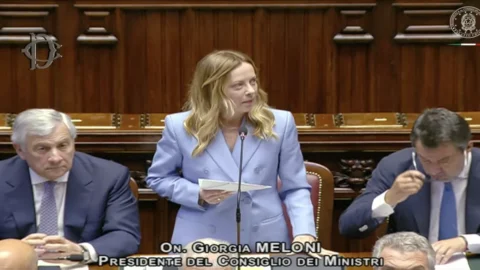
The European construction will withstand the disintegrating forces coming both from outside (the US and Russia) and from within, where in many large states, parties opposed to Brussels are at risk of winning. These parties, like our own Giorgia Meloni, refuse to hear about federalism but instead envision a free association of sovereign states with the right of veto. If such a trend were to prevail, Cipolletta argues, We will have many small countries that, unable to deal with the major world issues alone, will be seeking favors from the USA or Russia or China depending on their preferences.And this would be the freedom and independence so longed for by right-wing propagandists with the slogan "masters in our own house"!
And yet Cipolletta appears optimistic overall. It won't take long – according to his reasoning – for people to understand that identity closure leads to a general impoverishment and to the risk of political and military confrontationsThe opening of global trade in goods, but also in ideas and people, produces, as has always happened throughout human history, greater enrichment, greater tolerance, and often a more lasting peace.
Naturally, it's important to study now what corrective measures and rules are needed to ensure that the new globalization doesn't cause the crises and drawbacks of the previous one. It's difficult to say what structure of international institutions is needed to make the world market function well. However, we must start from the awareness that the crisis of internationalism is not due to the market as such, but to errors, often gross, of the political authorities. or regulations that have left individual operators the possibility of operations with absurd degrees of risk.
This is what happened with US banks and subprime securities, while few countries have passed laws to facilitate the smooth transition of workers from one job to another. Thus, in many countries, taxes and services have not been used to reduce inequality. But these are all political errors that many governments have aggravated by trying to shift the blame onto international markets or Brussels rules. which leave no alternative to the poor national governments. In short, by a paradox of history, many citizens seek refuge precisely with those national authorities that are the main architects of the current crisis.
The big question is: will the leaders of the major countries be able to understand that cooperation would be beneficial for everyone because in this way it will be easier to start a gradual reduction of global imbalances without imposing major sacrifices on anyoneOn the contrary, continuing down the path of fragmentation will certainly worsen the problems. Looking at how Trump, Putin, and Xi Jinping are moving, there's no reason to be very happy. But perhaps greater citizen education, prompted by a book like Cipolletta's, can certainly push authorities to make the right decisions.