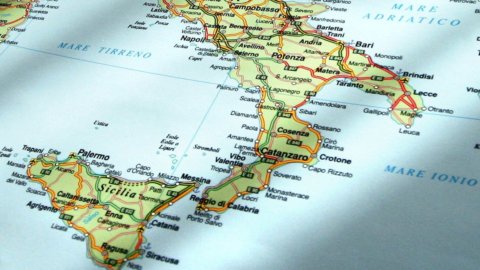
“In the decade leading up to the pandemic, the economic weight of the South was further reduced: the gap with the Center and North in terms of employment rates and per capita product has widened again and productivity levels have remained well below those of the rest of the country”. The governor of the Bank of Italy said on Monday, Ignazio Visco, at the conference to present the report "The North-South divide: economic development and public intervention”, edited by the economists of Via Nazionale.
The trend of the GDP
According to the study, in 2019 the GDP of Southern Italy was still 10% lower than in 2007. In the Centre-North, on the other hand, the gap was much lower: -2%. On average in 2020, the fall in the product was 9% in the Center and North and 8,6% in the South and Islands. However, in the fourth quarter of 2021, GDP in the Center and North had returned almost to pre-pandemic levels, while that of the South was still around one percentage point lower.
Private companies
This trend is primarily due to a “undersized production system compared to the demographic weight of the area – continued Visco – characterized by prevalence of micro-enterprises, by a specialization in services with lower added value and by a low density of manufacturing activities, which limit their access to international markets”. Dynamics which correspond to a greater dependence of the southern economy on the public sector.
In 2019 average size of firms of the South (3,2 employees) was about a third lower than that of the Centre-North. A difference that is reflected in the productivity levels average, lower by about 24% compared to the Center and North for the total economy and by almost 30% in the private sector alone.
The backwardness of southern entrepreneurship is also demonstrated by the low incidence of high tech manufacturing, which stops at 9,6%, against 19,9% in the Center and North. The gap is reflected in the investments in research and development, which in the South do not go beyond 0,96% of GDP, while in the Centre-North they reach 1,6%.
Employment and inequalities
On the labor front, the numbers are even more alarming. In 2019, only 44,5% of the population aged between 15 and 64 was employed in the South, against 66,6% in the Centre-North. Overall, between 2007 and 2019 the employment rate it grew by 1,4 points in the Center and North and decreased by 1,7 points in the South.
The gap has grown from around 7 points at the end of the 70s to 22 points recorded on the eve of the pandemic. Not only that: if we order the almost 300 regions of the European Union according to the employment rate, the largest in the South (Sicily, Campania, Calabria and Puglia) are placed in the last 10 places in the ranking.
“Labour market participation rates, especially for women, are on the same level at levels among the lowest in international comparison, even compared to the other European regions which are lagging behind in development - Visco went on - In addition to accounting for more than half of the gap in per capita product compared to the Center and North, the low levels of employment constitute the primary source of the high inequality of household incomes that characterizes the southern regions”.
In this regard, Bank of Italy estimates that an increase in employment levels in the South to the values observed in the Centre-North, in addition to reducing the income and inequality differentials between the two macro-areas, would alone be able to reduce by two percentage points the Gini index calculated for the entire country, aligning Italy with the European average.
Demography
The specter of the demographic crisis hangs over these problems: according to Istat projections cited by Bank of Italy, between 2020 and 2040 the working-age population will shrink by 14% in the Center and North (nearly 3,5 million people) e by over 24% in the South (with a decrease of about 3 million inhabitants).
According to Visco, this phenomenon is “also a reflection of a lower capacity of the southern regions to attract foreign workers and keep young people in the area. Without a marked increase in participation in the labor market, employment opportunities and productivity levels, these trends will end up further weakening the development of the South, with obvious consequences for the whole country”.