No electoral system It's perfect because there's no mechanism capable of perfectly achieving the maximum representation of the citizens' will, the foundation of democracy with maximum governability, that is, the need to manage public affairs for a time sufficient to implement the policies established by the majority. Each system arises in relation to the political and cultural context that expresses it, and generally lasts for several years, even if they often show the flaws of old age. Only in Italy in recent decades has a system changed every seven or eight years, both to address the flaws of the current system, but above all because those in government sought a system that would ensure their continued existence in power. This latter objective has never been achieved: generally, those promoting electoral law changes have subsequently lost spectacularly at the polls!
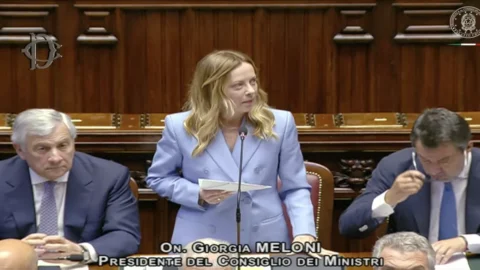
We are now faced with a new proposal put forward by the Meloni government to replace the current Rosatellum law. The aim is to ensure, through a substantial majority bonus, the coalition that secures more than 42% of the vote, the parliamentary votes needed to ensure government stability for the entire legislature. The proposal does not appear to be well-articulated: it presents significant flaws, both technical and constitutional. Controversy has erupted over preferences, which are only one aspect of the problem, and perhaps not even the most important.
Now, a comprehensive study promoted by the Astrid Foundation, chaired by Franco Bassanini—with the participation of over thirty legal and political scholars coordinated by Enzo Cheli, Stefano Passigli, and Cesare Pinelli—highlights the critical aspects of the government's proposal and clearly identifies the possible alternatives that would be more appropriate for implementing a policy capable of leading the country out of the current predicament.
We begin with the observation that majoritarian systems, at least in Italy, as well as majority bonuses, often create artificial parliamentary majorities that lack both representativeness and, above all, political cohesion, thus giving rise to weak governments incapable of making effective decisions. And this is precisely what happened in Italy after the introduction of majoritarian systems. Often, coalitions, both right-wing and left-wing, formed to win elections, subsequently showed such divergences that they brought down governments or, at best, paralyzed their action. The result of these three decades has been an overall decline in the country compared to its trading partners. Just look at the latest study released by the Parliamentary Budget Office, which shows that Italy is the only country where incomes have fallen by an average of 1,6%, while in the rest of Europe they fluctuate between a 48% increase in the United Kingdom and a 13% increase in Spain. No one has done as badly as we have. And it's not just a question of international crises because everyone has had the subprime crisis and the Covid crisis.
Thirty years ago, after the collapse of the Christian Democrats and the elimination of the K factor for the PCI, we thought the time had come to introduce the possibility of a genuine alternation in the leadership of the country. The two coalitions, one liberal-conservative and one liberal-progressive, would ensure a stable government and a possible alternation in the leadership of the country.
There has been change, but not stability. Indeed, governments have always seemed at the mercy of their extremist wings, responsible for their downfall. Berlusconi was tripped up by the League twice, in 1994 and 2011, because Bossi refused to approve fiscal consolidation policies that would have allowed for a recovery in growth. Overall, the League is the party that has caused serious damage to Italy, followed, and then overtaken a few years later, by the Five Star Movement. On the left, Prodi was brought down first by Bertinotti and then by the contradictions of such a crowded coalition, where the smallest party wielded veto power.
Essentially, the two coalitions, instead of moving toward the center, have increasingly been held hostage by their extreme wings, as is now the case with Meloni, who is heavily influenced by Salvini's League within her and by General Vannacci outside. On the left, the reformists of the Democratic Party have disappeared, while the Five Star Movement led by Conte and Avs dominate. Considering that one of the crucial issues of the coming years will be foreign policy, relations with Europe, and the need to play an active role in reforming the rules of the global economic game, one might wonder what kind of governability can be ensured by two coalitions that harbor irreconcilable disagreements on foreign policy within themselves. On the one hand, Salvini and Vannacci are unabashedly pro-Russian and anti-European, while on the other, the Five Star Movement is against rearmament and in favor of negotiations with the Russians to achieve any peace at the expense of the Ukrainians. And so are Fratoianni and Bonelli. And then let's not even talk about economic policy, security, or reforms of the functioning of the state and its local branches. Incidentally, let's remember that the Northern League minister Calderoli once promoted an electoral law he himself called "Porcellum," so flawed was it. And now we're entrusting such a person with a reform of the regions, with respect to which the Porcellum will seem like a minor hiccup!
Even the introduction of an amendment on preferences won't save Giorgia Meloni's proposed law. There are aspects of unconstitutionality regarding the level of the majority bonus, the de facto premiership that undermines the prerogatives of the President of the Republic, and other significant details. Now, it seems the majority has reached an agreement on introducing preferences (but with the top candidate blocked), which awaits review by the House of Representatives, especially in the Chamber of Deputies.