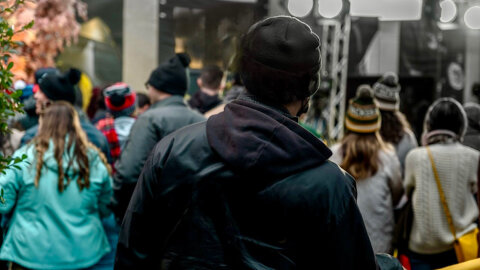
We have already talked about it in a previous article on FIRSTonline, where we highlighted how the pickpocketing is taking on increasingly complex characteristics in large Italian cities with a high cultural-tourist rate, moving from episodic manifestations of petty crime to forms of real urban organization. Cities like Rome, Milan, Florence, Venice, and Naples increasingly offer ideal breeding grounds for this type of crime: they are crowded with tourists, commuters, and anonymous spaces like subways, stations, and shopping malls. This shift reveals much about the evolution of the phenomenon: these are no longer small, improvised thefts, but planned attacks, carried out by gangs who know how to exploit tourist flows and distractions during peak periods. Pickpockets choose places where their victims feel safe—a place of worship, an art gallery, or a line to enter a museum—precisely because there, their defenses are lowered and their attention is lowered. In these environments, it's easier to blend in and act unnoticed. Crowds thus become a protection for those who steal, and a risk for those who experience them every day. Generally, multiple people monitor each other, coordinating their movements to increase their chances of success and reduce the risk of detection. Furthermore, they blend in perfectly with the crowd: they wear ordinary clothes, behave like normal tourists, carry backpacks, maps, or cameras, talk to each other, and move in small groups precisely to avoid arousing suspicion. This apparent "normality" makes them difficult to recognize at first glance, as their goal is to appear harmless and blend in with the tourist scene.
Crowds and queues: pickpocketing is changing in Venice, Florence, and Rome.
Venice, like Florence or Rome, where it's easy to find yourself queuing to visit an artistic or cultural site, is a clear example of how pickpocketing has evolved in high-density tourist environments. The constant and growing flow of visitors has forced the phenomenon to transform: what was once an occasional theft by lone thieves, easily recognizable by their suspicious behavior, now happens frequently. in a group and with coordinated strategiesPickpockets blend in with the crowd, exploit crowded places such as squares, bridges, museums and churches, and move in such a way as to make it more difficult to spot them even from a distance, increasing the effectiveness of their thefts. There's often a precise structure behind it: one person observes the victim, another distracts them, a third carries out the theft, and yet another takes care of reselling what's been stolen. In this way, theft becomes part of a small illegal economy that relies on collaboration, speed, and the ability to adapt to surveillance. These groups move between cities and learn to change techniques when the police increase surveillance.
The social roots of the problem
There are also deeper social causes behind the growing phenomenon. Unemployment, precariousness, and poverty push some people into petty crime. In many cases, these are marginalized individuals who find theft a quick way to survive. For this reason, pickpocketing cannot be seen simply as a public order problem, but as a sign of new social imbalances and a complete lack of integration.
Fear and perception of insecurity
The result is growing fear in many cities. Residents and tourists feel less safe, and this also affects the city's image and the local economy. The perception of risk is often higher than the actual numbers, but the unease remains strong and visible.
What can be done more
Authorities are increasingly responding with increased controls, patrols, and surveillance cameras, but these measures alone are not enough. The phenomenon shifts, transforms, and reappears elsewhere. A change of perspective is needed: pickpocketing is not just the act of the thief, but also a symptom of a society in which many live in conditions of exclusion and vulnerability. Truly addressing it means addressing social causes, as well as individual behavior. Organized pickpocketing is an increasingly widespread form of crime that grows with the city itself. It speaks volumes about the inequalities and frenetic pace of urban life. Understanding and combating this phenomenon ultimately means questioning what kind of city we want: a seemingly safe place, or a more just and supportive community.
Practical advice for tourists who want to visit our cities
When visiting cities, although it may seem rhetorical, it's important to remember that pickpockets are especially active in crowded places such as museums, churches, train stations, markets, or tourist areas. To reduce the risk of theft, always keep bags and backpacks closed and close to your body, preferably in front. Avoid leaving wallets or valuables in external pockets. Be careful when using your phone, documents, or money in crowds, and always remain aware of your surroundings. When waiting in line or in crowded spaces, keep bags and wallets visible and well-protected, avoiding distractions. Finally, if you notice suspicious behavior or unusual attempts to approach someone, immediately report them to security personnel or law enforcement who may be present.