The increasingly frequent heat waves (we know something about this after yet another record-breaking summer) are putting the energy system under pressure, and in particular electricity consumption, given that the use of air conditioning is in fact necessary Both at home and especially in the workplace. But beyond our health, this has a significant impact on our electricity bills, which risk ending up in our pockets. the high cost of climate change.
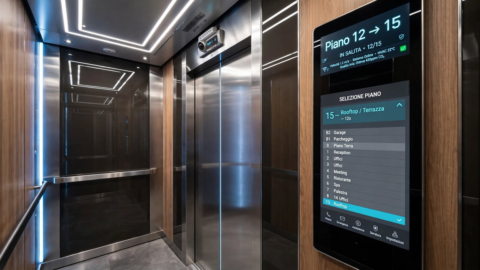
That's why it's always more urgent to identify new efficiency solutions, capable of going beyond interventions traditionally associated with thermal insulation, lighting, and air conditioning, also including other infrastructure present in buildings. Such as, for example, elevators. According to Kone, the Finnish multinational and global leader in vertical mobility, elevator modernization can in fact reduce energy consumption in buildings by up to 70%, depending on the conditions of the system and the technologies installed.
Elevators can account for up to 10% of buildings' electricity consumption
A very significant potential for savings, therefore, considering that Elevators can account for 2% to 10% of electricity consumption overall of a building: the smart elevator is a solution that also closely concerns Europe and Italy since, according to the European Environment Agency (EEA), in addition to 85% of existing buildings will still be in use in 2050, making the redevelopment of real estate assets a strategic lever for achieving greater energy efficiency.
“In periods of high energy demand, such as the summer months, optimising the consumption of all the equipment present in buildings is fundamental – explains Fabrizio Troiani, Director of Modernization at Kone Italia & Ibérica Improving elevator efficiency relies on three main technological levers: energy regeneration, intelligent standby systems, and the evolution of traction and control technologies. These solutions not only reduce building energy consumption, but also improve vertical mobility and people flow management.
The two levers of energy efficiency through elevators
The first lever concerns the recovery of energy that is normally dispersed during plant operationRegeneration technologies allow it to be recovered and reintroduced into the building's electrical grid for other uses, such as lighting or air conditioning: according to Kone, already This solution can generate savings between 30% and 55% in buildings with intensive use of elevators.
The second lever concerns, instead, the so-called "invisible consumption": cabin lighting, signals, electronic components and ventilation systems can continue to absorb energy even during periods of inactivity, in some cases reaching represent up to 80% of the needs overall energy of the system.