The conference took place in Rome, at the Campidoglio "The Key Role of Paper and Cardboard in Italy's Ecological Transition", organized by the Italian Box Factory Association with the contribution of the Department of Agriculture, Environment and Waste Management of Rome Capital.
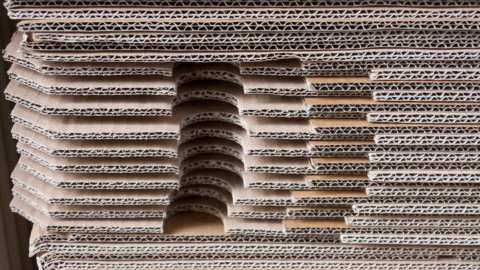
At the center of the meeting the strategic role of corrugated cardboard packaging as a cornerstone of the paper recycling system and a key lever for achieving the country's environmental sustainability and circular economy goals. The conference provided an important opportunity for discussion between institutions and industry professionals, drawing on the results of a survey conducted by Ipsos Doxa. the Italian Box Factories Association, which offers an updated snapshot of the state of the art of the sector.
The packaging market scenario
The growth of corrugated cardboard packaging represents one of the most significant phenomena in the packaging market, supported by the development of e-commerce and increasingly sustainable economic growth models. Italy remains the second largest European producer of corrugated cardboard, just behind Germany and ahead of Spain and France. This achievement was made possible by a solid, innovative, and strongly sustainability-focused sector, driven by high recycling capacity and production volumes. In 2024, the recycling rate for cellulose packaging reached 92,5%, long exceeding the European Union's 2030 target.
Sabrina Alfonsi, Councillor for the Environment, Agriculture and Waste Management of Rome Capital commented: 'The paper and cardboard recycling sector represents a driving force towards the transition and environmental sustainability. The amount of material collected and sent for recovery demonstrates a growth, including cultural growth, that is now structural and lasting over time.
Rome's commitment to separate waste collection
In this virtuous context, Rome is playing its part. In the Rome metropolitan area, separate waste collection of paper and cardboard in 2024 slightly exceeded 258,000 tons, more than the combined total of the other five metropolitan cities combined, with a positive increase of approximately 11,000 tons (+4,4%) compared to 2023. AMA's provisional data for 2025 confirm this positive trendIn the city of Rome alone, over 255 tons of paper and cardboard were collected and sent for treatment, approximately one-third of the total separate waste collection. These results are undoubtedly positive, and can be attributed to the development and improvement of collection services, but there is still considerable room for growth.
To make further progress it will be necessary to continue to develop the collaboration that has existed with Comieco in recent years, working to improve the collection and citizen awareness campaigns on the correct disposal of this type of waste which, as demonstrated by the Ipsos Doxa research presented, is increasingly coming into contact with users thanks to the growth of purchases through e-commerce platforms. We face a major collective challenge, one that focuses on sustainability, social cohesion, and innovation, and to overcome it, the contribution of all stakeholders is necessary.
Andrea Mecarozzi, president of the Italian Box Manufacturers' Association, stated: "We are proud to be part of a supply chain that represents excellence at the European level and offers further concrete prospects for growth and innovation. With this research, we aimed to analyze perceptions and future scenarios in the sector, gathering the perspectives of packaging purchasing companies, producers, and consumers. A clear and consistent picture emerges: corrugated cardboard is an increasingly well-known and appreciated material, growing and widely recognized for its high level of sustainability."
“In 2024, more than 9 out of 10 paper packaging items were sent for recycling” “This achievement is part of a growing trend,” explained Carlo Montalbetti, General Manager of Comieco. “As evidenced by production, from 1999 to 2024, the use of paper and cardboard for packaging increased by approximately 15%, from 4 to 4,7 million tons. This growth has generated environmental and economic benefits: in the same period, Comieco has awarded Italian municipalities over €2,75 billion for the recycling of paper packaging.”
Ipsos Doxa research for the Italian Box Manufacturers Association: consumers
Data from the market survey—conducted between October and December 2025—showed that corrugated cardboard remains a key material for consumers (and businesses), with a high level of familiarity and trust: 8 out of 10 Italians know what it is and are familiar with its functions and characteristics. The rise of e-commerce has strengthened its presence in homes, with over 50% of consumers reporting frequent interaction with this packaging, especially among young adults and in Northern Italy.
Consumers are paying attention to the changes underway in the corrugated cardboard packaging industry: over half of consumers say they've noticed the replacement of other materials (bubble wrap, rigid plastic, etc.) with corrugated cardboard. Reuse of boxes for storage, personal shipping, and the second-hand market is also widespread.
Businesses
On the B2B front, satisfaction among packaging purchasing companies is high, and all sectors analyzed in the survey—food & beverage, clothing & textiles, electronics & technology, furniture & plumbing—reported increased purchases of corrugated cardboard packaging over the past year (57%, with peaks in the food & beverage and furniture sectors). The "traditional" white or brown cardboard box is increasingly being joined by new "custom" solutions in terms of design or graphic appearance: in fact, more than 8 out of 10 companies consider customized solutions increasingly important.
Furthermore, 51% of the companies interviewed declared that they had replaced packaging made of other materials (especially flexible plastic, polystyrene flakes, other types of wrapping paper, and rigid plastic) with corrugated cardboard.
Looking to the future, companies are demanding lighter yet stronger, sustainable, modular, and digital packaging to reduce overpackaging and improve logistics efficiency.
Cardboard packaging manufacturers (box factories)
The research paints a picture of a sector—boxmaking—that is solid and deeply rooted in the Italian manufacturing landscape, serving a domestic market largely composed of small and medium-sized businesses. Competition is the main challenge, fueled by price pressure, the difficulty of finding qualified personnel, and competition with larger operators, while customization has become a structural component of the offering. The adoption of cardboard as a replacement for plastic is growing, while innovation focuses on efficiency and reducing overpackaging.
"Competition based exclusively on price—an expression of a globalization drive that has progressively delocalized production centers and risks losing the skills painstakingly acquired over years of research by our entrepreneurs and their staff—drains resources and competitiveness from our SMEs and distracts them from crucial investments in innovation and in replacing high-impact packaging materials with corrugated cardboard solutions. To successfully address these challenges and enhance the strategic role of box factories, it is essential to defend the national industry and engage in concrete collaboration with institutions to support small and medium-sized Italian businesses, which represent a cornerstone of the country's industrial, economic, and employment growth," concluded the President of the Italian Box Factory Association.
Looking to the future, the sector is indeed aware of the need to evolve, but a shared vision is lacking; expectations of external trends, such as industrial concentration and the replacement of plastic, prevail. In this context, the Italian Box Manufacturers Association enjoys broad and positive recognition as a representative body.