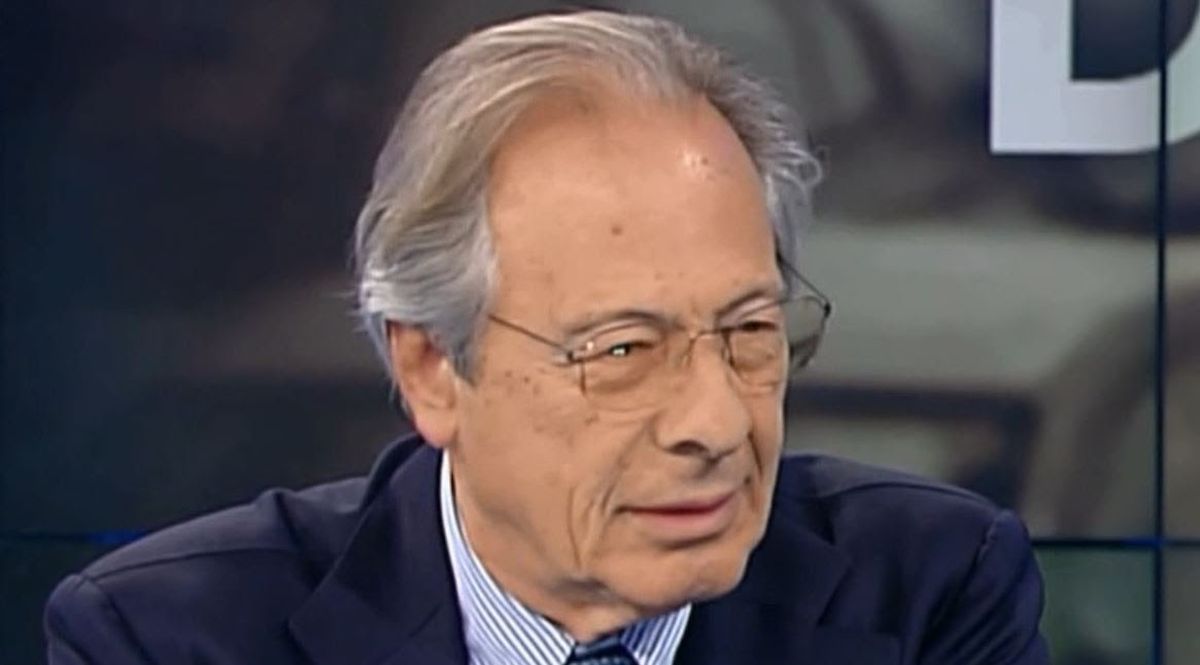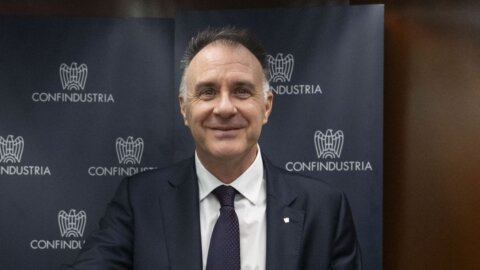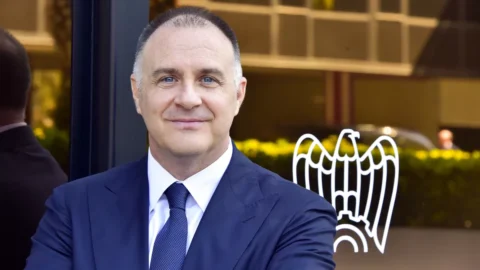
The President of Confindustria, Emanuele Orsini, he threw in the annual assembly of the Confederation a real manifesto for a Europe different from the current one, but more integrated, with an internal market free from barriers that slow down trade and therefore growth, with a financial integration that allows European savings to contribute to financing the investments needed to increase the competitiveness of industry. In short. "Europe yes, but not like this".
Confindustria: what Orsini asked Europe
More specifically, we need less bureaucracy, fewer absurd rules that are holding back production activity, and above all less ideology in the energy transition that was launched without considering the needs of production activities and citizens who want to continue to have growth prospects.
Music to the ears of Giorgia Meloni and also of the President of the European Parliament, Robert Metsol, who attended the meeting. Meloni no longer knew how to say that she agreed with Orsini on the revision of the green deal and in particular on the cost of energy which is much higher than that of other European countries and which is causing great difficulties for businesses and taking away spending capacity from families. In short, Europe, to use the words of Metsola, "must be the solution and not part of the problem" as it appears today, unfortunately, in the eyes of many citizens.
In his report, President Orsini made an impressive list of all the things that are wrong with the choices made in the past by the EU in terms of production policy. And it is also clearly stated that what has been done so far by the Commission is absolutely not enough. For example, the fines imposed on the car industry if emissions limits are exceeded cannot only be spread out over time, but must be eliminated. And so the need to purchase green certificates from companies like Tesla o Byd, which essentially means financing one's competitors.
Confindustria: EU should pay more attention to the competitiveness of the economy
But that's not all, a first small measure has been taken on simplification, but much remains to be done. And then the question of the preference for reuse and not for recycling where we Italians have a world record. And so the packaging that would damage our businesses. And if we go to the financial sector we cannot fail to notice the urgency of creating an integrated European market, while the ECB should equate the capital requirements of our banks to those of the banks of Usa e China which are less stringent. We need an EU that is more attentive to the competitiveness of the economy and less to the formalism of the rules which in any case are too many and too binding so much so as to stifle the market, hindering innovation and investment by companies forced to wait very long times before having all the necessary authorizations.
Il extraordinary plan for both European and Italian industry consists first of all in the rapid change of pace of Brussels, from where 70% of the regulations concerning businesses already come. Then we need to urgently address the problem of the cost of energy in Europe, but especially in Italy. In the immediate future, it would be necessary to decouple the price of electricity from that of gas, which does not take into account the much lower prices of hydroelectric production and that of renewables, taking into account the incentives provided by the State and which in any case end up in the bills of users, both industrial and private.
According to the president of Confindustria, for wages we need to move to decentralized bargaining where higher wages can be exchanged for increases in productivity.
Finally on the international trading and on duties Orsini stressed that it would be wise to find an agreement with the US and that in the meantime it is necessary to ratify the agreements made with other countries such as Canada and make new ones with Mercosur, India and Australia.
Meloni and the attempt to reassure Confindustria companies
Prime Minister Giorgia Meloni, who is not at ease with economic matters, tried to reassure the audience of entrepreneurs by saying that "decline is not the destiny of our country, and that the trend can be reversed" by acting with determination and coherence. She said that she is doing everything to reduce the cost of energy even if she recalled that this cannot happen thanks to public subsidies because the state budget does not allow it. She also promised that the Government will commit to simplifying the rules both in Europe and in Italy, where Confindustria had presented 80 proposals at zero cost and of these less than 10 have been implemented so far.
Golden power and hot topics? Set aside
The most burning issues have been set aside, such as the disproportionate use of the Golden Power by the Government, or a certain wavering towards foreign investments that are welcome, but many ministers would like to control them. Then there is the big question of where to find the money for the extraordinary industrial plan invoked by President Orsini, who has asked for 8 billion a year for three years, and for all the other needs useful for increasing the productivity of our country such as research, training, infrastructure. But the Prime Minister has preferred to gloss over these.
Everyone knows that we live in a critical phase. There is a paradigm shift, and to address it we need not only financial means, but the will of men to show determination, courage and responsibility together. An arduous task that falls not only to politicians, but to the entire ruling class.