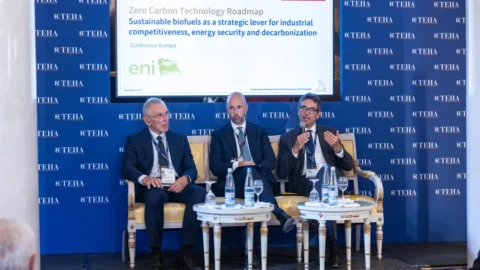
La European energy transition It's not just a question of emissions. For Europe's industry, it also means security of supply, production capacity, employment, and technological autonomy. This is the starting point for the strategic study.Sustainable biofuels as a strategic lever for industrial competitiveness, energy security and decarbonization", realized by Teha Group together with Eni and presented on September 5th at the Cernobbio Forum.
The work begins in an energy context that has profoundly changed compared to the one in which the Green Deal was conceived: recent crises have shown how dependence on external technologies, raw materials, and production capacity can become a risk to European security. In this scenario, the biofuels from renewable raw materials They can help reduce transport emissions, diversify supply sources, and support European industrial competitiveness. Not in opposition to electric cars, but as a complementary solution, especially in sectors that are more difficult to electrify.
Biofuels, a technology already available
HVO, acronym for Hydrogenated Vegetable Oil, and Saf, Sustainable Aviation Fuel, are at the center of the analysis. The former can be used, subject to manufacturer validation, in over 170 million Euro 5 and Euro 6 diesel vehicles in the European fleet. According to the study, HVO can also be used pure and without modifications to the engines or distribution infrastructure.
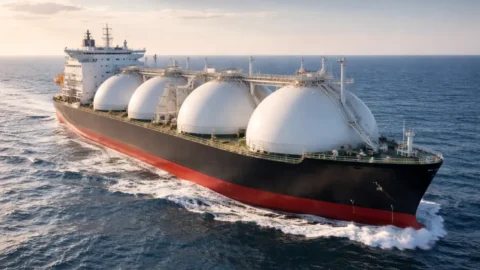
The advantage also concerns the most difficult transports to decarbonize: in the maritime sector, HVO can be used pure, while in aviation, SAF can be mixed with conventional fuel up to 50%. It is precisely the possibility of intervening on the vehicle fleet and existing infrastructure that makes biofuels, according to Teha and Eni, an immediately available and complementary solution to other energy carriers.
The industrial question: refineries, employment and added value
La industrial size is central. Since 2009, Europe has lost 21% of its refining capacity, increasing dependence on imported diesel and aviation fuel and contributing to the estimated loss of 90-130 skilled jobs. In the sector automotive, imports of finished vehicles have more than tripled between 2015 and 2025, reaching around 166 billion euros, with a potential annual loss of European added value estimated between 30 and 60 billion. Added to this is the dependence on critical raw materials: 100% of refined heavy rare earths for European use come from China.
A possible model is that of the transformation of refineries into biorefineries. Eni has already experienced it with the reconversion of the plants Porto Marghera in 2014 e Gela in 2019, preserving industrial sites, skills and employment and contributing to the regeneration of the territories.
According to Teha estimates, the private investments The sector could generate up to €66 billion in GDP and over 33 jobs in Europe. The study compares this figure with approximately €49 billion in public resources earmarked for electric mobility between 2016 and 2030, with the risk that a significant portion of the value of the related production chains will end up outside Europe, particularly in China.
Not just cars: the electricity issue
The study's reasoning extends beyond transportation. data center electricity demand in the European Union, according to Teha estimates, it could go from 96 TWh in 2024 to 236 TWh in 2035, also due to the development ofintelligence artificialUsing different solutions in heavy transport, aviation, and the maritime sector can therefore avoid concentrating even the most difficult-to-electrify sectors on the electricity grid, leaving greater energy availability for strategic sectors.
The principle is that of technological neutrality: Evaluate different solutions based on their potential outcomes, rather than prioritizing a single technology. "Biofuels are not an alternative to electric vehicles, but a complementary choice," is one of the key points of the study, which calls for considering the energy transition in light of new geopolitical risks and industrial dependencies.
Raw materials: waste, agriculture and degraded lands
Another chapter concerns the availability of raw materialsBiofuel production can utilize waste cooking oils, animal fats, and agro-food waste, but also vegetable oils from intermediate crops rotated with food crops and crops grown on degraded land.
According to the study, the global potential of these resources is approximately five times higher than European needs, without necessarily taking land away from food production. In this context, Eni's projects in Africa could involve over a million farmers by the beginning of the next decade, through the recovery of degraded land and the cultivation of crops intended simultaneously for biofuels, food, and local feed.
The key is a verifiable supply chain: data, traceability, digital technologies, and field measurements should ensure sustainability, additionality, and the absence of competition with food production.
From measurement at the point of discharge to measurement along the entire supply chain
The final part of the study looks at the European policiesThe request is to change the criteria used to evaluate different technologies, moving from a measurement focused on exhaust emissions to an evaluation of the entire production cycle.
Among the proposals there is also the hypothesis of a new category of low-carbon vehicles powered by exclusively with biofuels from renewable raw materials considered more sustainable. The goal, according to the study, would be to recognize the contribution to reducing emissions along the entire supply chain and support already available and scalable technologies.
The second direction concerns the industrial policy: instead of closing the refining plants, the study proposes to transform the existing production base, favoring the conversion of refineries into biorefineries.
Finally, regarding the relationship between agriculture and energy, the proposal is to rely more heavily on data, traceability, and field measurements to verify the sustainability of supply chains and compliance with the principle of additionality, preventing biofuel production from diverting resources from food production.
The challenge for Europe
The message from Cernobbio is therefore broader than just the decarbonization of transportation. For Teha Group and Eni, the biofuels issue also concerns Europe's ability to reduce its vulnerabilities without transferring them from one sector to another. "A transition that replaces one dependency with another doesn't strengthen the continent; it merely transfers its vulnerabilities. Biofuels represent a concrete lever for the decarbonization of transportation, as well as for diversification, security, and industrial policy. We need to move beyond a predominantly regulatory approach and adopt a more pragmatic, industrial vision that is aware of new geopolitical risks," he noted. Valerio DeMolli, Managing Partner and CEO of Teha Group.
For Stefano Ballista, CEO of Enilive, the challenge is to combine energy transition, industrial competitiveness, and economic and social sustainability, leveraging available technologies and industrial expertise. "In this context, biofuels represent an immediately available solution to reduce emissions from the transport sector along the entire value chain because they are widely available, can be distributed using existing infrastructure, and can be used in most diesel engines currently in circulation." According to Ballista, they are a complementary solution to other energy sources, capable of strengthening European energy security and competitiveness. Eni's experience, he adds, demonstrates how "technological innovation" and industrial expertise can generate "value, employment, and sustainable development."
The point, ultimately, is not to choose a single winner of the energy transition today. It is build a mix of solutions able to reduce emissions without weakening Europe's industrial baseAnd it is precisely in this space that the study places the role of biofuels.