Her job in life was to create a lifestyle, whether or not she was paid for it. She had interesting jobs—as a model, stylist, and food writer—but she never considered what she did a formal career. Yet for more than 40 years she was an original whose appearance, cooking, and home arrangements were imitated by many, appearing in hundreds of magazine articles and advertisements. She is Born Maxine Birley in the glamorous and express social circle that preceded the jet set. Her father was Sir Oswald Birley, already in demand in the late Edwardian era as a portrait painter. After his military service in the First World War, he married a much younger Irish artist and beauty, Rhoda Lecky Pike.
The Birleys were the tallest of the High Bohemians
They lived in a house in Hampstead in north London with a studio designed by Clough Williams-Ellis, and later at Charleston Manor in East Sussex, which Rhoda had reclaimed from ruins. Oswald painted royalty, politicians and artists (the Birleys added a music room to the house as a setting for posing dancers of the Ballets Russes). Rhoda gardened according to the advice and designs of her friend Vita Sackville-West, although Vita never fed her roses a superior fish stew as Rhoda did. Everyone, including their neighbour Rudyard Kipling, came to dine on Rhoda's prawn curry. Maxine and her younger brother Mark (who later founded Annabel's nightclub) grew up eccentrically though well-connected and always fearing their mother's storms. The Birleys sailed repeatedly to India, south-east Asia, Mexico and the United States. Maxine, in their absences and when she was not at school (where her clothes – Rhoda’s cast-off Schiaparellis or tailored oriental dresses – were fantastic), lived as a happy tinker with her Irish grandparents in Wexford. She intended to join the Wrens when the Second World War broke out, but their recruiting office was closed, so she settled for the blue-grey RAF as Waaf, probably never to be an officer, to her relief, because of a wild party soon after recruitment. The service did not want to waste her intelligence or her fluent French, so she was sent to work as a junior codebreaker at Bletchley Park. Maxine was among the many mental casualties of that institution. Isolated, lonely, cold and nervous with tension, she began like a magpie to steal everything that glittered. She cracked and was declared an invalid. Her parents did not want her to come home, so they paid her passage to the States in the hope that she would get a rich husband. She frequented Vogue in New York (its artistic director, Alex Liberman, noted her unusual self-presentation and her ability to turn her hand to anything) and had an affair with one of its photographers.
The wedding with Alain de la Fasaile and his two children
But in 1946 she married the even more worldly Count Alain de la Falaise, old enough to be her father, as his second wife, and changed her name to Maxime. Announcement Suddenly she was a Parisian by residence, strolling with two children, Loulou and Alexis, as that city re-established its luxury trade in the postwar years. The count was not earning. Maxime proved more competent at the job, when she was ordered to find it to save the family finances. She looked like her mother – dark hair cut short, a long, lean body – only more vivacious. She was also introduced to Elsa Schiaparelli, whose fashion house she had reopened. Maxime was perfect in her saucy lust to wear and sell for the house in her later years, and was also photographed as a model for Dior, whose rise eventually eclipsed Schiaparelli.
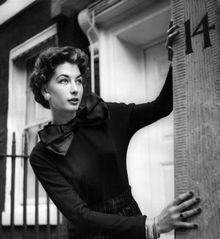
Maxime and the Count divorced soon, unequivocally. Among her many indiscreet lovers were the British Ambassador Duff Cooperan Italian playboy, and she had to resort to the law to regain custody of her children, although they were both later sent, like her, to boarding schools in England, New York, and Switzerland. When Loulou made a brief teenage marriage to an Irish aristocrat, Maxime warned his daughter that she would be more comfortable with artisans, as her mother and grandmother had been. As a free spirit, Maxime preceded Jeanne Moreau as the love of director Louis Malle, had a strange erotic relationship with the painter Max Ernst and moved to Provence with a minor American artist. There were other connections. She once claimed that her mother had taught her the facts of life by dissecting her father, as he lay naked in her bathroom. Maxime took her American artist back to New York in the late 50s, where she abandoned him and married John McKendry, the curator of prints and photographs at the Metropolitan Museum of Art. American society was devoutly Francophile in the 60s, and Maxime de la Falaise McKendry was an influential hostess among Manhattan's creatives. She became a food columnist for Vogue, with a line of aphorisms ("lemon is the speed of cooking") and a pioneering taste for the informal English and Irish dishes of her childhood. When her friend Andy Warhol, whose entourage she often fed, asked for a menu for his fancy food processor, the Andymat, she proposed shepherd's pie, fish cakes and lamb stew. Warhol had an idea, also undeveloped, that she should have been the chef in his prototype reality TV show that was never produced, although she did appear in his 1974 film Dracula.
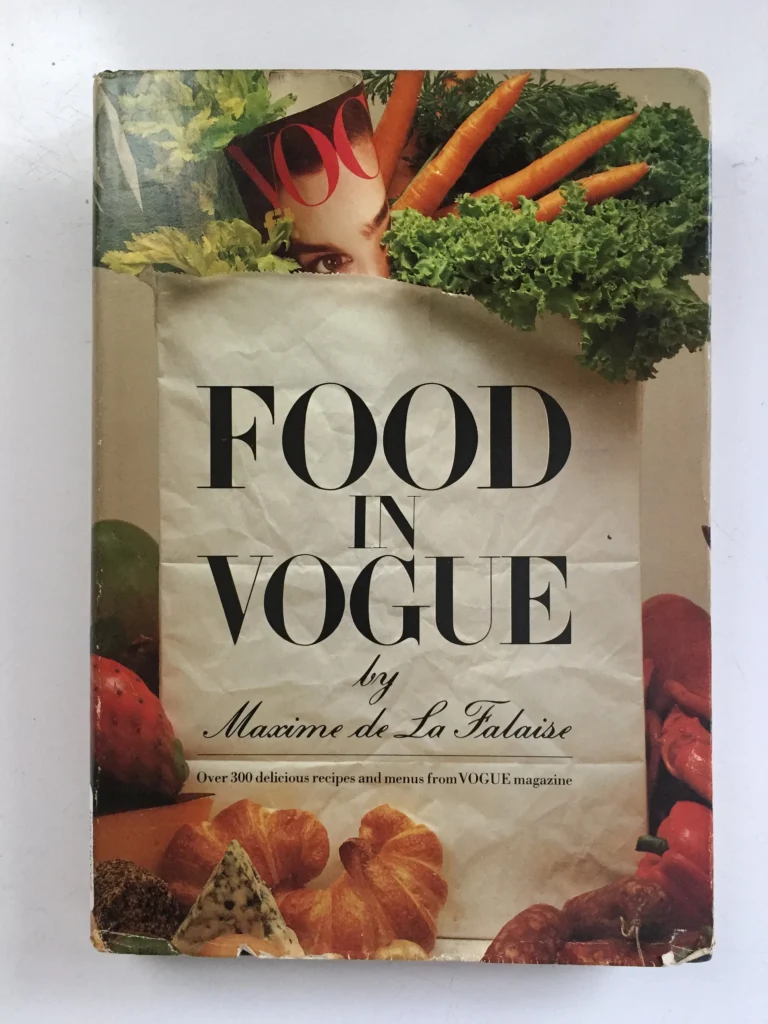
She collected Vogue celebrity recipes and menus as a book in 1980 (Food in Vogue, with illustrations) and the ancient sources of his menus were revealed and translated for modern use in his book Seven Centuries of English Cooking (1973).
The relationship with John Paul Getty
McKendry died of cirrhosis of the liver in 1975. Maxime's subsequent relationship with John Paul Getty III did not last. She continued to improvise financially, teaching screen printing, preparing luxury sandwiches in nightclubs, arranging interiors with furniture produced to her specifications, designing clothes (notably for Chloé and Gérard Pipart) and, after Loulou became Yves Saint Laurent's muse, modelling, and acting as his licensing consultant.
In the late 80s she retired to a house in Saint-Rémy-de-Provence, where she put together her collaged lifestyle for the last time: the Saint Laurent “Love” poster, family portraits (joined by those of Loulou, and Alexis’s successful model daughter, Lucie de la Falaise), ethnic art, rugs knotted to her design in Turkey, and simple dishes served in a lifetime’s earthenware collection. She then settled down to write her memoirs. She died there. Alexis predeceased her. She is survived by Loulou, her grandchildren, and her great-grandchildren. Maxime de la Falaise (Maxine Birley), model, designer, and writer, born June 25, 1922; died April 30, 2009.
°°°Cover image: detail of Maxime de la Falaise immortalized by Richard Avedon, Paris 1948