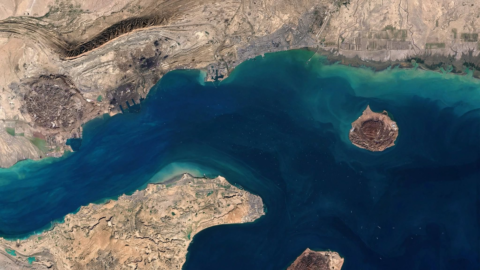
After hours of statements, denials and counter-denials, the The truce proposal between Iran, the United States and Israel seems to have actually arrivedThere is a on the table 45-day ceasefire which aims to freeze hostilities for the time necessary to open a real negotiation and try to restore normality to the Strait of Hormuz, the most delicate and strategic passage of the entire crisis.
This development comes after the new ultimatum launched by Donald Trump, who threatened to attack power plants and bridges in Iran "if Tehran does not reopen the Hormuz Strait by today." The American president used harsh tones, urging the reopening of the Strait or face dire consequences. Shortly thereafter, however, he partially corrected his tone, saying he was confident that a "good chance" of an agreement could emerge in the coming hours.
US-Iran: Pakistan presents a truce plan
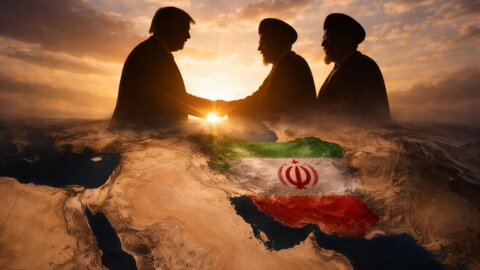
According to the latest reconstructions, Iran and the United States have received a proposal that provides for a 45-day ceasefire , reopening of the Strait of Hormuz as a first step toward a broader agreement. Reuters reports that the plan, referred to as “Islamabad Agreement”, was reportedly transmitted during the night from Pakistan to Tehran and Washington and outlines a framework agreement based on two steps: an immediate halt to hostilities and the initiation of a more comprehensive path to exit the crisis.
In the same reconstruction, the Hormuz reopening would be placed within 15-20 days, while the final talks would take place in person in Islamabad. The 45-day truce would serve to bring the parties back to the table and address the issues which have fueled the escalation, from regional security to the issue of Iran's nuclear program, up to the full restoration of navigation in the Strait.
However, it remains entirely the political validity of the proposal needs to be verifiedThe draft, in fact, arrives in a climate of deep mistrust, and precisely for this reason, the gap between a mediation plan and a real agreement remains wide.
Tehran is evaluating, but is not backing down on its tone
La Iranian response, for now, remains suspended between diplomatic prudence and political toughness. From Tehran it has filtered out that the proposal arrived through Pakistan has been received and is under examination, but without any explicit opening. Indeed, according to a senior Iranian official quoted by Reuters, Iran does not intend to reopen the Strait of Hormuz in exchange for a "temporary truce", because the prevailing belief in Tehran is that Washington is not yet ready for a permanent ceasefire. The same official confirmed that Pakistan's proposal for an immediate halt to the fighting is on the table, adding however that Iran refuses to accept pressure nor to decide within externally imposed deadlines.
This is where the political crux of the negotiations lies. The Iranian leadership fears that a limited pause in fighting could turn into only a superficial truce, leaving intact the possibility of a resumption of attacks within a short time. For this reason, while the draft remains on the table, the official language continues to harden.
The Deputy Foreign Minister for Legal and International Affairs has defined “war crimes” are threats to target civilian infrastructure, while the Iranian central military command warned that any new attacks against civilian targets would provoke a “much more devastating and widespread” response.
Hormuz remains the true barometer of the crisis
Il the Strait of Hormuz remains the true strategic hubMore than just a point of negotiation, it is the true thermometer of the war, because its opening or closing will determine the extent of the escalation and, at the same time, the credibility of any mediation attempt. It is no coincidence that the truce proposal directly links the ceasefire to the resumption of navigation, envisioning a gradual return to normality that, depending on the reconstruction, could occur quickly or take several more weeks.
Meanwhile, some signs have already emerged. In the last few hours some ships crossed the Strait And several vessels stranded in the Gulf have resumed transit. This isn't yet a return to normalcy, but it's a move that demonstrates how Hormuz is the most concrete test of the entire diplomatic game. As long as that corridor remains exposed to obstacles, threats, and uncertainties, even the prospect of de-escalation remains inevitably fragile.
It is on this joint that the maximum pressure is concentrated. For Washington and its allies, reopening Hormuz means reduce at least part of the strategic risk associated with the conflictFor Tehran, however, the Strait continues to represent a key political and negotiating lever. Mediators are moving between the two, attempting to transform the most critical point of the crisis into a gateway through which negotiations can be brokered.
On the ground the war continues to rage
While diplomacy tries to open a window, the fighting doesn't slow downIn Iran, raids attributed to the United States and Israel have caused new victims in the last few hours. Reports speak of dozens of deaths between the night and morning attacks, with attacks that hit residential areas in Tehran province, Qom, and other locations. Among the most dramatic episodes is thekilling of six children under ten years old in the province of the capital.
At the same time it was announced also the death of the head of the Pasdaran intelligence, Seyed Majid KhademiIsrael, for its part, reported having completed a new series of attacks against regime targets in Tehran and, after the killing of the head of the Pasdaran secret services, Defense Minister Israel Katz relaunched in very harsh tones, declaring that Israel will continue to hunt them down "one by one" and arguing that while the Revolutionary Guards are targeting civilians, the Jewish state is eliminating “terrorist leaders.”
Even on the Israeli front the toll remains heavyIn Haifa, two bodies were recovered from the rubble of a building hit by an Iranian missile, and the search for the missing continued for hours.