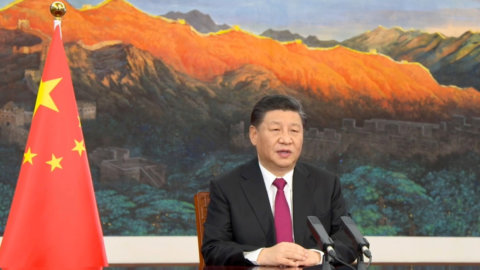
Il Xi Jinping's trip, leader of People's China, in Saudi Arabia it marked an important step in the relationship between the Asian giant in search of international expansion and one of the most important Gulf countries. The Crown Prince muhammad bin salman, often called by the acronym MbS, received it with full honors: a triumphal reception worthy of an imperial power such as the China aspires to be more and more. The trip served to sign long-term contracts and commitments that consolidate the commercial collaboration of the two countries but even more to affirm new geopolitical balances - including possible future military developments - at a time when relations between Saudi Arabia and the United States, traditionally allies in the Middle East, have reached one of the lowest points (also due to the brutal killing of journalist Jamal Khashoggi in the Saudi consultation in Istanbul).
Furthermore, Xi Jinping's trip to Saudi Arabia comes at a time when the balance between West and East is faltering both due to the US-China competition that of the Russia-Ukraine war on which Xi Jinping refuses to take a clear position. It is therefore understandable that analysts from all over the world have grappled with all possible possibilities backstories and future scenery on the developments of the trip, which lasted three very dense days. So let's take a closer look at what Xi Jinping's trip to Saudi Arabia has changed and what can happen after this crucial visit.
Xi Jinping's trip to Saudi Arabia: agreements for 30 billion
Xi Jinping's trip to Riyadh was a crucial visit for relations between China and Saudi Arabia. King Salman bin Abdulaziz and President Xi Jinping signed a strategic partnership agreement which harmonizes the Saudi development strategy”Vision 2030” and the project on New Silk Road, for a total value of about 30 billions of dollars.
The de facto leader of the Gulf oil giant, the Crown Prince Muhammad ben Salman it proposes itself as the intermediary between Beijing and the Arab countries, facilitating meetings between the Chinese president and all the main Middle Eastern leaders who have flocked to Riyadh for the occasion.
During the meeting which took place at the Yamamah royal palace in Riyadh, the parties discussed historical bilateral relations, regional and international developments and opportunities to invest the resources available in both countries. A memorandum of understanding in the hydrogen sector, an agreement for cooperation and legal assistance in civil and commercial matters were signed. Specifically: Huawei, the Chinese telecommunications giant banned by the US administration and in many Western capitals, will play an important role for cloud computing in Arabia. A Chinese company will build an electric car factory in Arabia. Another will supply “green” hydrogen batteries for MbS's future smart city.
Xi Jinping in Saudi Arabia: beyond trade agreements
In the three days of his stay, the Chinese premier participated in numerous meetings, both with Saudi leaders and in multilateral forums with other heads of state of the Gulf and the Arab region. Around thirty heads of state and super managers, writes The Guardian.
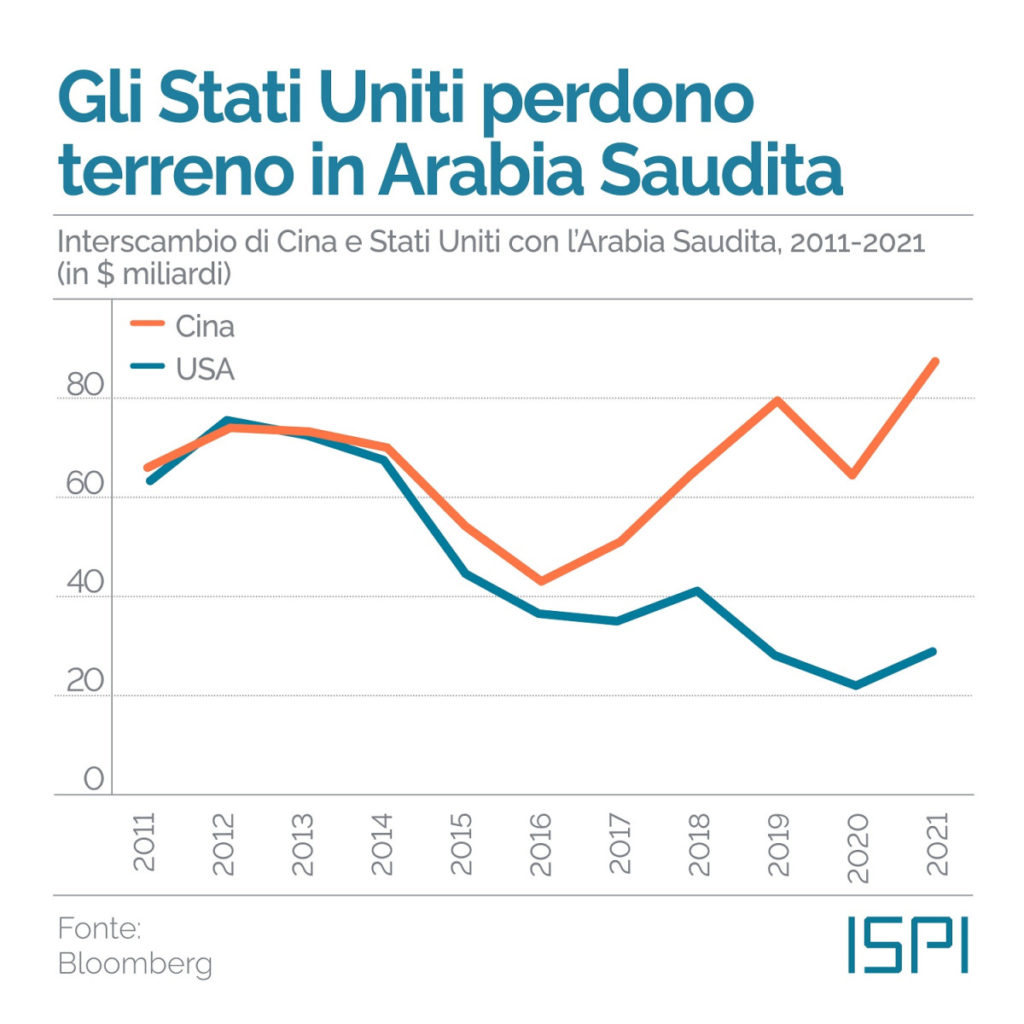
“This is Xi's third visit abroad after two years of isolation due to the pandemic. Over the last few weeks, the Chinese President has been particularly active on the diplomatic front. Xi's visits were concentrated in the priority places of Chinese foreign policy: at the Summit of Shanghai Cooperation Organization in Central Asia, where Russia is losing traction and China could expand its influence; on the occasion of the summits of the G20 and Apec (Asia-Pacific economic cooperation) in South-East Asia, a neighboring region of great economic and strategic importance which is increasingly becoming the object of international courtship; and, finally, in Saudi Arabia, a nation rich in energy resources. The timing of this latest visit is not accidental: relations between Riyadh and Washington are increasingly tense, while the Chinese presence in the Gulf is only increasing. And it will certainly not have escaped Beijing's diplomacy that, like many other countries, it will also be difficult for Saudi Arabia to remain neutral in the face of growing tensions between China and the United States. Xi's visit could not have been more timely." This is the analysis of Inspi (Institute for International Political Studies).
The collaboration between China and Saudi Arabia: energy and strategic partnership
Just add that:
- China is Saudi Arabia's largest trading partner
- Saudi Arabia is China's main oil supplier with 81 million tons exported in 2021. In 2022 Aramco saw its profits increase by 90% and Riyadh's public budget has a surplus of $27 billion
- Riyadh has spoken in favor of using the renminbi, the Chinese currency, to pay for its energy supplies to Beijing
- Saudi Arabia has expressed interest in becoming a partner of the Brics countries and an interlocutor of the Shanghai cooperation Organization
The circle closes and it is easy to deduce that "Riyadh could therefore prove to be a crucial partner for Beijing in the attempt to create an international order outside the hegemony of the United States and the West" concludes Ispi. From a political point of view, the modernization launched by MbS, authoritarian and focused on economic welfare, has points in common with the Chinese model.
Saudi Arabia and China: military scenarios
Saudi Arabia still needs the United States for its military security and has played a leading role in the exchange talks between the American basketball star champion with Russia Britney Griner (prisoner since February and sentenced to 9 years in harsh prison) and the Russian international arms dealer, Viktor Bout. The case ended a few days ago. But Beijing has already begun supplying the Saudis with drones, missile technology, and is making a contribution to Riyadh's nuclear programme. The future will be seen.