The 44th edition of opens today, Friday 17th, and will close on Tuesday 21st, at Milan-Rho Fiera Host, the global platform for technologies, products and services for hospitality, outside the home and food retail. Organized by the Milan Fair, brings together 2.041 exhibitors from 56 countries; professional operators from around the world are expected, including 700 highly profiled hosted buyers invited by ICE. Fiera Milano has announced numerous figures, starting with the "value" of Host, which, with its exhibitors, represents over 166,2 billion euros. But the entire Italian restaurant and hospitality platform is worth even more, totaling 120 billion euros, according to Fipe-Confcommercio, including the hotel and restaurant industry (around 80 billion) and related supply chains.
Host driving exports
The sectors present at Host are divided into three macro areas organized by supply chain affinity, to which a growing sector has been added: vending machines. From the numbers released by Fipe and studies by various American and European institutes, the striking fact is that Italian companies have a very strong propensity for export, which for key sectors like professional equipment and coffee reaches as high as 80-90 percent. More records: our restaurant industry represents 19 percent of the global total, while the hotel and hospitality sector of various types firmly holds first place in Europe in terms of numbers and quality. And these are among the world's top performers, with prospects—as the Fiera Milano press office emphasizes—decidedly positive for rapidly growing foreign investment.
The world's leading espresso machines
For decades now, imitated and often badly counterfeited, the Italian professional espresso machines They are considered the pinnacle of any bar or restaurant. And the many new features will be a focus of interest for visitors from around the world. As for exports, growth continues, despite the duties, the copying, the market crisisThe industry association, Ucimag, reports that exports in the first six months increased by almost 3 percent (2,9%), with a resounding 32,4 percent increase for the United States. This, like the others, is a record based on a now consolidated combination of design and technology. Indeed, Host has been promoting innovation in all its forms for years, with Smart Labels awarded to products and solutions that stand out for their functionality, technology, environmental sustainability, ethics, or social impact.
The competitive advantages of professionals
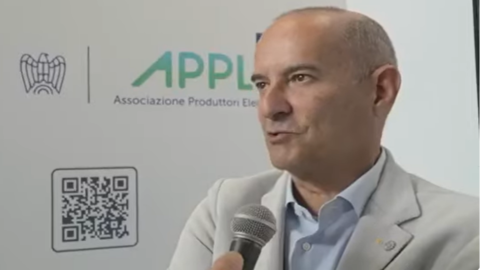
As for professional equipment, as he anticipated to us Andrea Rossi, President of Efcem A group of manufacturers of catering and hospitality equipment, exports have reached 80 percent of total sales thanks to the high level of technology and aesthetics. Eco-sustainability, in particular, is one of the most significant competitive advantages of this record-breaking Made in Italy brand. Tariffs, market crises, and rising raw material costs are certainly worrying industry players, but the central issue is uncertainty for everyone—producers, importers, retailers, and politicians—as Rossi confirms.
The numbers of a healthy sector
Yet the figures for 2024 and even the first months of 2025 do not signal the severe declines in other Italian manufacturing sectors. For Efcem companies, exports continued to rise in 2024 while turnover only slightly decreased.We asked Rossi to take stock of the situation, also in light of future commitments, international competition, and, finally, the tariffs imposed on European products by Trump.
“In 2024 despite the 2,4 percent drop the margins heldExports rose to 80 percent, with a +10 percent. In particular, refrigeration recorded a +12 percent; As regards the performance of the major EU exporters of professional appliances, in the first half of 2025 the greatest increases were recorded, above all, by Italian exports (+77.4 million euros compared to the same period in 2024, equal to +2.6%), driven by the trend growth in the refrigeration segment (+138.7 million euros, +12.5%) and by the growth of the US market.
How much did the US government's decisions to increase tariffs affect exports?
The professional appliances sector's exposure to the United States appears to be limited overall. Over the past 15 years, the professional appliances sector has seen dynamic growth in exports to the US market, reaching nearly €400 million in recent years. Conversely, the sector's imports from the United States are limited (€16 million in 2024) and are declining relatively. Refrigeration is the sector segment with the greatest exposure to the US market.
Some have said that tariffs can become an opportunity, that is, they can stimulate the search for new markets. Does this also apply to the Efcem sector?
We've always been good at exploring new markets, but we're encountering invisible, even quite costly, tariffs. For example, India, a market with significant sales potential, is introducing—and the same is happening in China—mandatory costly local inspections on gas-powered appliances. These are unnecessary measures because our appliances are already inspected, with certified requirements and parameters. Instead, additional checks and bureaucratic procedures are imposed, which—I repeat—are particularly burdensome.
What do you ask of the government and especially of the EU?
“They should take into account that the European restaurant supply chains are particularly important for the economy and that shared rules are needed with countries like India because thousands of pieces of equipment are involved.”
Very often these bureaucratic rules serve to protect local production…
"European rules are the best in the world, why impose so many additional controls and burdens? Protections and tariffs to safeguard free market competition are one thing, and very heavy hidden tariffs for our companies, often SMEs, are another."
In which directions are investments going?
"The trend that has been consolidated for years is eco-sustainability. In the coming years, Europe will require us to increasingly use recycled materials because reuse saves costs. We must especially optimize our use of steel. Steel recovery is essential due to the material's costs, and the European green steel program imposes sustainability standards on European production chains."
Are you also preparing for the repairability that is already adopted for household appliances and consumer electronics?
“Certainly, but the targets are very complicated and expensive.”
AI, Artificial Intelligence, is becoming increasingly popular, but it's still a fad. Many devices and systems that apply it are already on sale, however...
Our appliances will be increasingly connected and monitored, because in addition to sending recipes and information, we will have access to increasingly valuable data that Artificial Intelligence can help us understand and improve how customers use the appliances, for performance that we may not be able to identify today. And AI can tell us how to change parameters to make products increasingly upgradeable. AI can make a significant contribution, for example, in better selecting the many components that make up a product, for rapid updates, and even for simplifying equipment.