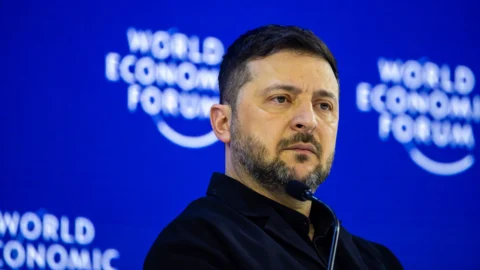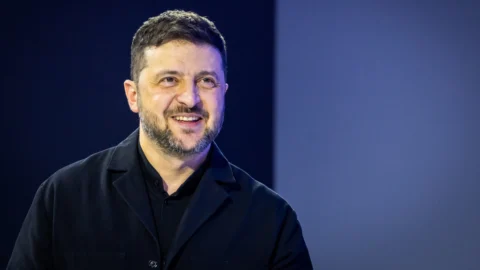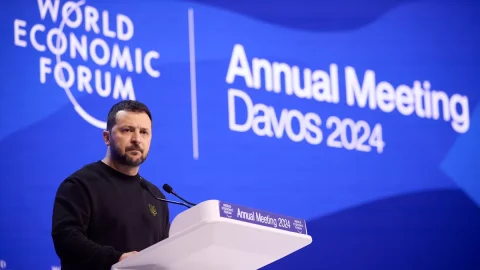
Who knows, maybe it's not Davos the witness of the peace between Ukraine and Russia. Ukrainian President Volodymyr Zelensky He said at a press conference in Kiev, together with Czech President Petr Pavel, that he hopes to sign an agreement on US security guarantees in the margin of World Economic Forum (WEF) which will be held in the Swiss city from January 19 to 23. A Ukrainian delegation is en route to the United States, Zelensky said, for further talks and to discuss a post-war recovery package.
All this while Russian bombing of Ukraine continues. Zelensky declared that 400.000 people remained without electricity following new Russian attacks on Kharkiv (northeast), the country's second largest city. The International Atomic Energy Agency (IAEA) has "agreed with Ukraine and Russia on a temporary ceasefire near the Zaporizhzhia nuclear power plant to allow for repairs to the last backup power line connecting the plant. RBC-Ukraine reported this, citing IAEA Director General Rafael Grossi.
The Davos Ghota raises the alarm: the world is "on the brink"
Meanwhile, the elite of academics, global companies, governments, representatives of civil society and international organizations have published, before the meeting, the 'Global Risks Report', which is based on a survey among 1.300 leaders and experts who say: forget pandemics and climate crises, inflation and debt, the number one perceived risk is now the “geoeconomic clash” followed by “armed conflict” among the States. The report raises an alarm: the world at the beginning of 2026 is “on the edge of the precipice”, with open wars and "economic weapons deployed to gain strategic advantages that continue to fragment societies." A picture that is even more dramatic if one considers that the WEF survey dates back to before Trump's offensive on Venezuela, of the promise to tear the Greenland to Europe.
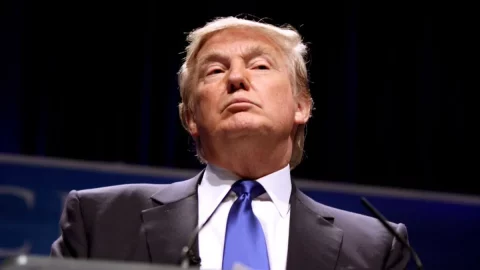
The 'Global Risks Report' is addressed to all major powers and in particular of course to Donald Trump, 'elephant in the china shop' with a muscular agenda of economic coercion and even war threats. The tycoon – who will be accompanied in Davos by a host of ministers, oil companies, and high-tech giants – in his scheduled speech for the 21st January He will not spare any jabs at the globalist elite of Davos who believe in multilateral cooperation. Shortly before his 'special address' there will be a panel entitled 'Déjà Vu?' which evokes a parallel between the current decade and the 1920s.
Half of respondents expect “a turbulent or stormy world in the next two years,” 14 percentage points higher than last year, another 40% expect at least instability, only 9% expect stability, and 1% expect calm. In 2028, the 'geoeconomic clash' remains at the top of the podium but the misinformation earns second place and the polarization of society the third third. And, looking ahead a decade, they are the extreme weather events The report's report, which includes "the fear of adverse outcomes from artificial intelligence," climbs the rankings to become the number one risk, while the fear of "adverse outcomes from artificial intelligence" moves up to fifth place. "Somewhat surprising is that participants are concerned about the outlook two years out and more optimistic ten years from now," explains Saadia Zahidi, Director General of the WEF. The fact is that the signals captured by the WEF point to a 'perfect storm' approaching: "In the short term, armed conflict, the militarization of economic instruments, and the fragmentation of society will collide." But "none of these risks is inevitable," explains Zahidi, and "the challenges highlighted in the report underscore both the scale of the potential dangers we face and our shared responsibility to shape what comes next."