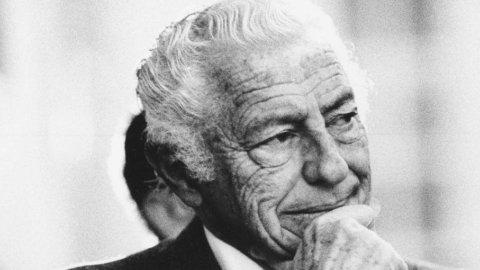
Ten without the lawyer. The 24st January next is the XNUMXth anniversary of the passing of Gianni Agnelli, exhausted by prostate cancer which he himself in April of the previous year, masking the beginning of the drama, had defined as a simple hindrance of age. He walked out of life while there Fiat it was experiencing the worst crisis in its history with the car indebted seven times its own means, the group at the mercy of the 3 billion loan banks, a succession of managing directors now powerless to eradicate the abyss of losses. The vision that the lawyer himself, only four years earlier at the celebrations of the centenary of the birth of Fiat, had given of the Lingotto, a large group of men and skills capable of affirming the made in Italy in the world even in the century that was about to open .
The Avvocato's last months must have been the most bitter for him. He felt his life failing, but above all he felt that an empire risked failing: the agreement with GM was already proving to be a failure; the top management of Fiat forced to go to Arcore, transformed for the occasion into a demeaning Canossa, to ask for help from the Government; Berlusconi, then premier, who said that if he had had a little more time, Fiat would have put it back on track in less than a year. But the Fiat disaster never came to scratch Agnelli's figure.
Proof of this was that his death aroused manifestations of condolences such as to recall those aroused by the drama of Lady Diana or John Kennedy: tens of thousands of people paid homage to him in his native Turin, twenty or more pages for several days in the newspapers to write about him , extraordinary editions of the media, debates on TV. In Italy, by memory, something similar had only happened with the disappearance of Fausto Coppi. And yet - points out in his essay on "Gianni Agnelli seen up close" Piero Ottone, who knew well and frequented the Avvocato until he became his friend - Agnelli's popularity was not due to particular enterprises: he did not win wars, he did not found industries, has not broken sporting records. Destiny made him the heir to Italy's most powerful industrial dynasty and for decades, thanks to an innate charisma, he was a sort of undisputed ruler, a friend of the most powerful personalities on the planet. David Weill, Lazard's banker, admired the ease of imposing his way of looking at the world on the interlocutor in an instant. Led to observe what happened rather than influence events, the lawyer was not the captain of industry that his grandfather had been, Senator Agnelli who founded Fiat, but was unique in his intuition and ability to synthesise and simplify, animated from an infinite curiosity and an existential boredom that didn't make him stop in one place more than strictly necessary.
He was 22 years old when his grandfather called him to the company (it was 1943), appointing him vice president. He recently graduated in law - but his grandfather called him right away "the lawyer” – Gianni had a participation in the Russian campaign behind him. Only at the end of 46, with the agreement on the works councils, was Fiat given back to the shareholders. In that year his grandfather died, and everyone looked to Gianni as the new boss. But the lawyer didn't feel like it. He remembered the patriarch's words: "You have to have fun and get everything out of your head before starting to work seriously." Gianni obeyed the letter, and at the request of Vittorio Valletta, grandfather's right hand man ("There are two cases: either you do the president, or I do it"), he replied: "Professor, you do it". And for twenty years he left him full powers in Corso Marconi, frequenting the jet set more than the company.
Only inApril '66 Agnelli took over the operational presidency of Fiat. "I'm handing over the burden of responsibilities to you," Valletta told him, who had signed the historic Togliattigrad agreement a few days earlier in Moscow. Fiat bought Pesenti's wrecked Lancia for a lira, took over Magneti Marelli, attempted to start an alliance with Citroen, opening up new horizons of internationalisation. But the boom was behind us. Italy was experiencing the season of the first centre-left governments. At the height of the economic miracle, of which the Seicento was the emblem, three out of four cars in Italy were Fiats. Turin had known an impressive and continuous immigration from the South. Valletta's Fiat guaranteed a salary and a summer colony, but the former Savoyard capital found itself besieged by a disorderly suburban dormitory, which coexisted with factories and chimneys. Fiat produced 66 million cars in 1,7, but in its balance of power and organizational structure it remained the same as it did 15 years earlier, when it only manufactured 50.
Valletta had been a centralizer. Agnelli played the card of the modernizer, which his age and cosmopolitan knowledge allowed him. Enrico Cuccia, who was the guardian of Italian capitalism for half a century, had been consulting for years. The Mediobanca banker found in Agnelli the best realization of his doctrine on family capitalism and the good living room of finance, that of cross-shareholdings and commanding without spending too much. The lawyer was always diligent in supporting the projects of the Great Old Man, at least until the bankruptcy of Supergemina in 1995. The hot autumn of 1969 overturned the pendulum of industrial relations in favor of the union, and for Agnelli and Fiat the path was immediately uphill. Consumption collapsed and the country found itself poor in infrastructure. Agnelli was convinced to enter the contention for Confindustria.
He wanted to block the way to the ambitions of Eugenio Cefis and seek a dialogue with the unions, led by Luciano Lama's CGIL, to defuse the spiral of strikes and conflicts that was paralyzing the factories. In May 74 Agnelli won the race for the presidency of Confindustria. The following year he signed the agreement for the single contingency point. Despite good intentions and a very high-profile presidency, however, the agreement did not produce social peace, and had devastating effects on inflation. Upon his return to Turin, after two years of presidency at EUR, Agnelli found “the city in very critical conditions: the yards were full of unsold cars; the climate within the companies was one of total disorder and for the first time in the history of Fiat we had to resort to bank credit”.
The Avvocato was convinced to speed up the separation of the shareholder's role from that of management. He tried with Carlo De Benedetti, but they were a hundred tumultuous days. He fared better with Cesare Romiti, the new helmsman recommended by Cuccia. The Fiat found by Romiti was a company that was struggling to pay salaries at the end of the month. After being the first to launch the hatchback car (the 127) and the minivan "ante litteram" (the 600 multipla), Fiat, short on investments, let itself be overtaken by its competitors in the evolution of new models. Romiti's cure was very hard: cuts, layoffs and finding new means, which were the petrodollars of the Libyan Bank. The following years were full of bitter struggles but at a certain point the city reacted; and in October 1980 came the march of the 40.
Il decade 1980-90 was that of the rescue. Disputes and absenteeism had left the factories and the first robots were entering. Two emblematic events: the success of Uno, presented in January 1983 in Orlando, Florida, and the en plein of the recapitalization of one thousand billion, under the direction of Mediobanca. The Agnellis started the shopping season: they returned to the Corriere, Toro, Rinascente and Snia. They conquered Galbani and Alfa Romeo. And they were one step away from realizing the global joint venture with Ford. “It failed because neither partner wanted to give up the lead,” was Agnelli's official explanation. In 1987, the family safe, Giovanni Agnelli & C., was created. The Fiat stock reached all-time highs on the Stock Exchange and the Libyans, attracted by a gigantic capital gain, decided to leave Turin. The partnership with Libya had caused the ostracism of the Pentagon orders. But he, the lawyer, has always remained the most famous and sought-after Italian in America, a friend of bankers like David Rockefeller and politicians like Henry Kissinger to whom Agnelli passed on his passion for football until he became a fan of the Juventus.
Agnelli recalled several times in his historical excursus: “It was precisely in 1989 that Fiat achieved exceptional profits. I think we were the fiftieth company in the world in terms of turnover and the fifth or sixth in terms of profits. I learned that, if it is certainly pleasant to have large profits, this is the most harmful thing that exists for a company, as attention to quality, economy and the production of new models is weakened”. A statement that also revealed a sort of mea culpa for what was at the peak of profits that season.
What happened was that Romiti began to dismantle the winning managerial structure that he himself had created by being the first to fire Ghidella on charges of being too self-centred. For a company that makes cars, it was the most ridiculous accusation. There were other reasons, linked to a sordid power struggle that had been unleashed in the Avvocato's court in those years. “What I have always struggled to understand – he writes in his essay“ Fiat, the secrets of an era ”, George Garuzzo, the former general manager of Fiat, another big torpedoed by Romiti – how top management, instead of concentrating on the product and core business of such an important group with 240 employees, tended to disperse into a thousand other streams more interested in maintaining relations with the political power or to weave marginal initiatives after all”. And Garuzzo cites the example of Supergemina as a collection of all the things that had gone wrong in the national industry, without a strategic plan. The car also suffered terribly, entering the tunnel of a very heavy crisis also because with the arrival of technology the production costs of small and medium-sized engines - the market of the Fiat group - were approaching those of large cars displacements without however having the revenues.
The party is over, the Avvocato ruled at the 1990 assembly. A crisis was beginning that would poison the climate in Turin, opening the first cracks between the Avvocato on one side and Romiti and Cuccia on the other. In the name of financial reasons to the detriment of the dynastic ones, Cuccia and Romiti also torpedoed Umberto Agnelli, the brother whom the lawyer had designated to succeed him in the presidency when he would have left due to having reached the age limit. It was the price that the family had to pay in exchange for financial support from Mediobanca in the form of a capital increase of 5 trillion lire. Gianni Agnelli officially always supported Romiti's initiatives. But it became clear day after day that Romiti would not stay at Fiat for an extra hour on the stroke of his 75th birthday. Between the Doctor and the dynasty there would have been ice. Especially since, in addition to the sacrifice of Umberto Agnelli, Mediobanca had decided to devise a new syndicate pact in which the Agnellis no longer had an absolute majority. The Supergemina flop effectively broke the historic partnership between Agnelli and Mediobanca.
Thanks to the first Stitch and for public incentives for scrapping, Fiat was making a comeback as an epochal deadline for the group approached. “I am at the end of my consulate. I'll be 75 next year, and there's no company in the world where operational positions are held beyond that age. The cardinals resign in the conclave, let alone the president of Fiat”. he was theDecember 11th '95: Agnelli was announcing his training camp which took place at the end of the following February. These were times of balance sheets: while inflated by double-digit inflation for years and by devaluations of the lira as well as by a wider scope of activities, they weren't bad at all. In 30 years the turnover had gone, in absolute terms, from one thousand to 75 thousand billion lire, the employees from 135 thousand to about 240 thousand, the market capitalization from 650 billion lire to over 22 thousand. “In these 30 years making industry and in particular cars – Agnelli said in his farewell – hasn't been easy for anyone. Suffice it to say that in the mid-70s there were almost 40 companies operating in Europe, and that today there are only seven left, plus the three American ones”. From Saint Moritz, on D-Day in Turin, his wife Marella confided: "But who moves Gianni from Fiat?". She was absolutely right. "I don't take a step back, but only to the side" joked the lawyer who remained the monarch of all time even without a crown.
The celebrations for the Fiat centenary in July 99 and the subsequent agreement with GM – 13 March 2000 – were occasions for great memories for him. He remembered the best moment ("after the elections of '48, when there was the sensation of being able to start working seriously again") and the worst ("the years of terrorism, when they killed us and kidnapped executives, and killed the deputy director of the "La Stampa", Carlo Casalegno). But other more painful days awaited the lawyer. When Italy's most powerful and envied man found himself alone, under the weight of pain and years, recognizing the body of his son Edoardo, lifeless on the bed of a river, after a tragic flight from a highway viaduct . The few images of the private funeral in Villar Perosa, with the old patriarch on the arm of his nephew John Elkann, went around the world. But the next day the lawyer was in his office at the Lingotto, like his grandfather when he lost his son Edoardo, like his brother Umberto after the tragedy of Giovannino. He was supposed to meet a journalist from the "Financial Times": yet another interview to reiterate that "cars are not for sale", that the one with GM is an alliance on equal terms. But Fiat's accounts were once again plummeting to the point of risking default.
The lawyer died leaving the company in the hands of his brother Umberto, realizing on his deathbed the succession that had jumped ten years earlier. An era ended forever. Umberto did his best to buffer the decay, putting his hands on the family portfolio. But his action lasted only 15 months, attacked by an incurable disease. Fiat was entrusted to Luca Cordero di Montezemolo, expression of the family, ea Sergio Marchionne, a manager that Umberto Agnelli appreciated for having known him well when Ifil entered the capital of the Swiss Sgs. John Philip Elkann, the Avvocato's favorite nephew, major shareholder in the limited partnership with over 30% owned through December, accelerated the cursus honoris towards the presidency. But Marchionne immediately proved to be the strong man: also favored by the fact that he was freed from any ties with the past, he began a restructuring that led to the elimination of managers and of the holding structure itself, now useless as Fiat was concentrated only on cars , trucks and tractors. A horse cure that in less than expected brought Fiat back into profit also thanks to extraordinary operations in which Marchionne proved to be brilliant: from the dissolution of the agreement with GM to the car spin-off from Iveco and CNH, from it left Confindustria for having fewer constraints in trade union negotiations until the Chrysler operation, which relaunched Fiat in a big way among the top players in the world auto industry. Elkann has also done important things such as shortening the chain of control, merging Exor, Ifi and Ifil together, which the famous grandfather had hoped for without ever being able to achieve it. With Marchionne he made a big splash in America, a frontier longed for but never reached by Agnelli. Scenarios that few would have imagined in the dramatic days of farewell to Agnelli.
But the role played by Agnelli in Fiat and in the country no one was able to cover anymore. It will be a feudal legacy of Italy accustomed to Cuccia's family capitalism – as Alain Friedman wrote in his “Tutto in famiglia” – but the lawyer has left a void without heirs. With him still alive, the attack against Fiat and the dynasty that recently led Diego Della Valle, accusing Marchionne of delaying the renewal of models in Italy by betting everything on America, would be unimaginable. He accuses that the manager with the crewneck pullover has returned to the sender calling him "scarparo". But if the Chrysler operation strengthens Marchionne's winning image, it could break the three dogmas on which the Avvocato's Fiat was based, intertwining and uniting the destinies of the company with those of the family and of Turin. Marchionne's strategy – who challenges the unions warning everyone that Lingotto will return to invest in Italy only when the market that has fallen to 1979 levels recovers – is in fact shifting the centuries-old Turin center of gravity. Not only that: the increasingly probable merger of the Lingotto with the Chrysler will lead to an inevitable downsizing of the family's controlling share. With the current capitalization of Fiat Auto, less than half of what had been valued at the time of the agreement with GM, it will be difficult for Agnelli's heirs to maintain the 30% stake unless they resort, as happened at the time the loan expired by converting , to a complex and increasingly difficult game of financial engineering with the déjà-vu of maneuvers that minority shareholders sometimes forget.