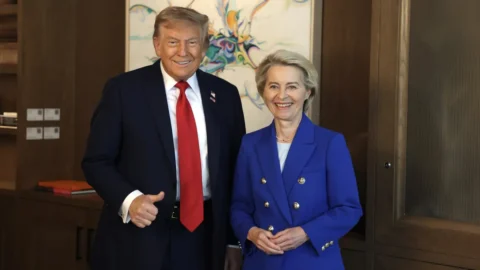
While waiting to evaluate the first real effects of the measures in the coming weeks, duties in force since last August 1st, both on direct exports to the United States both in relation to foreign orders that feed the large global supply chains, for theEuropean economy The main question remains: will it be possible to normalize relations with the White House? The risk, already anticipated by many observers, is that this profound expansion in Euro-Atlantic relations will trigger a process—perhaps even more dangerous—of political confusion within the European Union itself, caught between internal economic crises (France and Germany) and Eurosceptic parties that are gradually gaining ground in the Old Continent's democracies.
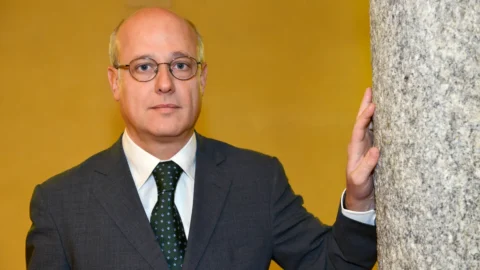
"The agreements announced on tariffs are still tentative, so there will likely be differences as the details are finalized. This concerns the rules for certain sectors, but also the issue of investment, given that the EU cannot directly decide what private companies do. It's important to keep in mind that the Supreme Court could invalidate almost all the agreements made so far, forcing the President to find a different mechanism to pursue his method of pressuring other countries," he observes. Andrew Spannaus, American journalist and political analyst, creator of the newsletter Transatlantico.info and became known for having anticipated with his books the transformation underway in the political balance of power in the United States and Europe.
When will relations between the two sides of the Atlantic return to normal after the shock?
There's a fundamental difference that will be difficult to overcome: the United States, with Trump or a Democratic president, has an interest in re-establishing relations with Russia, with the idea of not completely leaving the field to China. Indeed, for the coming years, the emphasis of American foreign policy is and will be on the Pacific. Europe must decide whether to stick with the Macron-Starmer-von der Leyen stance of open confrontation with Russia, or find a place within this new strategic reality, adopting a more realistic attitude.
Does this rift between Americans and Europeans have any effect on the internal political debate in the US?
Regarding Ukraine, there's a lot of talk about Europe's position, sometimes pointing out that the White House doesn't trust its allies, who seem to be trying to stall the possibility of an agreement, which is still considered too negative for Kiev. It's not the main issue, but those who follow international affairs know it's a crucial part of the ongoing diplomatic process. In the Middle East, Europeans are seen as disruptive, for example, with their statements in favor of recognizing a Palestinian state. Under this government, realism regarding Israel is struggling to surface in Washington.
How far will Europe go from the US to support Kiev?
Europe's path on the Russia-Ukraine issue is surprising. Previously, it was preferable not to completely close ranks with Moscow, so much so that it was pressure from Washington that pushed Brussels to a clear position. Now that America is changing, Europe is entrenching itself in its position. Brussels' rigidity is now legendary in many areas, but in this case there is a particular danger: Trump is certainly unreliable, but following the London and Paris line seems to exclude the principle of realism that will be needed to freeze the conflict.
The total unpredictability that Donald Trump has brought to US foreign policy is accelerating numerous processes of global political convergence. The world is reorganizing itself into blocs of influence that are partly, or entirely, alternatives to what until a few months ago was the Old West.
The creation of an alternative bloc to the West is part of a very long process, which began in the second half of the 1990s. Various factors have fueled it, from major financial policy issues to the numerous strategic initiatives implemented to defend the West's ability to project its influence on the global stage. In this context, Donald Trump is making the situation worse, given his inability to understand the deeper consequences of his actions. This is the opposite of what one might hope for from a President who prides himself on building relationships with other leaders rather than waging war.
China clearly dominates this new phase of global power realignment. I ask you: in light of these repositionings, does a weaker Europe, divided by internal political issues, really benefit the United States?
Europe's weakness doesn't stem from division. Quite the opposite: Europe is divided because it's weak in terms of substance. Aside from differences in strategic interests towards the East, a good example is economic policy: still anchored to a monetarist and market-oriented vision, it's unable to adapt to the new post-global scenario, that is, correcting the major errors of globalization. Forcing political unity to mask deep-seated problems is not a smart strategy. Genuine cohesion should be created through honest discussion of substance, rather than focusing on centralization as the solution to problems.
In this scenario, Germany must regain internal order for its industrial and economic machine. The Germans will undoubtedly direct part of their industrial strength toward rearmament. How does the United States view this scenario?
It's helpful for Germany to change its economic policy away from certain past obstacles, as it could open up space for broader change in Europe. From the perspective of ensuring Kiev's armaments, Germany's role will certainly be important, but there's no shortage of doubt among those who see German rearmament projected eastward. Jokingly, sending tanks through Poland to confront the Russians isn't entirely reassuring.
Still in Europe, France has in just a few weeks revealed a dangerous fragility in its public finances, so severe that it is even undermining the government's stability and will require very restrictive sacrifices for the French welfare state. Is the plan of those, both inside and outside Europe, who dream of detonating the Union by attacking its founding countries, coming true?
The explosion stems primarily from the obtuseness of European treaties and rules. A few exceptions aren't enough: we need to rethink the current system, designed for a world conceived in the 1990s as "the end of history": a facade of free markets and human rights that conceals structures that actually obstruct deeper democratic and popular change. Just think of the treaties being drafted without a popular vote, or the austerity imposed on the weakest countries to restore the finances of major banks. Europe will not be able to achieve what are legitimate goals without a real debate on its own mistakes.
Outside the EU, the United Kingdom also faces strained public finances and a sluggish economy. Is this a situation that truly threatens to overturn the European balance of power amidst the redefinition of transatlantic relations?
After a period of transition following the loss of its dominant role as a global empire, the British have landed in an economy skewed toward financial services. Here too, a decision must be made about the future: cling to the idea of being a global player in its own right or build a more solid identity in a new world. If the former option were chosen, potential allies would be wise to stay away.
Speaking of alliances being reconfigured, what are your thoughts on the impressive display of Chinese military might in the parade a few days ago?
China feels mature at this moment, ready to assert its role as an international player unwilling to submit to the West's demands. This is an understandable response given past humiliations and a consequence of the tremendous economic growth of recent decades. However, it poses a major problem: it represents a political system that, in our eyes, is unacceptable in terms of fundamental rights and rules. The question is whether we will be able to manage diplomatic and economic relations without subordinating them to military and strategic considerations. It won't be easy, but the alternative to coexistence and dialogue is a catastrophic war.
It hit the point of contact between India and China, something that seemed very distant until a few years ago.
For years, India has been at the center of a Western campaign to bring it over to "our side" in the strategic challenge with China. Trump has ignored the country's pride and independence, resorting to threats and pressure that could only provoke a counter-reaction. However, fundamental differences remain between New Delhi and Beijing, which will prevent a close alliance in the coming years. There is a crucial lesson to remember: the rest of the world no longer intends to submit to our conditions, which is why greater political realism will be preferable to an ideological position pursued with the bullying we are now witnessing in Washington.