The event kicks off on Monday 7th September First business-oriented mission organized by a European country to South America after the approval of the EU-Mercosur agreement: this is the Italian delegation led by Confindustria and promoted by the Institute for Foreign Trade together with the Italian Chamber of Commerce in the Argentine Republic and the Italian Chamber of Commerce of São Paulo – ITALCAM, and in close coordination with the Italian Embassies in Buenos Aires and Brasilia. The expedition, which will first stop in the Argentine capital Buenos Aires and then continue on to Brazil (first São Paulo, then Brasilia) by September 11, is involving 90 Italian companies. in the presence of the president of Confindustria Emanuele Orsini and the ministers Antonio Tajani and Giuseppe Valditara, as well as other representatives of the institutions.
With the EU-Mercosur agreement, Italian exports have already grown by 21,1%.
The mission opens a new phase in industrial relations between Italy, Argentina, and Brazil within the framework of the EU-Mercosur agreement, with the aim of transforming trade opportunities into a broader industrial partnership based on integrated supply chains, investments, infrastructure, innovation, energy, and skills. Moreover, the initial signs following the entry into force – not yet fully implemented – of the agreement with the four South American economies (in addition to Brazil and Argentina, Uruguay, and Paraguay) are encouraging: In May 2026, the first month of application of the Agreement, Italian exports to the bloc amounted to 745 million euros, up 21,1% compared to the same month in 2025. At full capacity, the potential of Italian exports to the area is estimated at 14 billion euros, with Brazil and Argentina representing over 90% of Italian trade with Mercosur: in 2025 Italy exported 5,8 billion euros to Brazil and 1,2 billion to Argentina.
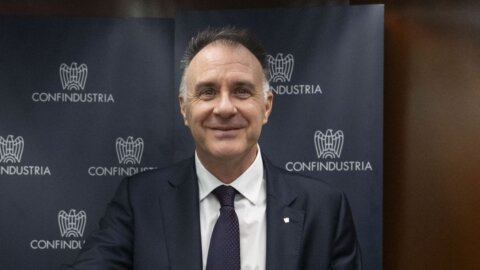
President Orsini: "We want to consolidate our presence in mature markets."
“In an increasingly complex and changing geopolitical scenario – commented the president of Confindustria Orsini -, diversifying markets means reducing dependencies and make Italian industry stronger and more resilient. We must consolidate our presence in mature markets, which remain strategic, and at the same time open up new opportunities for our businesses. Mercosur represents, in this sense, an area of great potential: we don't just want to export more, but also build industrial partnerships, investments, and common supply chains capable of generating growth and mutual value. The delegation led by President Orsini will focus on five areas: agri-food, machinery and plant engineering, pharmaceutical and medical, digital technologies and energy transitionAmong these, the most interesting in terms of growth margins could be the healthcare sector: to date, Italy is only the fourth EU exporter in this sector to Mercosur, while it is already the first for agri-food (which, however, before the agreement was subject to duties of 35%, the highest) and the second for machinery and electronic products.
Export figures for Italian-made medical devices
Exports of Made in Italy medical devices In Mercosur markets, it reached 108 million euros, with Brazil dominating the list, confirming its position as the largest market with over 75,7 million euros. These figures are set to grow if we consider the Brazilian market for medical devices and IVDs (in vitro diagnostics). is estimated at around 14 billion euros in 2025 and could reach 21,6 billion in 2032, with an estimated average annual growth of 6,4%. Added to these is Argentina, with a medical device market estimated at between €4,1 and €5,1 billion in 2025, and prospects for further growth in the coming years. Italy boasts a significant healthcare technology supply chain: over 4.600 companies, approximately 134.000 employees, €7,8 billion in production, and €5,1 billion in exports, which today already sees 117 Italian companies active on the South American markets.
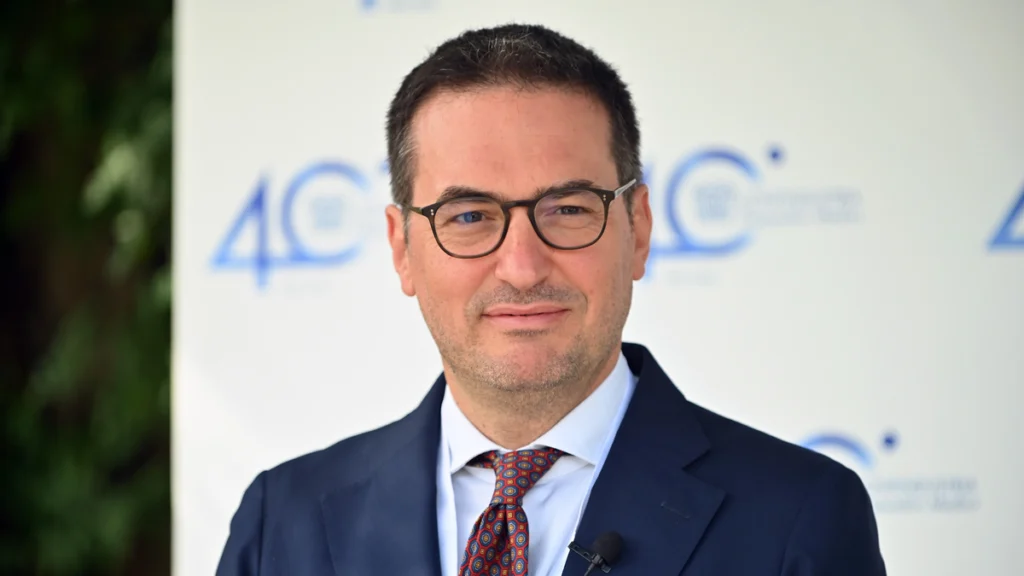
Beccagutti (Confindustria): "Mercosur is not just a market."
For the medical device sector, market opening could translate into new opportunities, especially in the fields of advanced diagnostics, digital healthcare, artificial intelligence, telemedicine, and healthcare IT. "Italy," he declared, Guido Beccagutti, General Director of Confindustria Medical Devices – brings one of its most innovative and strategic industrial supply chains to Argentina and Brazil: not just products, but technologies, skills, and manufacturing capabilities. We view Mercosur not simply as an outlet market, but as an area in which to build long-term industrial, scientific, and technological relationships. The EU-Mercosur free trade agreement can give new impetus to these relations, reducing barriers to trade and encouraging greater integration of supply chains. To compete on global markets, however, we must empower our companies to do so.
Here are three pharmaceutical companies participating in the mission
The Italian pharmaceutical sector delegation can be described by three companies. Bracco Imaging (already present in Brazil with Bracco Imaging do Brasil and in Argentina through Justesa Argentina, as well as in Mexico) is an Italian group specializing in diagnostic imaging, contrast agents, molecular imaging, and injection systems for radiology and cardiology. In Brazil, it has already invested €22 million and has obtained approval from Anvisa (the National Health Agency) for advanced diagnostic software based on artificial intelligence. Ebit is the Esaote company specialized in Healthcare IT and develops RIS, PACS and CVIS solutions for radiology and cardiology, as well as systems for telemedicine and secure clinical data management. Ganassini Institute It is an Italian company active in dermatological, ophthalmic, urogenital, and ENT devices: present in 60 countries but not yet in South America.