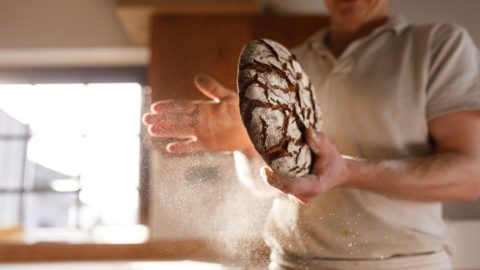
We all have to deal with the pandemic. The health emergency of the Coronavirus has forced Italy to remain closed at home. And how to spend our time? There are those who prefer to watch a film, those who read a book, those who, on the other hand, spend their time in the kitchen. Because if on the one hand the Coronavirus has taken away our freedom to go out, on the other it has given us the time to rediscover life in the kitchen, to experiment with recipes, even complex ones, never tried before due to lack of time. Among these is bread, the processing of which requires a lot of patience and concentration. In Italy there are about 250 types of bread that differ in shape, color and texture. From North to South. First&Food offers 7 bread-based recipes, from the traditional historic bread of the Neapolitan countryside, il pane cafone, that of the poor, by Carlo Di Cristo, to the refined French-inspired baguettes by Gabriele Bonci of the Pizzarium in Rome; from white bread with potatoes by Niko Romito, another tradition resurrected from history, typical of mountain areas that was born in ancient times to save flour, to Peppe Cannistrà's bread which in Ragusa Ibla he gave life to together with Ciccio Sultano, two Michelin star chef of the Il Duomo restaurant to a rediscovery workshop of the ancient flavors of bread. We then move on to Tuscany, which recently established a Consortium for the protection of Tuscan bread DOP, the sciocco bread whose crust smells of toasted hazelnuts while the flavor is 'silly' but not insipid since the types of wheat used, together with sourdough, give it a unique taste despite the lack of salt.
And since we are on the eve of Easter from the Malafronte bakery in Gragnano, 110 years of history behind it, a constant loyalty to the quality of the flours in the full tradition of the area that has never failed, comes the proposal of the Casatiello di Gragnano historical product of the Neapolitan cuisine typical of the Easter period whose name derives from the Neapolitan inflection of cheese (cacio, from which cas' and finally casatiello), the main ingredient of its dough, whose diffusion seems to have been attested since at least the seventeenth century. We therefore close in Puglia, in Altamura with Giuseppe Di Gesù's bakery, a tradition of experience in the production and marketing of artisan bakery products, started in 1838, under the reign of the Bourbons of the Two Sicilies as a small neighborhood oven, for cooking home made bread. The proposal is the very tasty focaccia di Altamura born as a variant of the traditional durum wheat bread by exploiting the strong initial heat of the wood-burning oven, before it stabilizes at the ideal temperature for baking the bread.
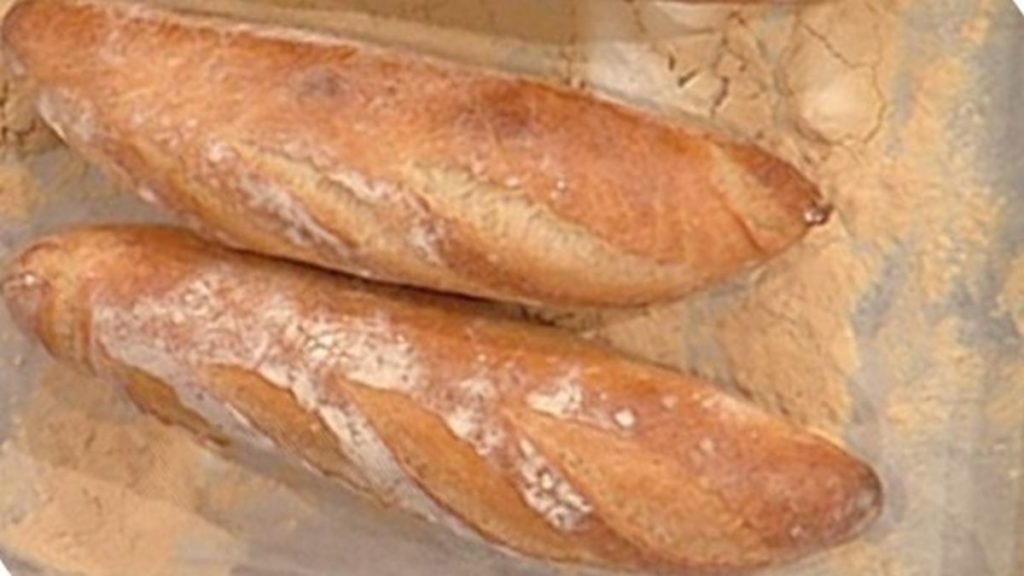
1. THE FRENCH BAGUETTE
Gabriele bonci, Roman pizza maker and chef, known for the show "Pizza Hero - the challenge of the ovens". In 2003 he opened the local Pizzarium, a stone's throw from San Pietro, achieving great success, so much so that he opened others around the world. The "king of pizza" offers a recipe for the French baguette, following the instructions of the master Piergiorgio Giorilli. Here is the official recipe step by step.
Ingredients for poolish (pre-dough): 1 kg of flour, 1 l of water, 1 g of brewer's yeast. For the dough: 2,3 kg of flour, 1,150 l of water, 15 g of brewer's yeast, 65 g of salt. First you need to make the poolish. In a large bowl, dissolve the yeast in the warm water. Then add all the flour by hand and then start kneading. Once the ingredients are well blended, cover with a cloth and leave to rest for 14-16 hours at 18°. When it starts to sag in the center, the dough is ready. At this point you need to mix the poolish with the flour, brewer's yeast and 80% water. Mix and halfway through the dough add the remaining water and salt. Leave, then, point the dough for 90 minutes. At this point break the dough into shapes of 330 grams each. Slightly squeeze the mixture with your hands to create short loaves and let it rest for 10 minutes. Then, create long loaves (60 cm) place them on a cloth and let them rest for another 90 minutes at 24°. Once the leavening time has elapsed, transfer the loaves onto a greased and floured baking tray and cut under the skin with a razor blade. Heat the oven to 240°, bake at 220° and place a saucepan with water on the lower part of the oven. Bake for 20-25 minutes, until golden brown.
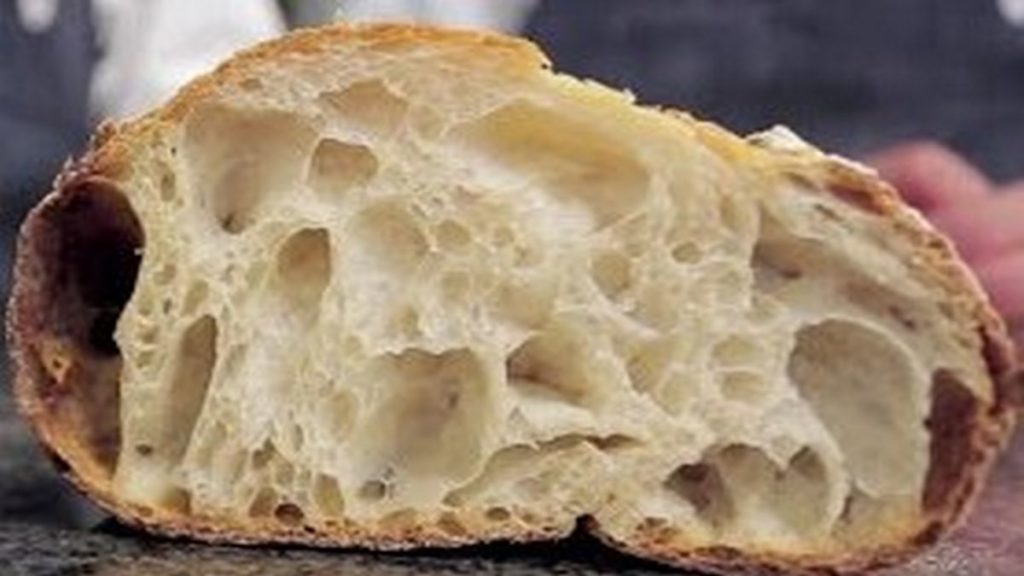
2. WHITE BREAD WITH POTATOES
Bread is also the symbol of the history and idea of cooking by Niko Romito, starred chef from Castel di Sangro, for years engaged in bread-making, leavening and fermented products. One of the most famous recipes is white bread with potatoes.
Ingredients: 500 g of TYPE 0 flour, 30 g of mother yeast, 14 g of salt, 280 g of water, 80 g of boiled potatoes. Procedure: first you need to cook the potatoes at a temperature of 100° with steam for an hour. Once cooked, peel them and let them cool. Then you need to prepare the sourdough: immerse the yeast in water at 35° with the sugar, so as to lose the acidity typical of sourdough. Wait for the yeast to emerge, then squeeze it to remove excess water and mix it with the same amount of its weight in flour and 40% of its weight in water. When the consistency becomes firm and elastic, let it rise for at least 3 hours. As for the bread, put the flour, yeast, boiled potatoes and part of the water in a planetary mixer. Turn the machine on low and knead until you get a firm and smooth dough. You have to add the water a little at a time, so that the dough absorbs it well and finally add the salt. At this point, take the dough with wet hands and leave it to rise for 12 hours, until it has doubled in volume. After the leavening time, lightly flour the dough and make loaves of about 500 g each. Leave to rise for at least 3 hours and then proceed with cutting. Finally, bake in a static oven for about 40 minutes at 240°, being careful to open the oven only halfway through cooking to allow the crust to form.
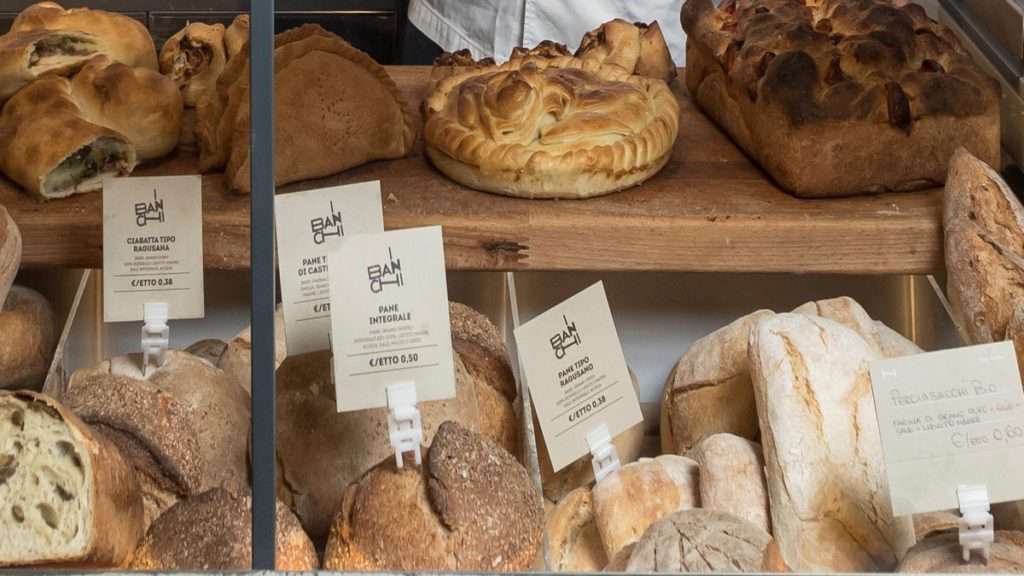
3. CASTELVETRANO BLACK BREAD
I Banchi – Pane al Pane are one of the most innovative formats in Italy: a bakery, a restaurant, a grocery store and, at the same time, a wine bar, by the starred chef Ciccio Sultan, which uses ancient and selected flours. One of the flagship recipes is that of black bread from Castelvetrano, mixed with three flours: Tumilia, Biancolilla and Rossello. Below is the Banchi recipe, but in a homemade version.
Ingredients: 15 g of salt, 500 g of flour for Castelvetrano Molini del Ponte, 500 g of TYPE 1 wholemeal flour, 60 g of bran, 30 g of oil, 800 ml of water and 10 g of brewer's yeast. First, dissolve the yeast with a little water at 23° and with 200 g of flour. Make a batter and after an hour mix all the ingredients, mixing liquids and flours separately, then combine everything and finally put it in the planetary mixer and mix. Leave to rest for at least an hour in a room at 25°. Once the rest time has passed, divide the dough in two and form the loaf, put the bran in a basin, and pass the loaf through it. Leave to rise for another hour. Finally, heat the oven to 250° with a tray inside. Once the temperature has been reached, unmold the loaf onto the hot pan, after 15 minutes lower the temperature to 200°. Continue cooking for another 50/60 minutes until the bread is ready.
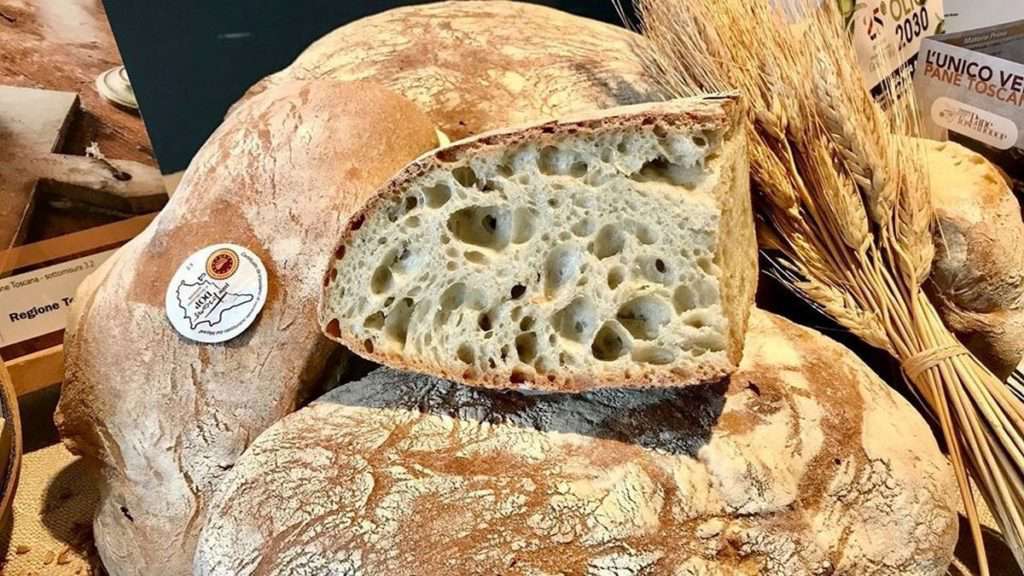
4. THE "TUSCAN BREAD" DOP
We arrive in Tuscany, proposing an ancient traditional recipe, subject to precise rules: the "Tuscan bread" (PDO), which involves the use of water, mother yeast and TYPE 0 soft wheat flour, containing wheat germ, but not salt. First you need to prepare the "biga", or also known as the first dough, which once ready will have to rest for at least 8 hours. To this end, the soft wheat flour 0 is mixed with water and mother yeast, according to the following proportions: at least 500 ml of water and 200 grams of mother yeast must be added to each kilogram of flour. The biga, which is used to multiply the refreshed natural yeast, water and the biga are added to the TYPE 0 soft wheat flour in the following proportions: for each kilogram of flour, at least 550 ml of water and at least 200 g of chariot. Once the dough is ready, let it rest for at least 20 minutes. We then proceed with the "size", i.e. the division of the dough into portions, followed by a rest period of at least 15 minutes and the preparation of the loaves. These are then left to rest until optimal leavening is achieved (not less than 3 hours), after which the pasta shapes are placed in the oven. At the beginning, cook for about twenty minutes at 230°, placing a saucepan of water on the lower level of the oven to help leavening. Then lower the temperature to 200° for another 20-30 minutes until the loaves are completely browned.
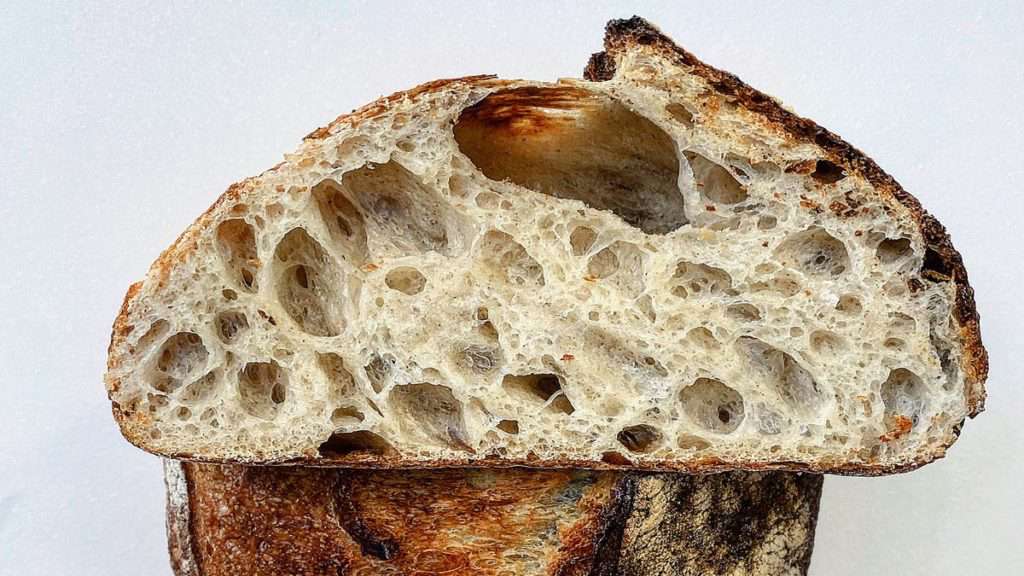
5. THE CAFONE BREAD
Pane Cafone, symbol of Naples and the South, was made with sourdough, now replaced by criscito, a carryover dough made with scraps from previous processes. Both processes give the bread a soft crumb, a crunchy crust and a slightly acidic note, characteristic of southern bread. Charles of Christ, professor of Zoology at the University of Sannio, and owner of Soul Grums in Naples, over the years has built his own stereotype of bread following the Neapolitan tradition, however alternating it with new combinations. Here is the recipe for Di Cristo's peasant bread.
We can divide the preparation into several stages. The first concerns the management of the liquid sourdough: refresh it with double the weight in flour and water, then keeping it at around 18-20° for about 10-12 hours. The second phase is autolysis, the technique that makes the dough elastic, smooth and malleable: with 300 g of re-milled semolina, 700 g of TYPE 1 flour and water. Then add water and flour and knead for 6/7 minutes and leave to rest for about an hour at around 24°. The third phase concerns the final dough, made up of 250 g of liquid yeast, 20 g of salt and 50 g of water. Start by kneading the yeast and salt until you get a smooth dough, then add the water gradually, until the dough is well structured. Leave to rise at a temperature of around 22-24°. The fourth phase is mass fermentation: put the dough in a lightly oiled container and mark the level. Once the dough has doubled in volume, it will be ready to be portioned (at 25/26°, 3/4 hours should be sufficient). At this point you have to dedicate yourself to the preform and the final shape. Turn the dough out onto a floured surface, without tearing it, and with a spatula divide the mass evenly and make the preform. After 15 to 30 minutes you can proceed with the final shaping. Finally, place the loaf in a floured basket and place it in the fridge for 12/18 hours. The last stage is cooking: cut the bread with a razor blade and bake at 250°. Leave the steam inside the cooking chamber for at least 10-20 minutes, depending on the characteristics of the oven. After the first 20 minutes, lower the temperature to 200/210°. Once ready, the bread must be cooled on the racks.
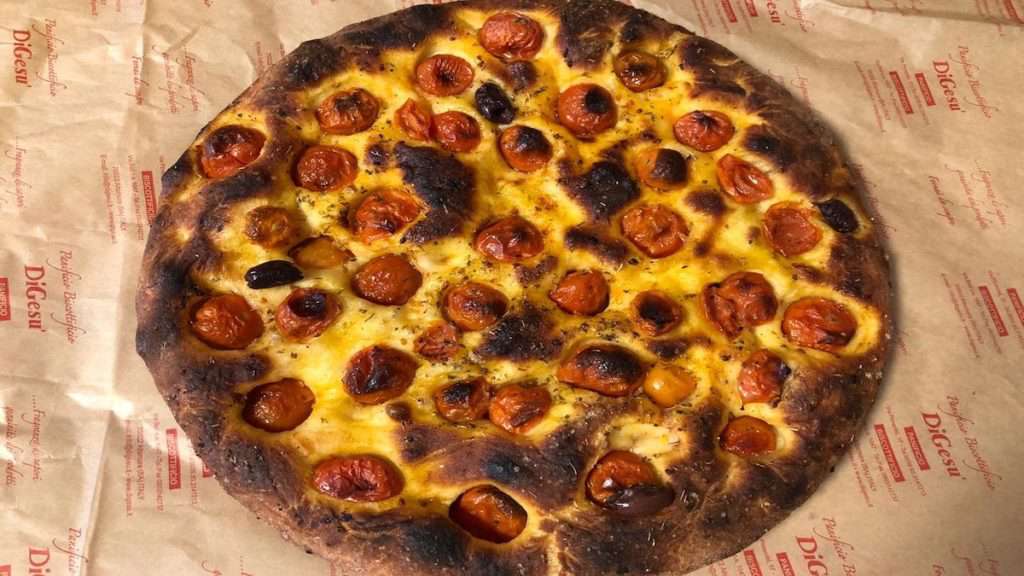
6. THE ALTAMURA FOCACCIA
Joseph Digesù born in 73, inherited from the family tradition the passion for bread and respect for the ancient recipes of the area, such as the DOP bread of Altamura and the traditional bread of the Alta Murgia, both produced with local re-milled semolina flour, sourdough and cooking in the wood oven. But the spearhead is the focaccia, seasoned with extra virgin olive oil, tomatoes, oregano, olives and salt. Here is the recipe.
IngredientsIngredients: 500 g of re-milled durum wheat semolina, 10 g of salt, 100 g of mother yeast and 350 g of water at about 24°. Dissolve the sourdough in water, add the semolina and salt, then knead to obtain a smooth and soft dough. Leave the dough to rest for about 90 minutes, then arrange the dough in a lightly oiled pan and dress it with tomatoes, extra virgin olive oil, oregano and olives. Leave to rest for another 30 minutes and bake at 220° for 41 minutes. Once cooked, the bread is ready to be served at the table.
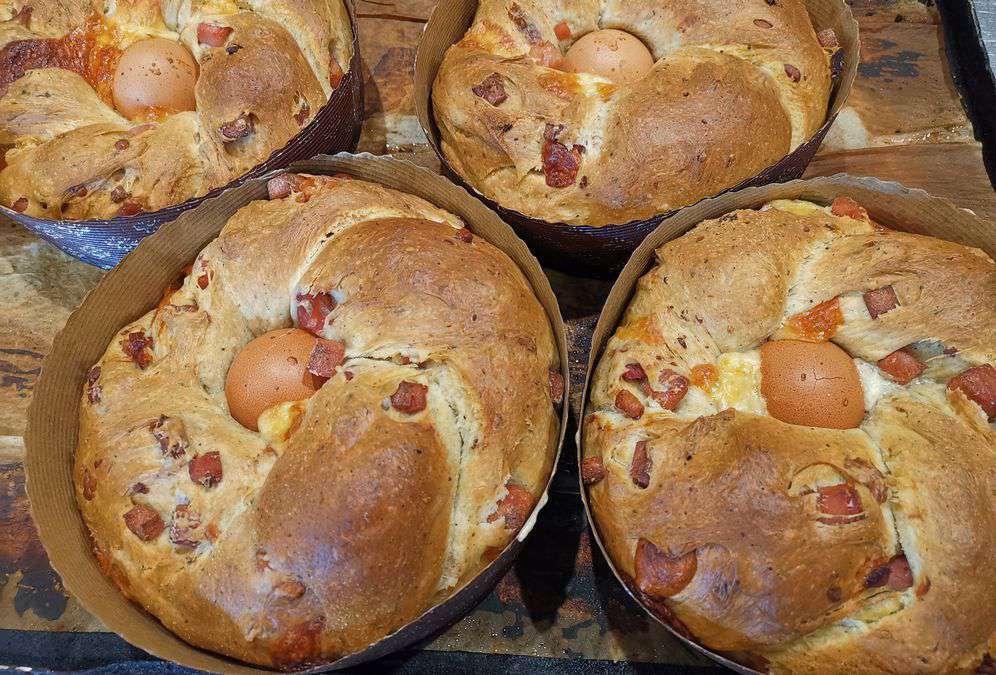
7. THE CASATIELLO OF GRAGNANO
Passion and dedication, craftsmanship and the best flours for special products are a source of pride for the Malafronte bakery in the center of Gragnano, the kingdom of Italian pasta known and exported all over the world. It all began with Giuseppe Malafronte, a creative man and great connoisseur of flour who founded the bakery business that bears his name in the last century. Today the Malafronte bakery is the custodian of production traditions that are rooted in history but it is also a laboratory of innovation. So next to Cafoncelli, homemade rye bread, semolina loaf, sourdough bread, we find Casareccio with fennel, panepetra, corn bread, kamut, spelled, cereals, Cereals & Chia
Ingredients: One kg of type 00 flour, 500 gr. of lard, 200 g of whole eggs, 200 g of natural yeast, 25 g of brewer's yeast, a pinch of ground pepper and salt, 2 and a half liters of cold water, 200 g. of Parmesan Reggiano or Grana Padano, 1,6 kg of mixed cured meats in cubes, 1,4 kg of cheese in cubes.
You begin to knead the flour, natural yeast, pepper, lard, brewer's yeast, half the eggs and half the water.
As the dough begins to form, add a little water and a little egg, alternating. Halfway through the dough, add the salt and the grated cheese, and slowly add all the water and all the eggs. When the dough is complete, smooth, homogeneous and elastic, add the diced salami.
After a few minutes, until they are all incorporated, the dough is finished, leaving it to rest for at least 70/80 minutes at room temperature.
After the dough has rested, portioning and initial shaping begin.
Rest for 30/40 minutes, after which you make all loaves and intertwine giving the shape of a donut and then insert the donut into the appropriate moulds.
After which they are left to rise in the heat for at least 3 hours or until the dough has reached the edge and then they are placed in the oven at a temperature of 230°C for 15 minutes, then another 40/45 minutes at 200°C making sure with a wooden toothpick that the heart of the casatiello is well cooked.