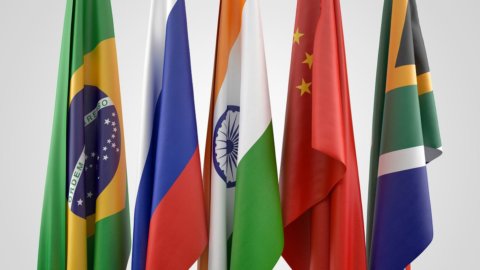
The BRICS are becoming the “others’” G7. The acronym that once referred to the 5 major emerging countries – Brazil, Russia, India, China, South Africa – has today become a real term geopolitical bloc to oppose the Western one. A new axis that, unlike the Euro-Atlantic one, includes more than 7 countries (there are already ten with the annexation of Saudi Arabia, Egypt, Iran, the United Arab Emirates and Ethiopia on 1 January 2024) and is destined to resemble a G20 rather, although some countries such as Brazil (and formally Russia itself) belong to both groups.
La BRICS version 2.0 it is therefore an enlarged universe even if divided internally by strategic differences (China and India, for example) to the point that there even exist The BRICS Sports Games, a sort of Universiade reserved for them which this year took place in Kazan, Russia, that is, in the country that could not compete under its own flag at the Paris Olympics. And always The next meeting will be held in Kazan from 22 to 24 October of the now former emerging countries, which today look more like an anti-Western club if one thinks of the presence of Russia, China, Iran and the candidacies of hostile countries such as Venezuela, Nicaragua, Cuba, Belarus and even Palestine, which would be recognized for the first time as having an official role with an evidently anti-Israeli function.
BRICS Towards New Digital Payment System to Break Away from the West
La Russian presidency of the conference, which will be little or not talked about in Europe, where we are obviously more focused on the American elections and at most on the G20 in Rio de Janeiro in November, is in reality of primary importance for defining international balances, to the point that experts consider it the BRICS “Bretton Woods”, as it aims above all to consolidate an economic and financial system alternative to the so-called "dollar-centric" one.
The BRICS are in fact developing a multilateral payment system in digital currencies, to separate themselves from global trade and facilitate a parallel one. Some interbank systems are already operational, such as the Russian SPFS and Iranian CPAM, which allow the two countries to settle 60% of trade with their currencies and not using dollars. There is also a project on the table a blockchain system, Brics Pay, which 159 countries would be ready to join and which would be the equivalent of the European SWIFT. This platform will allow Countries affected by international sanctions to circumvent them.
The BRICS are expanding
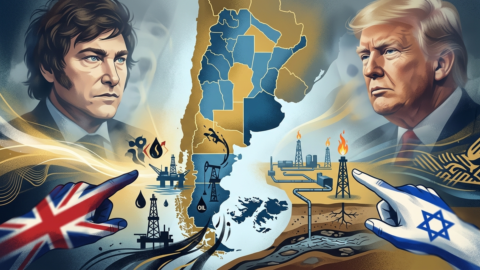
And last but not least, as mentioned, a further expansion of the group of members of the acronym will be evaluated, after theArgentina of Javier Milei, who has every interest in remaining tied to the dollar, declined the invitation last year.
In addition to those already mentioned, the following are also ready to come on board: Algeria, Azerbaijan, Bahrain, Bangladesh, Bolivia (which already has a privileged relationship with Russia due to raw materials), Kazakhstan, Chad, Congo, Eritrea, Honduras, Indonesia, Kuwait, Laos, Malaysia, Morocco, Nigeria, Pakistan, Senegal, Syria, Sri Lanka, Thailand, Turkey, Uganda, Vietnam and Zimbabwe.
Practically half the planet, and above all a huge slice of the global economy, given that already with the current composition The BRICS represent 46% of the world's population and 35% of GDP, that is, more than the 33% put together by the G7 members.
However, the concerns are for the democratic stability of many of these countries, and the fact that Washington does not look favorably on such a powerful group under Russian and Chinese leadership. The balancer, in the West's plans, should be the Brazil, which has always been linked to Europe and the US for cultural and economic reasons, but at the same time is China's main trading partner and which on major international issues, starting with conflicts, sometimes takes ambiguous positions, not condemning Russia for its aggression against Ukraine and openly siding against Israel. President Lula will be (or will send someone) in Kazan within a month and will then host the G20 in Rio, where he will be invited to clarify which side he is on in Risk.