It is the Petroleum, rather than chips, is leading the international markets this morning: with a slight drop in Brent, moving away from the one-month high, investors who have been holding on to the hope for mediation in the war in the Middle East, while in the background there still remain strong tensions between the United States and IranIn Asian stock markets, traders have returned to the great classics starting with the index Kospi South Korea is rebounding after the strong volatility of recent weeks. Attention is also on the new powerful wave of US quarterly earnings this week, including those of giants Alphabet, Tesla, Texas Instruments and Intel. Trump has promised to impose a new 50% tariff on some Canadian products. This morning the Nasdaq futures earns 1%, on parity the one onEurostoxx.
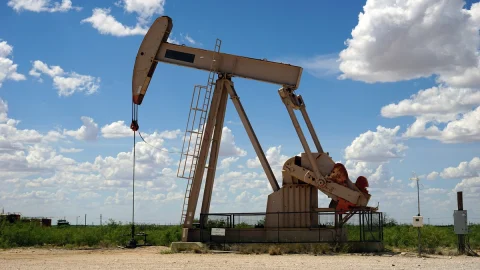
Hopes for a new ceasefire push oil prices down
- Yemeni Houthis, aligned with Iran, announced yesterday the imposition of a naval blockade on Saudi Arabia, opening a new front in the US-Israeli war against Iran and widening the threat to global energy supplies and trade outside the Gulf. However, a senior Iranian official said Reuters that the mediators presented Iran with a The proposal to ease tensions with the United States, which would include a 10-day ceasefire to find a way to restore the interim agreement reached last month. However, it won't be easy, as deep differences remain between Washington and Tehran, and Trump has threatened retaliation after the killing of several US soldiers.
Brent crude futures fell 0,74% to $88,56 a barrel, as investors clung to hopes of a resolution. In the previous session, Brent crude hit a one-month high of $91,42 a barrel. U.S. West Texas Intermediate (WTI) crude fell 73 cents, or 0,9%, to $82,50 a barrel, while the most active September contract fell 41 cents, or 0,5%, to $82,07 a barrel.
Wall Street fell slightly yesterday ahead of the second wave of quarterly results
Yesterday the three main indices of Wall Street closed lower, with investors awaiting signs of easing tensions in the Middle East and quarterly results from major technology companies due later this week. Nasdaq, strongly influenced by the technology sector, recorded a smaller decline (-0,05%) than the'S&P 500 (-0,19%) and others Dow Jones (-0,59%), thanks to the recovery of part of the losses suffered the previous week by the sector semiconductors and the growth of sectors such as services communication e technology, along with the titles energetic.
This week's second quarter data release will accelerate, with results expected from big names such as Alphabet, Tesla, Texas Instruments and Intel, broadening the picture that the earnings season offers of the health of American companies after a week of solid results coming mainly from the financial sector. Next week will be the turn of Microsoft, Meta Platforms, Apple and Amazon.com. According to data collected by LSEG, the markets they expect earnings growth of the S&P 500 index of 26% in the second quarter on an annual basis, up from the previous estimate of 23,7%. A rose 1,5%, providing the third-largest point boost to the S&P index after news that its unit Google is developing a server chip integrated with Gemini, aimed at improving the efficiency of artificial intelligence and alleviating computing power constraints.
To report Global Payments which gained 5,8% after Morgan Stanley raised the stock's rating to overweight and raised its price target to $100 from $65.
However the bearish bets Stocks on Wall Street are reaching record highs, reflecting concerns about the sustainability of a rally that has seen the S&P 500 jump 18% since the end of March. Short positions on the S&P 500 index are approaching 3,79% of the free float, the highest level in data tracked by S3 Partners LLC since 2010. For Russell 3000 companies, the figure recently rose to a record 6,3%.
Asia: The Kospi and Nikkei rebound. The Chinese government supports prices.
Le asian bags Stocks rose this morning for the first time in four days, thanks to investors' return to chipmakers. The MSCI Asia Pacific stock index rose 2,2%, with semiconductor giants Samsung Electronics (+ 6,1%) and Taiwan Semiconductor Manufacturing (+3,8%) who led the dance.
The reference indices in South Korea e Taiwan, barometers for artificial intelligence investment, both gained about 4%. Taiwan's economic growth could exceed 10% this year, according to the island's Economy Minister, Kung Ming-hsin, higher than the statistics bureau's latest projection of 9,64%. South Korea's exports reached a record high from July 1 to 20, with semiconductors growing 180,6% year-on-year to $22,11 billion, accounting for 40,3% of total exports. The Kospi is still down 19% in July but up 62% in 2026.
In China Hong Kong's Hang Seng Index is up 0,1%. Hang Seng Tech is up 1,8%. Shanghai and Shenzhen's CSI 300 is up 1,5%. Taipei's Taiex is up 3,4%. China, stepping up efforts to stabilize the stock market, has mobilized other state institutions. The latest sign of this momentum came yesterday, when the ChinaAmc Star50 ETF—the largest fund tracking the index—recorded 13,8 billion yuan ($2 billion) in trading, suggesting to observers that the state was behind it. Support is also coming from China's largest insurance companies, with at least five of them pledging to increase investments. China Life Insurance said its subsidiary has purchased over 10 billion yuan of stocks and funds and promised to increase its stakes in companies operating in new, growing sectors.
The Japanese stock index Nikkei 225 rose about 3% after entering correction territory on Friday. Last month, Japanese insurance companies purchased their largest volume of ultra-long-term government bonds in three years, reinforcing signs of stabilizing demand from a key buyer.
I US Treasury securities They held onto yesterday's losses. The rose 1% to around $4.050 an ounce. The Copper Consolidates 2026 gains (+9,6%), although the price remains below January's record ($13.625 versus $14.520). According to operators, data on Chinese copper imports, which show a nine-month high, have strengthened positive sentiment for the metal used in the energy and construction sectors.
La GBP remains in the spotlight after the decline recorded in the previous session, following the surprise appointment of the former Minister of Defense John Healey to Chancellor of the Exchequer by the new British Prime Minister Andy BurnhamThe latter declared yesterday that he would stick to the previous government's fiscal rules, while still making use of any flexibility within them. This was enough to cause a sharp fall in the pound and British government bonds that same day.
European stock markets saw a breakeven opening. At the Milan Stock Exchange, Monte Paschi di Siena, Unicredit, and Fincantieri are all eyes on the market.
European stock markets are expected to open at par. The Euro Stoxx 50 futures are up slightly, +0,1%.
Monte Paschi and Banco Bpm, According to Milano Finanza, could present an integration plan by August 6. MPS's board of directors is scheduled for August 6, with results due the following morning, while Banco BPM is expected to release its accounts on August 5.
Fincantieri Portugal will purchase three FREMM EVO frigates, Prime Minister Giorgia Meloni announced yesterday. According to a source familiar with the matter, cited by Reuters, the deal is worth approximately €3 billion.
Eni Var Energi will acquire Bluenord in a cash-and-stock transaction. Eni's stake in Var Energi will be diluted from 63,0% to 57,3%.
Leonardo The plan to have the new Gcap fighter enter service by 2035 will not change even if a new country joins the program, currently involving the United Kingdom, Italy, and Japan. This was announced by the CEO of Edgewing, the joint venture that will design the sixth-generation fighter.
Pirelli – Michelin data on the June tire market show a +3% growth in the Replacement (RT) segment and a -2% decline in the Original Equipment (OE) segment.
Prysmian – HSBC raised its target price to 175 euros, from 170 euros previously, with a Buy rating confirmed.
Stellantis – Named Matt VanDyke as the new CEO of the Ram brand and Branden Coté as the new CEO of Jeep.
Unicredit Fitch affirmed its ratings after the Commerzbank offer and stated that, if the acquisition were successful, the bank could be rated two notches above Italy's sovereign rating, and one notch higher than its current rating. UniCredit made the statement yesterday.