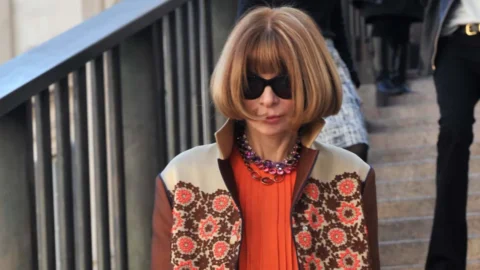
Anna Wintour leaves American Vogue: the icon who led the prestigious magazine for 37 years has announced his farewell to management. The news, leaked during an internal meeting and then confirmed by Condé Nast at New York Post, has quickly made the rounds around the world, leaving stylists, influencers and fashion enthusiasts with one big question: who will collect the inheritance of “Nuclear Wintour”?
Why is Anna Wintour leaving the operational management of Vogue America?
Le motivations officers remain confidential, but the context is clear: after nearly four decades at the helm, Wintour is aiming for a more strategic, less operational role. It’s not a retirement, but a far-sighted choice in an era of digital disruption and changes in the way fashion is communicated. “The greatest satisfaction is supporting a new generation of editors, helping them bring fresh ideas and a new, exciting vision of what a great media company can be. That’s the kind of person we’re looking for as the new head of content for Vogue Us,” she explained during the meeting.
Anna Wintour Remains Protagonist in Condé Nast and Global Vogue
At 75, 76 in November, Anna Wintour is not retiring, but is taking on a new strategic role. While leaving the operational leadership of Vogue America, she will maintain her position as global chief content officer di Condé Naste Global Editorial Director of Vogue, overseeing a media empire that includes titles such as Vanity Fair, GQ, Wired, Architectural Digest, Condé Nast Traveler, Glamour, Bon Appétit, Tatler, World of Interiors, Allure, Teen Vogue and Ars Technica.
Vogue Us’s new Head of Editorial Content will be responsible for the magazine’s day-to-day operations across all platforms, while Wintour will maintain a key, strategic role globally.
Who is Anna Wintour: From London Rebel to World Fashion Queen
Anna Wintour was born in London in 1949, into a family of publishers who immediately opened the doors to the world of communication for her. Already at 14 years old she challenged the school dress code with her iconic blonde bob and shortened skirt hems, marking the beginning of a style that she would never abandon. After initial experiences in the Swinging London, a short and turbulent passage to Harper's Bazaar in the USA (fired for her “too innovative” ideas), and a role as editor-in-chief at British Vogue, in 1988 he conquers the direction of Vogue America taking the place of Grace Mirabella. Her first cover – a model in $50 jeans and a $10 Lacroix sweater photographed by Peter Lindbergh – represents a true revolution in the fashion system: denim, until then banned from high fashion covers, becomes the protagonist.
Since 1999, Anna Wintour has been the director behind the scenes of the Met Gala, the most coveted and photographed event on the New York social calendar. Thanks to her, the Metropolitan Museum of Art gala has become a perfect mix of fashion, art and entertainment, capable of raising millions of dollars for the Costume Institute and dictating styles and trends. But Anna is not just fashion: her great passion is tennis. She has a private court in her villa and starts each day with a match at dawn. A regular at the US Open and the major tournaments in the world, she is a personal friend of champions such as Roger Federer, to whom he dedicated a moving tribute upon his retirement.
Anna Wintour, the (feared) face behind “The Devil Wears Prada”
Anna Wintour is not only synonymous with style: she is also one of the managers most feared and respected of the industry. Nicknamed “Nuclear Wintour” for her icy gaze and legendary perfectionism, she dictates the law with quick decisions and cutting comments: one of her “interesting” comments can kill a project in an instant. Her ability to balance innovation and tradition has made Vogue a global colossus and earned her the role of inspiration for the character of Miranda Priestley (Meryl Streep) in The Devil Wears Prada, film based on the bestseller by his former assistant Lauren Weisberger. Behind this implacable figure, however, lies a strategist who has been able to launch careers, support young talents and bring fashion into dialogue with pop culture.
Throughout her career, Wintour has received numerous awards, including the prestigious Dame Commander of the Order of the British Empire awarded to her in 2017 for services to fashion and journalism.
Who will lead American Vogue after Wintour?
With the throne of American Vogue vacant, speculation is running wild. The new leader will need to possess a rare mix of artistic vision, digital innovation, cultural sensitivity and a dose of healthy ruthlessness, in true Wintour style.
Condé Nast has already started the Search for new editorial director, and among the possible candidates stand out names such as Chioma Nnadi, current leader of British Vogue, appreciated for her inclusive and modern approach; Radhika Jones, director of Vanity Fair with a strong cultural vision; Edward Enninful, Vogue veteran known for revolutionizing the brand with a focus on diversity; Tom Ford, stylist and director, bold and creative hypothesis; and Gabriella Karefa-Johnson, a young emerging voice with a strong commitment to inclusivity.