Sixty-two years old and not hear them. The January 25th is a date which weighs in the history of sport and global industry: on this day of 1964 what is now the the world's most famous multinational sportswear company. At the time, however, Nike wasn't called that yet and it didn't even have a recognizable logo. It was thebeginning of a story made of intuitions, disruptions, visionary marketing choices and numbers worthy of a global giant.
When Nike wasn't Nike yet
It all began on January 25, 1964, when the track coach Bill Bowerman and the passionate middle-distance runner Phil Knight founds Blue Ribbon SportsThe initial idea is simple and, at the same time, revolutionary: import Japanese running shoes in the United States Onitsuka Tiger, produced by the company that later became Asics.
The first sales literally came from the trunks of cars, during athletics competitions. Within a few months, over 1.300 pairs of shoes were sold; by 1965, the figure had already reached 20.000.
In 1966 Blue Ribbon Sports opens its first store in Santa Monica, California, and the following year it expanded to the East Coast. It was a rapid growth, fueled by a market that was beginning to discover the value of technical running shoes.
1971, the turning point: name, logo, and identity
Il 1971 marks the point of no returnRelations with the Japanese partner are broken off and Bowerman and Knight decide to take the big leap: Nike, Inc. is officially born. The name is inspired by the Greek goddess of victory, Nike, symbol of speed and success. In the same year the famous "swoosh" also takes shape, the inverted, horizontal comma that will become one of the most recognizable logos in the world. drawing it is Carolyn Davidson, then a graphics student, for a fee of 35 dollars.
The new visual and symbolic identity accompanies the company in a phase of espansione accelerataThe headquarters was established in Beaverton, in the Portland metropolitan area, Oregon, where the group's headquarters are still located today.
From sport to legend: the bet on Jordan that changed everything
In the 1980s Nike makes the decisive leap from sports producer to global cultural phenomenonThe turning point has a name and a surname: Michael JordanWhen the young Chicago Bulls star entered the NBA in 1984, Nike was not yet the dominant brand in basketball. Jordan looked elsewhere, but the company decides to bet everything on him, offering him not only a sponsorship contract, but a tailor-made project. It's a counter-current choice, based on trust and a vision. Not just selling shoes, but tell the story of an athlete as a symbol of excellence.
From that intuition was born Air Jordan, a line that breaks the traditional mold of sportswear. The first Air Jordans are controversial, even opposed by the league for their design considered non-standard, but precisely that breakup fuels the mythThe result is an overwhelming success that redefines the relationship between brand and athlete and transforms Jordan into a global icon, well beyond the parquet.
In this context, the language that c also takes shapeenshrines Nike in the collective imagination. In 1988 comes the slogan destined to enter the history of advertising: “Just Do It”Coined by Dan Wieden, it was chosen by Advertising Age as one of the five best slogans of the 20th century and is now housed at the Smithsonian Institute.
The connection with Jordan wasn't just a sponsorship, but the founding act of a new sports marketing model. From then on, Nike consolidates its global image, building a pantheon of athletes and transforming the brand into a symbol of success, competition, and style. A successful gamble that, decades later, continues to generate value and legend.
Acquisitions and the Stock Market: The Birth of a Global Empire
Growth also comes from acquisitions. In the 2003 Nike buys Converse for $309 million, bringing the iconic Chuck Taylor All-Stars under its control. Followed by Starter and in 2004 Umbrian in 2008, both linked to the world of English football, before a rationalisation phase that brought the focus back to the group's main lines.
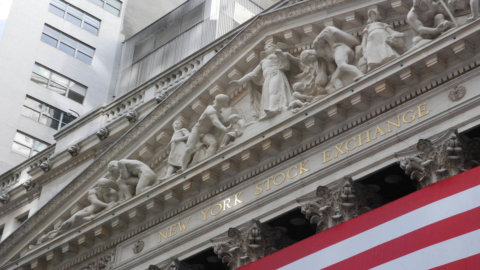
Listed on the New York Stock ExchangeNike entered the Dow Jones Industrial Average in 2013, replacing Alcoa. This was the definitive consecration as American blue chip, no longer just a sports brand but an industrial and financial giant.
Today's numbers and the shadows of the past
Today Nike is a multinational with annual revenues exceeding $50 billion, over 79 thousand employees worldwide and a Global presence that spans sports, fashion and lifestyle. It is the sponsor of some of the most prestigious clubs and national teams, the official supplier of championships and leagues, and a key player in NBA basketball, with record contracts like the lifetime one signed with LeBron James, estimated to be worth one billion dollars.
Alongside the successes, however, the The brand's history is not without controversyOver the years Nike has been hard criticized for working conditions in Asian factories and the exploitation of child labor, issues that have also entered public debate and been addressed in documentaries such as Michael Moore's "The Big One." These issues have accompanied the brand's rise and affected its reputation, prompting the company to introduce controls and monitoring programs.
Sixty-two years of continuous racing
From the trunk of a car to shop windows around the world, Nike turns 62 today, bringing with it a history that intertwines sport, business and pop cultureA race that began in 1964 and shows no signs of stopping, faithful to a slogan that, more than any other, has captured its essence: Just Do It.