There will be many new things at this year's International Antiques Biennial in Florence, and for the occasion Carlo Orsi's gallery will present a careful selection of ancient paintings and sculptures. Among the works on display, a “Madonna with Child and Saint Mary Magdalene” by Titian (1555-1560) stands out, as does a majestic panel by Frans Floris, “Susanna and the Elders” (1548), a “Self-Portrait” by Fra' Galgario (1715), the “Portrait of Etienne Michaux” by Louis Gauffier (1801) and a Coral Headboard with the Assumption made by Trapani craftsmen around the first half of the XNUMXth century.
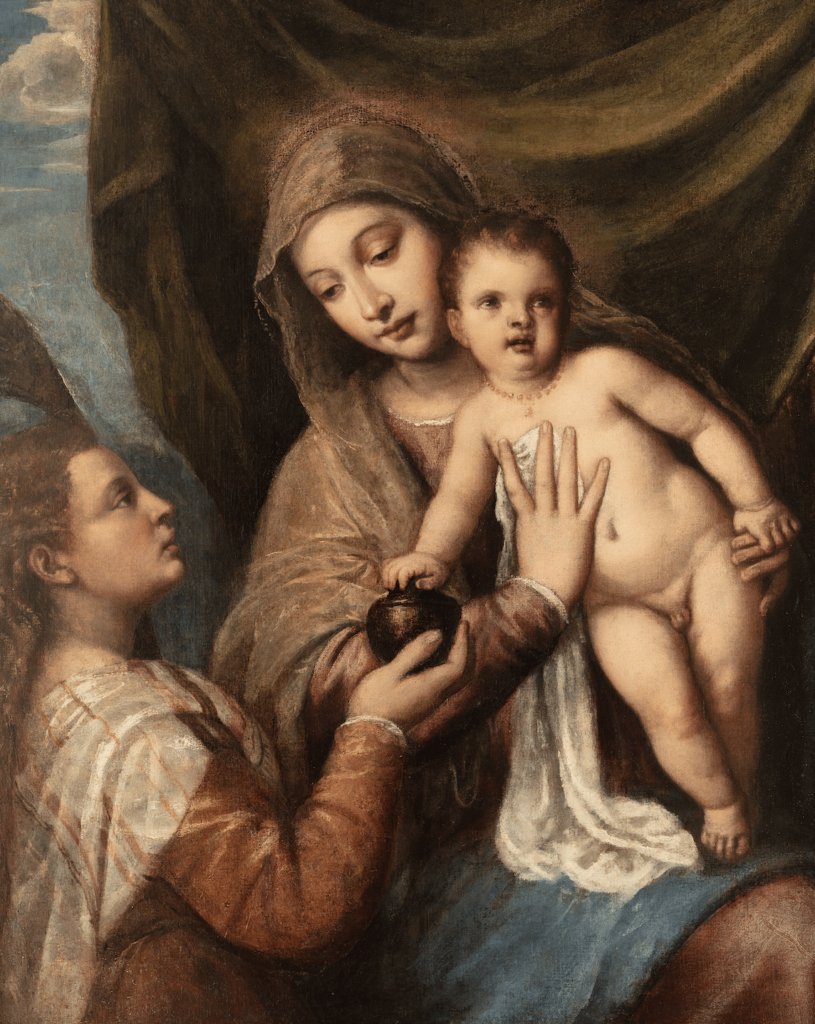
The painting by Tiziano Vecellio “Madonna and Child with Saint Mary Magdalene” datable between 1555 and 1560, from a private collection in New York, it was part of prestigious collections in London and Rome, as documented by Zeri in 1991. The work is distinguished by its refined composition and emotional depth, typical characteristics of Titian's mature period. The extraordinary quality of the execution and the excellent state of conservation of the surface make this canvas qualitatively superior to the versions with the same subject held in some of the most prestigious museums in the world, such as the Hermitage, the Uffizi Galleries and the Capodimonte Museum.
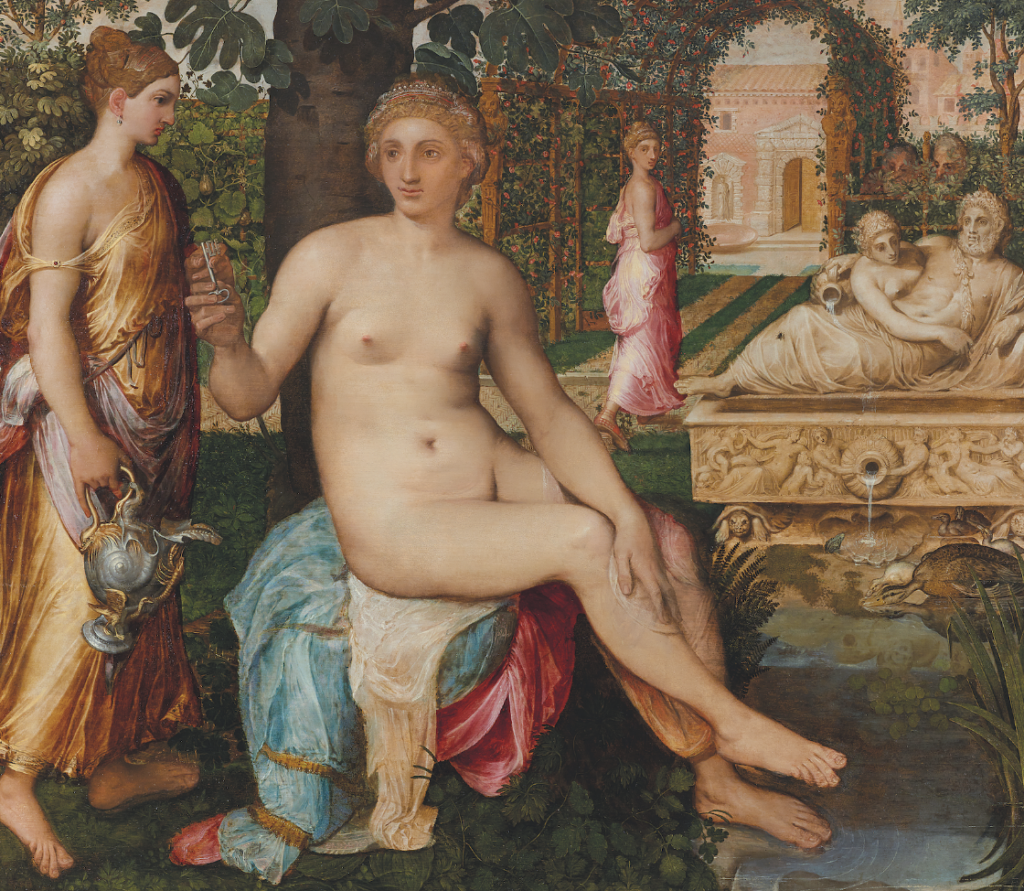
Among the works on display is a large panel by the Dutch Renaissance master Frans Floris: “Susanna and the Elders”. Dated and signed 1548, the work is one of the few surviving examples created by the artist after his return to his native Antwerp, following a long period of study in Italy. Floris has always been appreciated for his rendering of the nude and for his characteristic combination of an Italianate style, derived from Tuscan Mannerism, and Dutch painting technique. At the centre of the scene is Susanna, Joachim's young wife, about to bathe, unaware of the two old men spying on her from the bushes. Floris's work represents an effective fusion of two pictorial cultures that profoundly influenced the European Renaissance. Floris also introduces a novelty in the representation of Susanna's story, already explored by many of his contemporaries: this panel represents the moment preceding the climax of the story, involving the viewer in what is about to happen. The stand will also feature a “Self-portrait” by Vittore Ghislandi, known as Fra' Galgario, dated around 1715. The canvas portrays an elderly friar in a black habit and bare head, half-length, facing right, against a black background. Fra' Galgario depicts himself with white hair, but at a younger age than his more famous self-portrait held by the Accademia di Carrara in Bergamo, dated 1732.
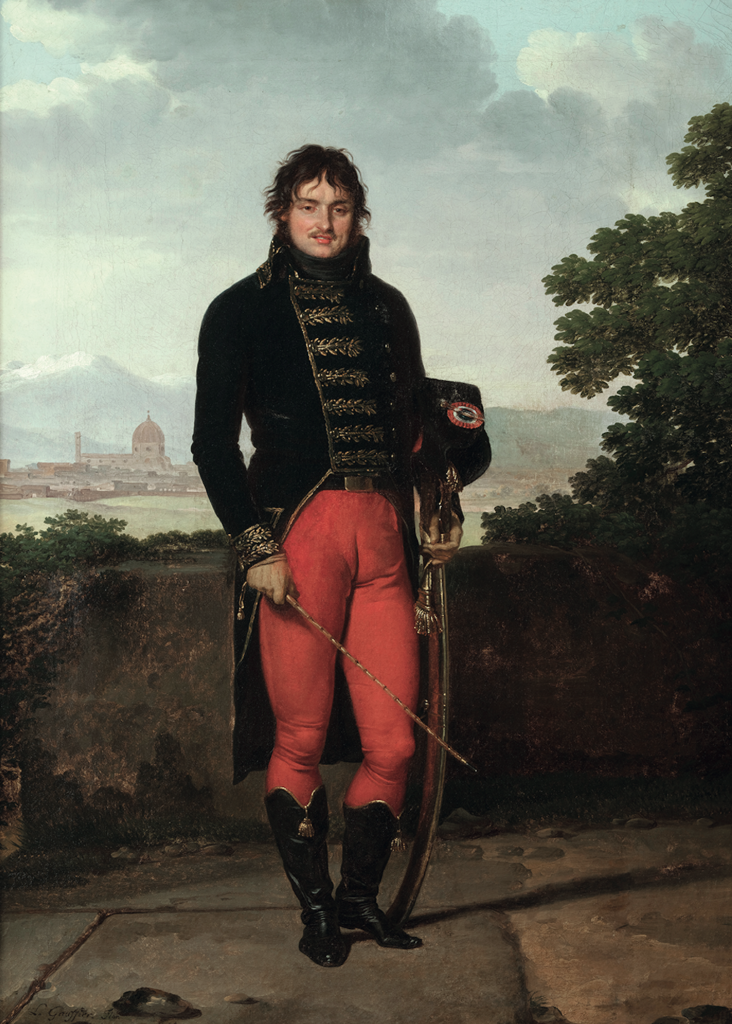
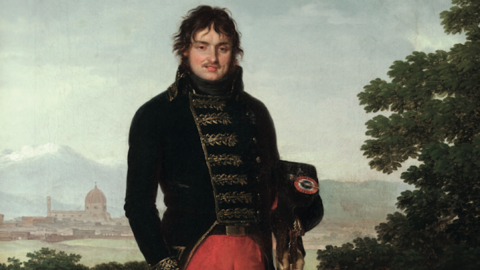
Another important work by a foreign artist, but in which the Italian stylistic influence emerges strongly, is the “Portrait of Etienne Michaux”, by Louis Gauffier. Dated 1801, it is one of the last works of the artist who died that same year. A smaller version of the portrait, probably a draft of the work done by the painter in Florence, is currently preserved in the Musée de Montpellier. The painting portrays the divisional commissioner Etienne Michaux, a member of the army general staff under Murat, in all his pride, on the terrace of a garden in the south-east of Florence. The dome of the cathedral rising against the Apennines in the background is clearly visible. As for Floris, Italy also played an important role in Gauffier's artistic development. In fact, the artist moved to the Eternal City in 1784, after winning the Prix de Rome. His stay in the Italian capital was forced to end in 1793, when he was driven out of the city by anti-French insurrections. The painter later settled in Florence, the city where he began to devote himself to portraiture.
A Trapani bedside in mother of pearl and coral
It will also be possible to admire a Headboard with the Assumption made by Trapani craftsmen around the first half of the 18th century. The work, probably commissioned by the Palermo Senate as a gift to an illustrious person, represents the ability now pushed to virtuosity of the Trapani craftsmen. The gilded copper support of the entire work is flanked by the floral scrolls of mother-of-pearl and coral of the external frame. In the center on a smooth background, surrounded by winged heads of cherubs, are the amber figures of the Madonna Assunta and two angels, surrounded by a gilded copper halo. The size, the refinement of the carving and the age of this artifact make it a unique example of its kind.
Carlo Orsi Gallery specializes in Old Master paintings, especially Italian, sculptures and art objects from the 14th to the 18th century and has become a point of reference for private collectors, art dealers, curators, auction house experts and art lovers from all over the world. It participates in the most prestigious art exhibitions and fairs in Europe and overseas such as TEFAF Maastricht, the International Antiques Biennial in Florence, Arte e Collezionismo in Rome, Modena antiquaria and Flashback in Turin. The Orsi Gallery also supports numerous museum institutions, It lends works and finances the publication of volumes, as well as compiling its own catalogues relating to studies carried out on specific works and artists.