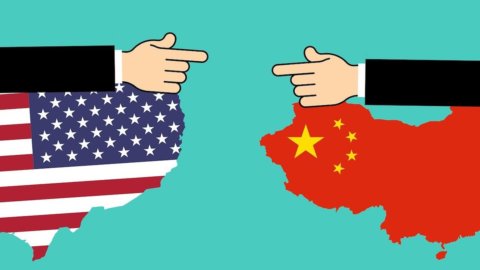
Both China is Usa "They would have economic advantages in maintaining trade cooperation, financial stability, and industrial integration. But both fear that this same interdependence could turn into strategic vulnerability. This is not just Washington's paranoia; it is in fact a well-known reality in Beijing." A report states this Gabriel Debach, market analyst of eToro, in the days when US President Donald Trump meets with Chinese leader Xi Jinping, highlighting how today the path between the two powers would be that of "competitive cohabitation: compete hard where needed, but manage points of friction with sectoral agreements".
US-China, Debach's analysis
“An olive branch disguised as clearly defined interests. The quote from the Thucydides Trap by Xi – underlines the analyst referring to the expression coined by the US political scientist Graham Allison in an article for the Financial Times of 2012 – it was not academic philosophy, but a strategic message to Washington and the marketsCompetition can be managed, as long as neither tries to stifle the other. Behind the diplomatic language, however, remain explosive dossiers: tariffs, Taiwan, semiconductors, rare earths. And above all a very delicate balance between what is best for businesses e what is convenient for the States"On the one hand, Debach observes, there is Trump's capitalist America, accompanied, not coincidentally, by a host of CEOs of major US companies, interested in preserving access to the Chinese market, supply chains, and economic returns. On the other, there is the logic of the strategic state, where immediate profit weighs less than national security, technological leadership, and geopolitical balance. Ultimately, CEOs look to the margins. Statesmen look to strategic dependencies."
US-China and mutual fears of strategic vulnerability
And it is here, explains the analyst, "that the US-China relationship takes on the contours of a gigantic geopolitical prisoner's dilemmaBoth powers would benefit economically from maintaining trade cooperation, financial stability, and industrial integration. But both fear that this very interdependence could turn into a strategic vulnerability. It's not just a paranoia of Washington, it's in fact a well-known reality of BeijingWashington fears that openness and globalization have accelerated the rise of a systemic competitor. Beijing interprets export controls, tariffs, and technological restrictions as attempts at containment. Thus, every defensive move is perceived by the other side as offensive.
US-China: The Monetary and Financial Confrontation
Critical minerals, batteries, renewables, electric cars and industrial supply chains, the analyst points out, "represent a front where Chinese dominance is already structural. But the confrontation has also extended to monetary and financial terrainThe dollar remains the center of the global system, but the push for de-dollarization promoted by Beijing, also supported by the expansion of Brics and trade agreements in local currencies, shows how competition is no longer just about manufacturing and technology. It concerns the very architecture of international economic powerAnd it is in this context that the theme of stablecoin, not by chance increasingly supported by the Trump orbit and by part of American finance".
But be careful, observes the analyst, "not to fall into the error of imagining Sparta (Washington) as the only one responsible for the tension, dealing Athens (Beijing) almost as a passive or innocent actor. Because Beijing is not only a victim of American containment. It is also a power that uses industrial leverage, control of supply chain leaders, commercial pressure, financial diplomacy, and geopolitical clout to expand its sphere of influence. Restrictions on rare earths, the posture on Taiwan (it was previously about Hong Kong), the implicit support for Russia, Iran and North Korea, the Brics strategy, the Belt and Road Initiative, expansion in the South China SeaAll these elements, from the American perspective, are not interpreted as simple "economic development," but as the progressive construction of an alternative order. And this is where the dilemma becomes complicated. For Washington, every Chinese advance is perceived as a systemic threatFor Beijing, every American attempt at containment is interpreted as proof that the United States will never truly accept a dominant China. Both interpretations fuel the spiral.”
US-China: What Does the Thucydides Trap Mean?
La Thucydides Trap, explains Debach, “it works precisely because neither side truly considers itself an aggressor. Both perceive themselves as defensive actors reacting to the other's moves. It's the prisoner's dilemma applied to global geopolitics. Thucydides Trap it is not a destiny, but a structural dynamic that manifests itself in different sectors with numbers, investments, tariffs and supply chainsToday's summit is a real test: if the deal business (chips, rare earths, EVs, agriculture), the trap is loosened. If technological paranoia and the Taiwan issue prevail, it tightens. Allison himself says that in the 16 historical cases examined, war was avoided four times. This is why "today the way forward is, precisely, competitive cohabitation."