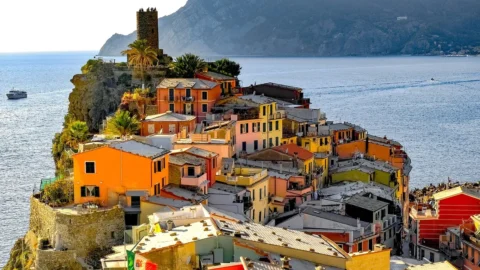
Le Cinque Terre have become a symbol of mass tourism, where the charm of the villages overlooking the sea clashes with the invasion of hit-and-run visitors. In particular, according to when reconstructed by Corriere della Sera, these villages, once quiet and authentic, are now overwhelmed by an incessant flow of tourists who crowd the streets, take a few photos, eat quickly and leave, leaving behind a trail of chaos and overcrowding, (as happens in many other Italian and European locations). A particularly critical problem is the high crowding of small villages: last year, the 4 million visitors were concentrated in an area of just 1 square kilometre, which represents only 3% of the entire national park.
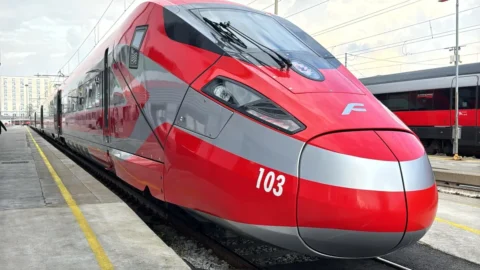
Most tourists come in train, but thousands of passengers per day are also transported by ferries from cruise ships moored in La Spezia. This massive influx is transforming local tradition, once represented by historic shops and authentic flavours, into a scene dominated by chip shops and souvenir shops. As a result, historic centers have turned into mass tourist attractions.
I residents, now helpless spectators, see their daily lives turned upside down, with increasingly crowded trains and accumulating delays, while tourism, rather than enriching, seems to impoverish the authenticity of the territory.
Mass tourism crushes the Cinque Terre: the solutions
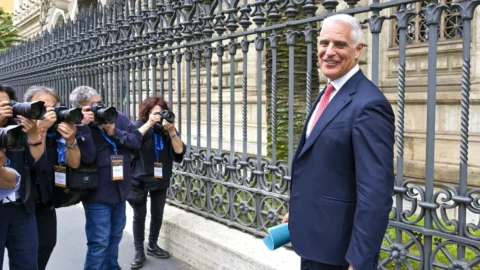
The Cinque Terre Park, led by Donatella Bianchi, is looking for others Industrial to stem this pressure. Among the initiatives already underway is the introduction of a limited number of participants for visitors to the Via dell'Amore, reopened on 27 July 2024 after years of safety works. To access the route you need a reservation and the Cinque Terre Card, which not only allows access to transport and park services, but could become a key tool for managing the tourist influx and encouraging alternative, equally fascinating itineraries. The Cinque Terre Card has a cost variable: from 7,50 to 15 euros for the daily trek and from 19,50 to 32,50 euros for the train during the high season, with a supplement of ten euros for the Via dell'Amore.
Among other measures adopted, the Biennial Digital Plan, developed with Mic Hub. This plan uses drones and people counting totems to monitor tourist flows to the various paths of the Park. Furthermore, a flow regulation system is coming, similar to asemaphore“, which directs visitors to less crowded villages when necessary. The data will be updated in real time on a smartphone app. All data and images will be updated in real time via an app on visitors' smartphones.
Furthermore, a has been established Limited traffic zone (Ztl) in the waters of a marine protected area of the Cinque Terre to reduce noise pollution, allowing only navigation with electric boats. Within three years, all boat rentals will have to comply with eco-sustainability and noise reduction standards, marking an important step towards greater sustainability.
Rethinking tourism: a sustainable future for the Cinque Terre
The idea is to rethink tourism in the Cinque Terre, moving it from fast and superficial consumption to a deeper and more respectful experience. This does not mean closing the doors to visitors, but rather inviting those who arrive to truly discover the area, its hidden paths, its traditions and its history. In this way, it is hoped to prevent these charming villages from becoming victims of their own success, while protecting the daily lives of residents.
The future of the Cinque Terre depends on the ability to find a equilibrium between welcoming tourists , conservation of a heritage that belongs to everyone. A balance that requires courageous choices, such as limiting commercial activities that do not respect the local identity and encouraging those who decide to stay longer, immersing themselves in the true essence of these places. The risk, otherwise, is that Cinque Terre, rather than being a model of sustainability, becomes an example of how mass tourism can destroy what makes a place unique and special.