While the US presidency winks at climate deniers, even a country historically among the world's three largest oil producers, Saudi Arabia, is aiming to become a clean energy powerhouse as well. To do so, it has chosen an alliance with the United States' great rival, China, which is increasingly gaining the trust, investment, and interest of the "disillusioned" Western world, who in times of tariffs and geopolitical hostility are now looking East. The latest evidence of this orientation, even from the Arab world, is that several Saudi companies, including the utility giant ACWA Power and a subsidiary of oil giant Aramco, signed power purchase agreements a few days ago for clean energy projects with a monstrous capacity of 15 gigawatts (enough to power a metropolis like Milan), and total investments worth approximately $8,3 billion, according to the state-run Saudi Press Agency (SPA).
Oil remains central, but green projects are growing
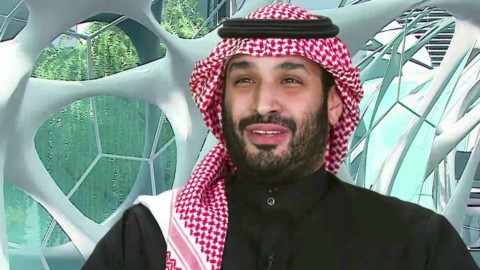
Specifically, ACWA Power has signed seven contracts as the lead developer, in partnership with Water and Electricity Holding Co. (Badeel), owned by the Saudi Public Investment Fund (PIF), and Aramco Power, a division of Aramco. The projects include five solar photovoltaic plants in the cities of Aseer, Medina, Mecca, and Riyadh, and two wind farms in Riyadh. Saudi Arabia is no slouch when it comes to energy transition: Prince Abdullah Moḥammad bin Salmān Saudi Arabia already announced last year that it aims to reach 130 gigawatts of renewable capacity by 2030. While oil production remains crucial to the Saudi economy, the kingdom is investing in other forms of energy, with the ambition of becoming a global powerhouse in the clean energy sector as well. And it has the potential to succeed, given its financial resources and a climate perfectly suited to photovoltaic power, with a territory bathed in intense sunshine virtually year-round. Furthermore, Saudi Arabia is virtually entirely desert, with few urban and agricultural areas, and countless hectares could be dedicated to solar energy production.
Photovoltaics in Saudi Arabia: current status and prospects
Currently, clean energy still represents a negligible amount of electricity generation in Saudi Arabia. However, the country plans to rapidly build solar parks. Sudair megaproject For example, it represents one of the largest efforts to diversify its energy mix: it could power 185.000 homes and is the first of many large-scale projects planned to increase generation from renewable energy sources, including solar and wind, to around 50% by 2030. The Saudis not only have the funds to expand rapidly, but they are also exempt from the lengthy permitting procedures that inhibit such projects in the West.
The axis with China
And then there's the strait relationship with China, which is an important factor, given that the country supplies much of the country's renewable energy equipment. In August 2024, China Energy Engineering signed a $972 million contract to build a 2 GW solar park in the country, along with partners such as PIF, ACWA Power, and Aramco Power. Meanwhile, JinkoSolar and TCL Zhonghuan signed multibillion-dollar deals—worth $985 million and $2,08 billion, respectively—for solar cell projects in Saudi Arabia. The kingdom is betting that abundant, low-cost electricity can attract energy-intensive sectors such as steel. ACWA is helping to build what will likely become the world's largest green hydrogen plant, with the aim of exporting it to Europe and other higher-cost destinations.