How to turn four days of celebration into a colossal business. It is the famous Rio de Janeiro Carnival that generates an enormous flow of money every year, the equivalent of what can only move the organization of a football World Cup. After all, the Municipality of Rio estimates that at least 850 tourists will arrive in the city, of which around 250 from abroad. But the predictions could turn out to be much more positive, if the trend of recent years is confirmed: last year, for example, 740 tourists were expected, but in the end one million arrived.
To make a comparison, in 2010, the tourists who visited South Africa during the four weeks in which the World Cup was played, were just over 3 million. Rio in just four days will receive a third. A deal that according to the most negative forecasts is worth 350 million euros, but which can even exceed 500 million, according to the city's tourist agency. Estimates, reported by the Valor Econômico newspaper, predict that 32% of tourists' expenses will come from transport, 29% from food and the remaining 29% for events and shopping.
Hotels and hotels will be full and finding a free room will be a real challenge: 96% of the rooms are expected to be occupied, when the seasonal average is 83%. A percentage similar to that of 2011, but with the difference that this year hotels will collect much more since the prices of holiday packages have increased by an average of 17,6%.
The consequence is that not only the most noble districts of the city will be invaded by tourists, from Leblon to Copacabana via Ipanema, but also Botafogo, Santa Teresa and Flamengo which have more accessible prices. If the Rio Carnival has always aroused the interest of foreign tourists, in recent years even the cariocas have begun to re-evaluate the most important party of the year.
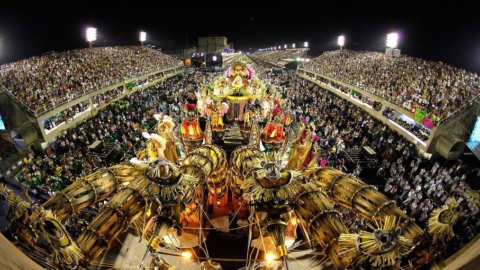
In fact, until about ten years ago, the inhabitants of Rio preferred to spend their holidays outside the city. Today the cariocas prefer to crowd the famous sambódromo Marques de Sapucaí or take to the streets and dance behind the floats that pass through the city. Indeed, the Rio de Janeiro Carnival offers several options for tourists. The parades inside the sambódromo are the most characteristic, but only a part of the public has the opportunity to attend them: places are limited (the sambódromo is able to accommodate up to 70 people per evening) and the prices are not affordable poorer than the population.
That's when it's always there the possibility of accompanying the blocos de rua, carts that blare carnival music and that cross the city during the day and night: this year they will be well 425. Parades born spontaneously, today they are an integral part of the business and attract 5 million people who dance, drink and have sex: to get an idea, the Ministry of Health will distribute 3 million condoms in the next few days.
But the real goose that lays the golden eggs have become the samba schools. To make the colorful costumes, build the floats and organize the parades, they spend no less than 2 million euros every year. But on the other hand they will collect this year, all together, 30 million deriving from the sale of tickets, TV rights, merchandising and costumes which, for hundreds of euros, are rented to tourists who want to experience the thrill of parading on the catwalk.
For some years now, the fashion show business has also moved outside the sambódromo. At least 50 people will attend the performances of 40 other schools, so to speak of "second division", which will be held in the northern area of Rio. In the city the madness of Carnival has begun: for four days, 6 million cariocas and one million tourists will live without any worries. And in a week many will also have made a good deal.