For those who are in Paris during the summer break and wanted to go and visit the Louvre it is an unmissable visit. However, due to the museum's popularity, it is busier on weekends, so it is recommended to enter during the working week from midday and perhaps also take advantage of the evening opening. With all its collections, its history and fame make it the most visited museum in the world.
The Louvre, once a royal palace, bears witness to eight centuries of French history. Since his foundation since 1793, the museum had to be universal. Her collections, among the most beautiful in the world, span several thousand years and an area extending from America to the borders of Asia.
The Louvre began as a fortress with thick defensive walls, built in 1190 during the reign of Philip Augustus
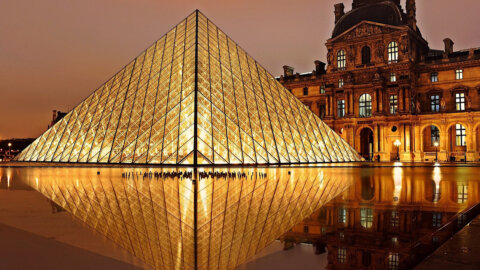
It became a royal residence in 1364 and was modified over the centuries according to changing royal styles and preferences. The Grande Galerie was built between 1595 and 1610, during the reign of Henry IV. In 1791, during the French Revolution, it was decreed that the Louvre should become an arts museum. The Muséum Central des Arts was inaugurated in 1793 and thereafter the palace was increasingly dedicated to museum collections and their display to the public. Dfrom 1981 to 1989, the Piramide project he focused on putting visitors at the center of the museum and its collections.
- The Department of Islamic Art was inaugurated in 2012.
- The opening of the new rooms of the Department of Byzantine and Oriental Christian Art is scheduled for 2027.
The Louvre is a universal museum with nine curatorial departments
Egyptian antiquities; Antiquities of the Near East; Greek, Etruscan and Roman antiquities; Paintings; Sculptures; Decorative art; Prints and Drawings; Islamic art; and now Byzantine and Eastern Christian art. Around 30.000 works of art are on display, including world-famous masterpieces such as the Winged Victory of Samothrace, the Seated Scribe, the Winged Bulls of Khorsabad, the Mona Lisa and Michelangelo's Slaves, and parts of the palace, such as the Napoleon III Apartments are works of art in themselves. Opposite the palace are the Tuileries Gardens, built in the Renaissance era by Catherine de' Medici, and a few kilometers away, in the heart of Saint-Germain-des-Prés, there is another museum managed by the Louvre – the Musée Eugène - Delacroix, housed in the painter's last apartment.
All the numbers of a great museum
The collections
- More than 30.000 works of art exhibited out of almost 500.000 preserved by the museum
- 9 departments: Antiquities of the Near East; Egyptian antiquities; Greek, Etruscan and Roman antiquities; Islamic art; Decorative art; Sculptures; Paintings; Prints and Drawings; Byzantine and Eastern Christian art
- Nearly 30.000 works on long-term loan across France
- Around 10 temporary exhibitions per year
Visitors
8,9 million visitors in 2023,
- 32% from France
- 13% from the USA
- A large number of visitors from Europe (Italy 7%, Germany and the United Kingdom 5%, Spain 4%)
-51% under 30 years - 40% benefited from free entry
Staff
2.213 employees work at the Louvre Museum
- 69 curators
- 9 department directors
- 254 curatorial staff
- 103 employees in the museum laboratories
- 1.285 reception and security staff
- 52 firefighters on duty 24/24
Il Palazzo
- 244.000 sq m of flooring
- 3.000 meters of facade (total length, including courtyards)
- 70.000 mXNUMX of exhibition space
- 403 rooms
- 14,5 km of rooms and corridors
The pyramid
- 603 diamond-shaped and 70 triangular glass segments
- 21 meters high and 34 meters wide at the base
- 95 tons of steel, 105 tons of aluminum
The Napoleonic Court
- 28.000 square meters of surface
- 650.000 sandstone and granite pavements