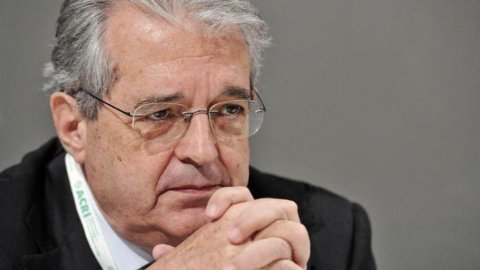
Speaking in the Senate, the Minister of Economy, Fabrizio Saccomanni, ruled out corrective measures, declaring that the trend of Italian public finances in the first half of the year "is consistent" with the objective of maintaining net debt at 2,9% of GDP in 2013.
“The absence of tensions on the revenue side – continues the minister – is an important sign of the stability of the public finances, although a definitive assessment will be possible when we have the complete picture of the payments of self-liquidated taxes.
“We intend to respect the objective of keeping the deficit within the threshold of 3% of GDP. Interventions to support the economy in addition to those planned can only be implemented if resources are found that allow budget balances to remain unchanged”, adds Saccomanni.
An example of these additional resources to support the economy was provided today by the Minister of Economic Development Flavio Zanonato, speaking at the assembly of the National Order of Engineers, underway in Brescia.
“In 2014 we will be able to launch new public investments for 16 billion, thanks to the 7,5/8 billion deriving from the exit from the European procedure for excess deficit, which will be joined by another 8 billion from European structural funds. In this way we will be able to aim to restart Italy ".
To "get Italy moving again", in the action plan outlined by the Minister, there is also the payment of the 40 billion that the Public Administration owes to supplier companies, made possible by the exclusion of this money from the calculations of the deficit. The timing sees payment flows of 20 billion this year and as many next year: "this will allow us to pay all the debts of the PA by 2014" continues Zanonato.
The latest measure envisaged in Brescia concerns the elimination of traceability for non-hazardous waste, which according to Zanonato's estimates weighs on the economy by 1 billion euros. “We want to eliminate the tracking of non-hazardous waste, the Sistri system, with which we have gone beyond the requests that came to us from European standards. The current system is a burden and entails costs of 1 billion a year” concludes the Minister of Economic Development.