Karlheinz Brandenburg, this is the name of the person who, among all, can be considered the father of the Mp3 compression algorithm. The story of the “Moving Picture Expert Group-1/2 Audio Layer 3” begins in the XNUMXs in Erlangen, Germany, when Brandenburg's thesis supervisor – Professor Dieter Seitzer – was trying to explore the possible uses of ISDN telephone lines , which were themselves new. In particular, Seitzer had focused on the transmission of audio files and had thought of commissioning Brandenburg to do some research. Brandenburg imagined a new way to encode and compress the signals to be transmitted, using a “psychoacoustic mask” system. In fact, when you listen to music, the louder sounds mask the softer ones. Brandenburg's approach was to exploit this principle to transmit different musical frequencies at different levels of accuracy, almost eliminating inaudible sounds.
Meanwhile, in Italy, the electronic engineer Leonardo Chiariglione he promoted a group of international experts with the aim of standardizing a format for digital video applications. The group, known as “Moving picture expert group” (Mpeg), in December 1988, published a “call for proposals”, i.e. a request to present proposals to complete the audio part of its video coding. From these proposals three different audio compression algorithms were derived, called “layer I”, “layer II” and “layer III”. While the first two merged into the same standard, the third layer was the one in which Brandenburg participated, as a doctoral student of the research institute Fraunhofer (partnered together with some private companies such as AT&T, France Télécom and Thomson Consumer Electronics). The standard was finalized in 1992 and, for some time, remained a tool for professionals. Its main application was the compression of audio files to transmit recordings between studios. A system certainly appreciated by the technicians who worked in radios, also because it was enough to use the encoder to obtain a file "mp3” that respected the standard suitable for transmission via the Internet. Compression and decompression was a very easy operation and all in all very quick. Despite this, MP3 was repeatedly rejected by companies in the sector and major investments were diverted towards other formats developed directly by the big tech companies of the time. Furthermore, the first versions of the algorithm produced a sound that made the trained ears of many record companies turn up their noses, especially when they wanted to obtain a file that took up very little space in terms of bytes.
At this point, Brandenburg took the initiative to have complete software created, that is, something capable of compressing the audio source, reading it directly in the new format and therefore also "going back" to the file that had generated the mp3, clearly with a loss of information (all audio frequencies cut). The consortium of which the Fraunhofer Institute was a part, at that point, made the mistake – we can only say it now – of putting the software on sale on the Internet; that is, it could be purchased by anyone, online. The final “fortune” of the mp3 was therefore a computer fraud: an Australian student, using a stolen credit card, bought the software, transformed it a bit and redistributed it for free. It was aillegal action, but it was exactly the operation that was replicated by several American university students who, in 1997, could count on Internet connections that were much more powerful than those that existed at home. Young people all over the world began to use that software to generate audio files that could be shared on the Internet based on their small occupation of digital space. From that moment on, the various sharing software peer-to-peer audio (and, later, video) files as Napster, eMule, LimeWire, Ares, Songr, up to Torrent technology. The major record companies managed to stem the phenomenon of sharing through dedicated portals and, in some cases, went further, closing down the activities linked to the servers of the peer-to-peer platforms; yet, contrary to their expectations, they increased interest in that particular digital format. The first device for listening to music in mp3 format arrived, websites for exchanging music for free multiplied, as did court trials. Software was developed to prevent the files containing it from being copied copyrighted music.
Today, no one worries about sharing mp3 files anymore because they can be purchased individually at a negligible price, most people use systems integrated into their smartphone to listen to music. The era of the iPod or any other device dedicated solely to the enjoyment of music. The app reigns supreme in this field Spotify, a service that offers on-demand streaming of a selection of songs from various record companies and independent labels. The same service was then created by apps from Amazon, Apple, YouTube (Google), Deezer (Warner), SoundCloud and Qobuz. These systems have now become practically perfect, because the technology for compressing audio files, derived from that of MP3, is comparable to a lossless technology, i.e. without data loss.
But who are currently the biggest users of music in digital format? Young people under 24, says Istat. Streaming is the undisputed king of all viewing methods. Spotify alone can boast approximately 248 million monthly users and 113 million subscribers. This means that young listeners prefer it choose the music yourself to listen to, without the intermediation of radio DJs or playlist presentation algorithms. Although the mp3 format is the basis of a totally autonomous mechanism for enjoying music, because it is enough to collect your own songs and then order them in a preferred list of succession, this acronym is almost unknown for the Zeta (1997-2012) or Alpha ( from 2013 to today). In these age groups there is very little awareness of the support and technology that has made the history of digital music and which still represents the key to having all the music you want on your smartphone. Someone has heard about it on TV or from parents' speeches, but it is precisely the topic that arouses little interest. The reason? No one needs to transfer these files anymore audio. And, even if it were, transferring an uncompressed file is never a problem, considering the availability of broadband now everywhere in the area. The MP3 compression ratio ranges from 1:10 to 1:3; a song that, in its original format, occupied even 100 MB is not an impediment, even for the slowest ADSL. Furthermore, simply communicate the title and author of the song and anyone would be able to find the same musical content immediately on any smartphone platform. An exception could be a very niche production or a personal recording, but it would still be a technical problem, certainly not one of those who listen to the songs.
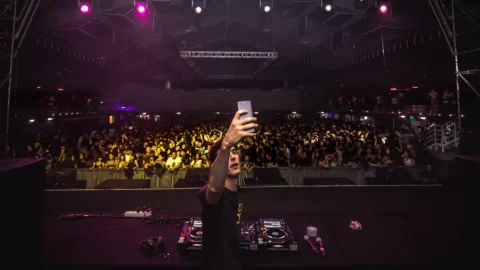
A survey carried out by FIRSTonline on a very heterogeneous group of young people in terms of age, but which involved both high school and university students, confirmed this total transparency of the technology in front of the eyes of end users. Some kids are convinced that it is a device that was used in the past, like the gramophone or the black and white TV, some have never even heard of it and, if they did a search on the Internet, they would have doubts about the source click: the one that talks about a Piaggio scooter model or the one that describes a software with an unspecified use. However, as one might expect, there is a very small exception: university students from scientific faculties or new professionals in the recording industry (DJs). A disk jockeyIn fact, regardless of experience, he brings with him the songs for his performance, strictly in mp3 format, divided into folders, on a USB stick. Some young people, part of the sample taken into consideration, declared that mp3 files are their daily bread. They use them to create mixes, to send samples of their performances to the console or to automate the management of the succession of songs during disco evenings. In short, what confirms the rule - that is, the oblivion of this technology that has given so much to music - are those rare cases of professionals, more or less young.
And to think that, several years ago, the lossy format par excellence, that is, that which causes information to be lost during compression (from the English “loss” = “loss”), the mp3, in fact, has been at the center of a seemingly endless diatribe to decree which was the right support to use for a music playback ad high fidelity (Hi-Fi). The so-called audiophiles, already protagonists of furious battles against the spread of digital audio, have waged real wars - sometimes against scientific evidence - to support the analogue form of recording on vinyl as the only and most perfect form of audio recording. high fedelity. But, never as in this case, time has been the master and today we no longer discuss what the best form of recording is, we just listen to the music. The only exceptions are fanatics and those suffering from obsessive compulsive disorder in the search for a perfection that does not exist. Every object, every technology has a nostalgic value that cannot be underestimated, but it is important to distinguish a data that can be evaluated objectively from what is simply an experience, an emotion - subjective - and which is not in question.
From a scientific point of view, the main requirements for high fidelity reproduction are:
- the performance of all audible frequencies, from 20 to 20.000 Hertz
- the absence of distortions in the shape of the pressure wave
- a dynamic range capable of faithfully reproducing sounds from the softest to the most intense
- a background noise tending towards zero
These requirements are all present in digital recordings, while in the case of magnetic tapes or vinyl an adequate one is missing dynamic range and the negligibility of background noise. Just to give an example: a compact disc covers an average of 90 dB in dynamic range, while the best vinyl reaches 70 dB. The signal-to-noise ratio (SNR) is above 90 dB for CD, below 60 dB for vinyl. The CD is equipped with various error correction systems that make it immune from the consequences of scratches, dust and fingerprints (within reasonable limits), when instead there is no vinyl that is not reproduced with a groove that is no longer the original one.
Vinyl or magnetic tape reproduces the complete sound wave as emitted by the source, i.e. in an analogue way (equal to the original), whereas digital reproduction reads a sampled signal, i.e. recorded only every forty thousandth of a second (40.000 data points per second). The continuous curve of the original sound is therefore transformed into a stepped curve (corresponding to the discrete sampled values). L'human ear it is not able to notice this difference since it does not perceive signal variations that occur below 1/20.000 seconds. They proved it too different tests conducted in double blind, which aimed at the recognition - by self-proclaimed audiophiles - of audio generated by a digital encoder, compared to the audio produced by an analogue system. Needless to say, no human being has so far been able to distinguish a recording digital from an analog one (obviously at a comparable level of quality of both sources).
Among other things, one of the advantages of digital is precisely the possibility of "compressing" files which has made the mp3 format popular. Any of us could choose your level of satisfaction, from the point of view of high reproduction fidelity and preserving the music at the corresponding bitrate value (as well as encoding quality). In fact, almost no one nowadays has this type of problem. Seeking a high sound quality experience has nothing to do with being a music lover, as demonstrated by many musicians of great artistic value who candidly admit to listening to music on streaming platforms, even using low-cost earphones. So, in the end, the only thing that matters is that we continue to innovate, even in this field, perhaps with a new standard for music that gives new possibilities to future generations.