“Erasing is not a trivial negation but rather the affirmation of new meanings: it is the transformation of a negative gesture into a positive one”. Words by Emilio Isgrò, an all-round artist, cultured and refined, who has made erasure his signature style. Born in Barcellona Pozzo di Gotto in 1937, in 1965 he moved to Milan where he still lives and works. In 1956 he made his debut with the collection of poems Fiere del Sud (Arturo Schwarz Editore). In 1964 he made the first erasures on encyclopaedias and books, contributing to the birth and development of visual poetry and conceptual art. An absolute gesture which he defined as "a form of creative destruction" which shook the literary world frequented by the artist in his capacity as a poet.
“It was Eugenio Montale who rejected it without hesitation, even though he appreciated my activity as a poet and with whom he had created a friendship. When I showed him the erasure, he was very upset, and we haven't seen each other since, ”the artist tells in an interview with the critic Alberto Fiz. More helpful Pier Paolo Pasolini, who had reviewed Fiere del Sud favorably, "but perhaps he hadn't fully understood its meaning, despite being somewhat influenced by it". Such a stir – according to Isgrò – “can only be explained by the fact that there had been a qualitative leap compared to the art and sensibility of the time. In the sense that my operation clearly represented the will to make the negation of language coincide once and for all with its contextual affirmation…..The gesture is absolute, but the action has nothing dogmatic about it. Indeed, it is placed in a dialectical and relational key. Erasure – explains the artist – is the building block, or, better still, the zero in mathematics, called upon to form all numbers and all values. Compared to a hierarchical and top-down system like the one imposed by the avant-gardes, deletion represents a highly innovative linguistic hypothesis…..The avant-gardes needed to find an enemy to fight, an aesthetic or political movement to oppose. I don't have the problem of killing the father, and the erasure - he underlines - develops as a cathartic action that does not seek a clash with social principles, but undermines their foundations, freeing the spectator from a passive position of pure contemplation".
In 1966, on the occasion of a personal exhibition at the Galleria Il Traghetto in Venice, he published Declaration 1, in which he specified his conception of poetry as a "general art of the sign". In 1971 he created his "conceptual" self-portrait: a suggestive self-cancellation of his identity with an affirmation of non-identity (I declare I am not Emilio Isgrò) signed by him and a large group of friends, relatives and representatives of the world of art. Statement recently retracted and replaced with a peremptory affirmation: 'I declare that I am Emilio Isgrò'. “Losing one's identity is as difficult as finding it again”, says the artist, alluding to the power of erasing, which carries within itself, contradictory, the opposite of himself. In 1972 he took part in the Venice Biennale, where he was present again in 1978, 1986 and 1993. In 1992 he took part in the exhibition The Artist and the Book in XX Century Italy, organized by the Museum of Modern Art (MoMA) in New York. In 1994 he was present at the review I libri d'artista italiani del Novecento at the Guggenheim Museum in Venice In May 2011 he presented the installation Italy sleeping at the Modern Art Gallery in Rome, for the celebrations of the 150th anniversary of the 'Italy. The work Cancellation of the public debt is inaugurated at the Bocconi University in Milan. In 2014, his self-portrait I declare I am not Emilio Isgrò enters the Uffizi Gallery. In 2015 he created the Seed of the Most High, a 7-meter-high marble sculpture, located inside the Milan Expo.
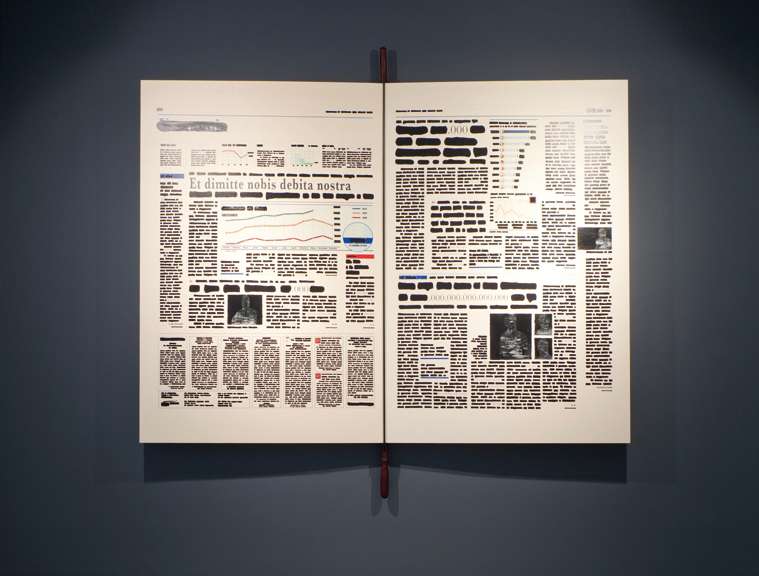
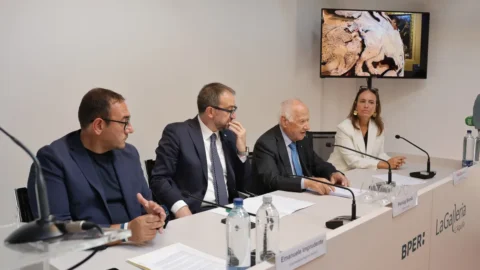
The cancellation of the public debt
Courtesy Bocconi University Milan
Exhibition activity (source Wikipedia)
In 1972 he took part in the Venice Biennale, where he was present again in 1978, 1986 and 1993. He exhibited with other artists at the Contemporanea exhibition (1973), curated by Achille Bonito Oliva and set up in the underground car park of Villa Borghese in Rome. The following year Emilio Isgrò's adventurous life was published in the testimonies of statesmen, writers, artists, parliamentarians, actors, relatives, family, friends, anonymous citizens (Il Formichiere), candidate for the Strega Prize. In 1976 he held the first anthological exhibition of his works at the Study Center and Archive of Communication in Parma. In 1977 he was awarded the first prize at the XIV Art Biennial of São Paulo in Brazil. In the same year he published the novel Marta de Rogatiis Johnson with Feltrinelli. In 1979 he presented Chopin, an installation-score for 15 pianos at the Rotonda della Besana in Milan. In 1982, he represented Gibella del Martirio e San Rocco read the list of miracles and horrors in Gibellina.
From the following year and for three consecutive seasons he represented the Orestea di Gibellina, a Sicilian trilogy, at the International Festival of Orestiadi. In 1985 the Teatro alla Scala commissioned him the multimedia installation La veglia di Bach, created in the Milanese church of San Carpoforo. In 1986 he presented the installation L'ora italiana at the Archaeological Civic Museum of Bologna, in memory of the victims of the massacre at the Bologna railway station on 2 August 1980. In 1989 he published the novel Polifemo (Mondadori), at the same time elaborating a new Erasure Theory (Fonte d'Abisso Gallery).
In 1992 he took part in the exhibition The Artist and the Book in XX Century Italy, organized by the Museum of Modern Art (MoMA) in New York. In 1994 you were present at the review I libri d'artista italiani del Novecento at the Guggenheim collection in Venice. He publishes the novel L'asta delle ceneri (Camunia) and returns to poetry with the collection Oratorio dei ladri (Mondadori). In 1998 he donated the Seme d'arancia sculpture to his native town.
In 2001, in the Santa Maria dello Spasimo complex in Palermo, he held the anthology Emilio Isgrò 1964-2000. With The bees of the Torah begins the "cycle of insects". In 2002 he published the book of poems Brindisi all'amico infame (Aragno), finalist for the Premio Strega and winner of the Premio San Pellegrino. In 2004 he created an installation entitled The Our Father of the Ants as part of the event "The Works and the Days", held in the Certosa di San Lorenzo di Padula from 18 to 20 June 2004 by Achille Bonito Oliva.
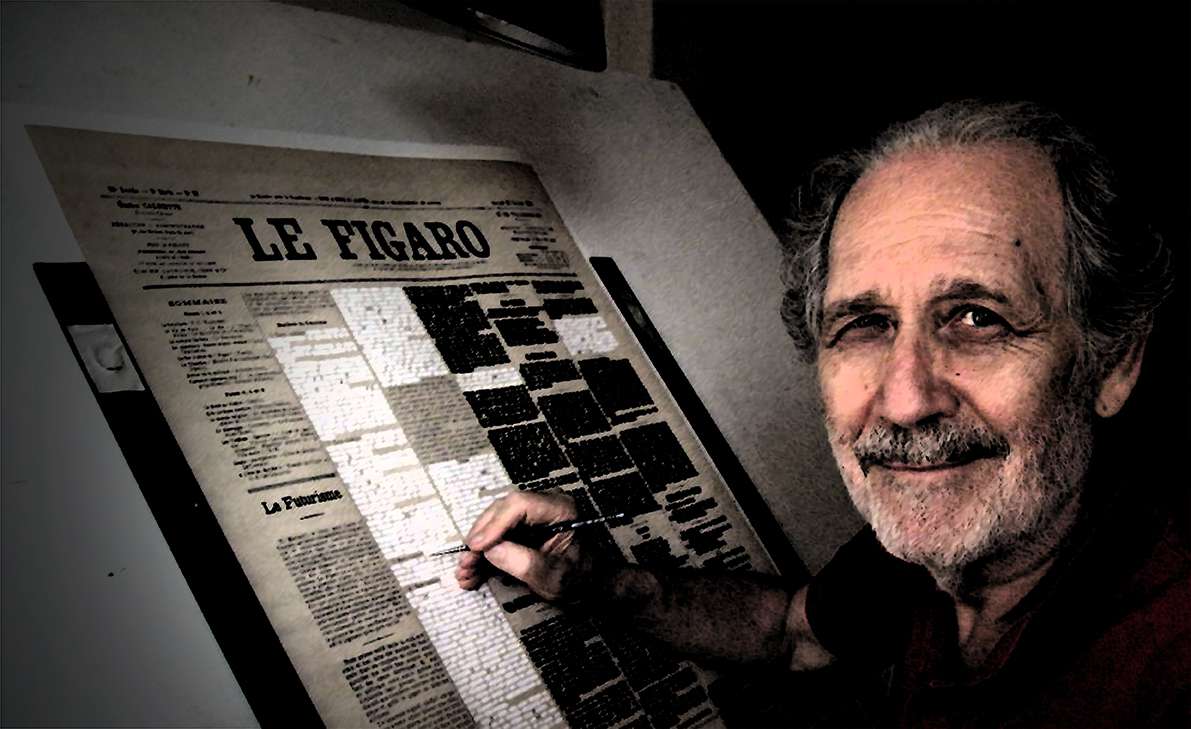
I believe and I don't believe 2010
acrylic on toile on plateau, cm 70 x 100
Courtesy Tornabuoni Art
With the title Erasure and other solutions (Skira) in 2007 he collected in volume the writings published in newspapers and magazines as a critical-theoretical kit of creative activity. The following year, the Luigi Pecci Center for Contemporary Art in Prato produced the anthology I declare I am Emilio Isgrò, curated by Marco Bazzini. In 2008 and 2013 he participated with a work at BAU. In 2009 he exhibited at the Stelline in Milan. The following year the exhibition Disobbedisco was held in Marsala. Landing in Marsala and other Sicilies. At the same time Var ve yok opens at the Taksim Sanat Galerisi in Istanbul while the fourteen Ottoman Codexes are exhibited at the Boghossian Foundation in Brussels.
In May 2011 he proposed the installation Italy sleeping at the modern art gallery in Rome, for the celebrations of the 150th anniversary of the unification of Italy, a work created the previous year for the review The canceled Constitution - Representation of a crime, curated by Marco Bazzini at the Boxart art gallery in Verona. The work Cancellation of the public debt is inaugurated at the Bocconi University in Milan. In 2012, the works I declare I am not Emilio Isgrò (1971) and The adventurous life of Emilio Isgrò were rearranged at Palazzo Reale in Milan in the testimonies of statesmen, artists, writers, parliamentarians, actors, relatives, family, friends , anonymous citizens (1972); as well as L'ora italiana (1985-1986) at the Gallerie d'Italia. In June 2013, the anthological exhibition entitled Model Italy (2013-1964) was held at the National Gallery of Modern Art in Rome, curated by Angelinandreina Rorro. The same year saw the release of the collection of unpublished essays "How to defend yourself from art and rain" edited by Beatrice Benedetti (Maretti Editore). In 2014, his self-portrait I declare I am not Emilio Isgrò enters the Uffizi Gallery. In Milan his Grande Cancellatura for Giovanni Testori was placed in Piazza Gino Valle, in the new Portello district.
In 2015 he created the Seed of the Most High, a 7-meter-high marble sculpture, located inside the Milan Expo. The following year in Milan, a project was organized in his honor in three venues: a personal exhibition at Palazzo Reale, the exhibition of his erasure of Alessandro Manzoni's portrait at the Gallerie d'Italia and thirty-five volumes of the Promessi Sposi erased for twenty-five readers and ten plague patients at Casa di Manzoni.
In 2017 Emilio Isgrò exhibited in London at the Tornabuoni Gallery. It is a retrospective, begun in Milan and then moved to Paris, which opens with the deletion of 24 volumes of the Encyclopedia Britannica (work from 1969). The exhibition is accompanied by a catalog published by Forma Edizioni and edited by Marco Bazzini.
In 2018 Isgrò inaugurates the monumental work Monument to Hell, created specifically for the IULM University of Milan. In April he exhibits in Belgium at the MDZ Art Gallery, in a double solo exhibition in which he is the protagonist together with Christo.
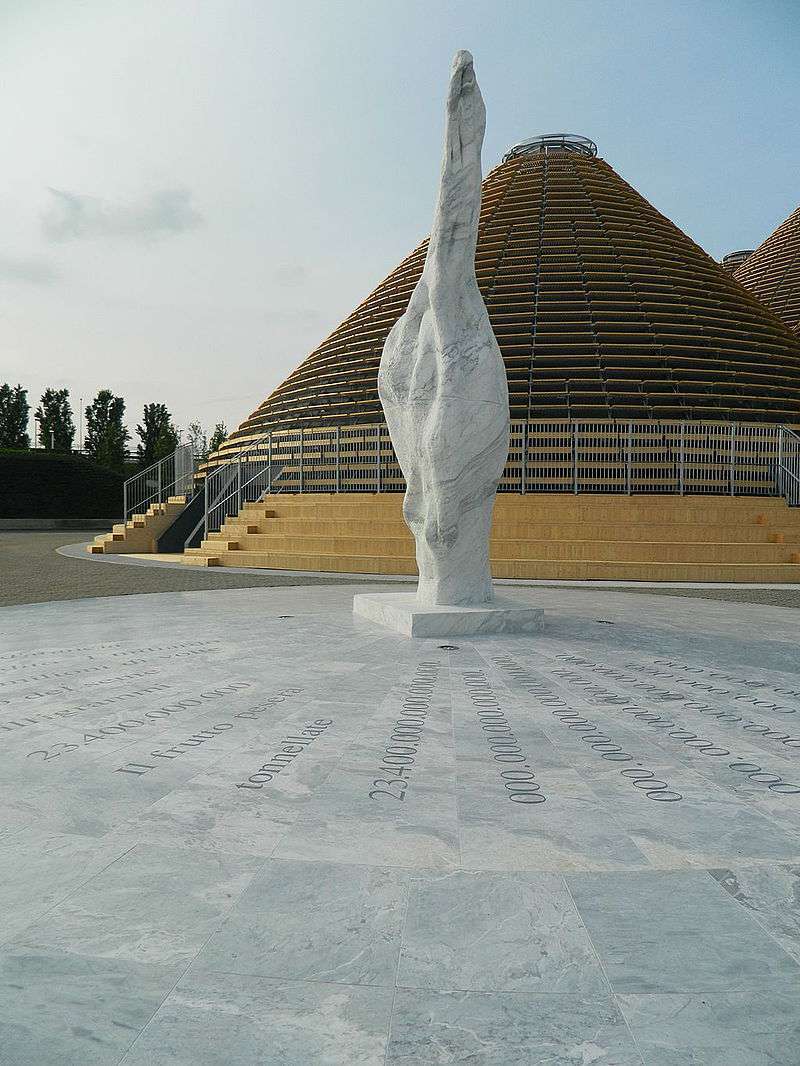
The seed of the Most High
Marble sculpture at Expo 2015 Milan
Basket Market
Quotations on the rise especially after his entry into the stable of the Tornabuoni gallery which opened the doors to the international market with its offices in numerous foreign squares (London, Paris, Crans Montana), and with a large anthology in the French capital. And also exhibiting his work in the main international fairs. Just to give an example, a couple of years ago, at Art Basel, Tornabuoni presented in the Unlimited section the cancellation of the Enciclopedia Britannica created by Isgrò in 1969. The work, made up of 24 elements (books canceled) was offered for 1 million euros and – according to rumors – negotiations were underway with the Beaubourg in Paris for a possible acquisition. The two Milanese exhibitions of 2016, held simultaneously at Palazzo Reale and at the Gallerie d'Italia, also contributed to the recovery of the erasure artist's market. An intense activity that can also be seen in the increase in its presence in international auctions where today it has almost 500 passages, with a percentage of sales that in recent years has exceeded 75% in the various types of works and with a turnover that in 2017 it was close to 650 thousand dollars (although lower than the approximately 900 thousand dollars achieved the previous year). According to the Artprice index, $100 invested in a work by Isgrò in 2000 is currently worth $350.
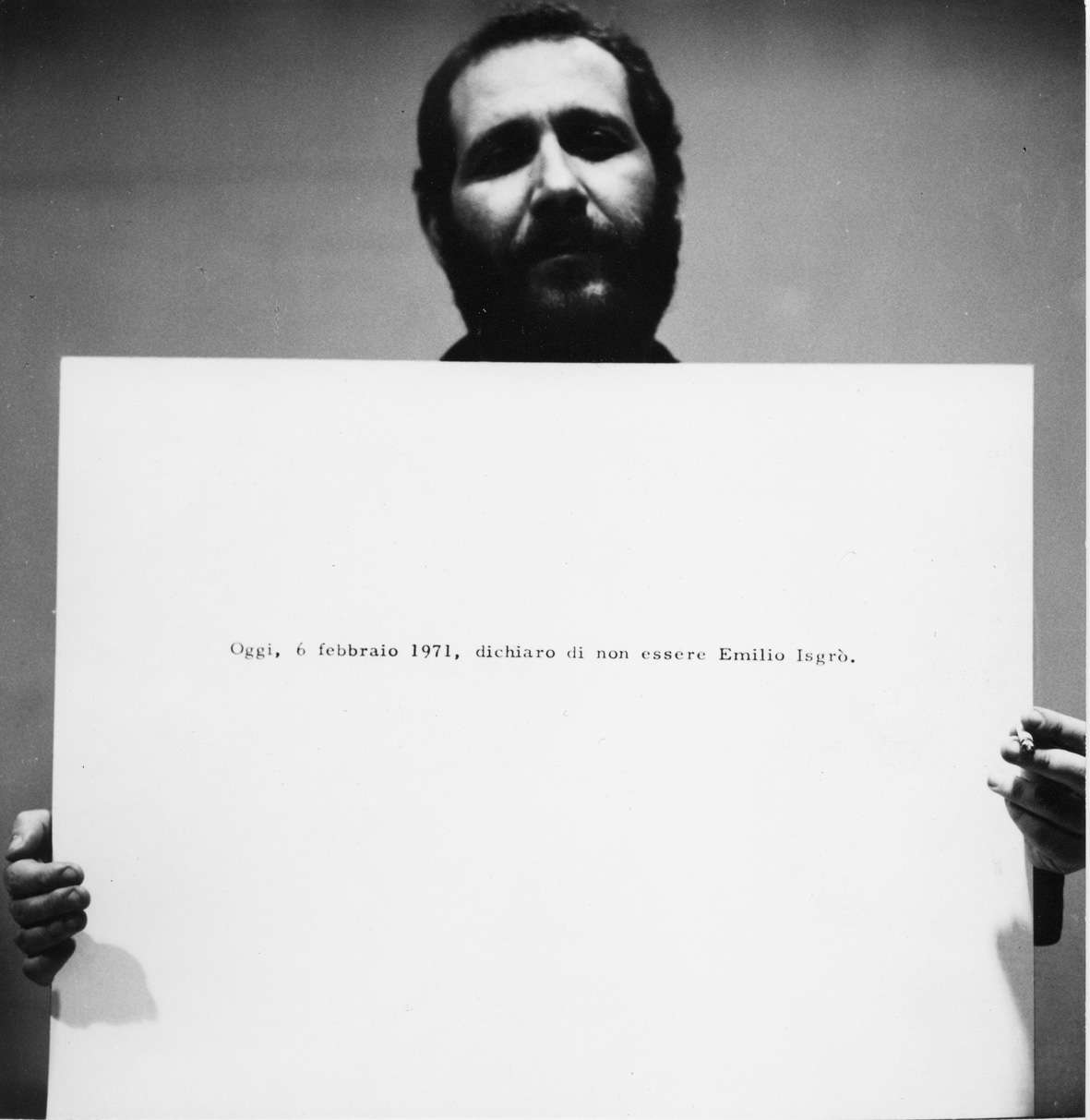
I declare that I am not Emilio Isgrò 1972
Performances – installation
Presence in museums e in the collections
His works have entered important Italian and foreign museums and public and private collections. Among others: Uffizi National Gallery, Florence; National Gallery of Modern and Contemporary Art, Rome; Mart, Museum of modern and contemporary art of Trento and Rovereto; "Luigi Pecci" Center for Contemporary Art, Prato; Museo del Novecento, Milan; Museo Novecento, Florence; Bocconi University, Milan; Galleries of Italy, Intesa Sanpaolo, Milan; Madre, Donnaregina Museum of Contemporary Art, Naples; Museum of Modern Art of Bologna, Bologna; Study Center and Archive of Communication, University of Parma; Maramotti Collection, Reggio Emilia; Museum of Contemporary Art of Sicily, Palermo; City Museum, Livorno; Sant'Anna Civic Gallery of Modern Art, Palermo; Credito Siciliano, Acireale (Catania); Civic Museum of Contemporary Art, Gibellina (Trapani); Orestiadi Foundation, Gibellina (Trapani); Gallarate Art Museum (Varese); Museum of Contemporary Sculpture, Matera; Certosa di San Lorenzo, Padula (Salerno); Brindisi House Museum, Lido di Spina (Ferrara); Gallery of Modern and Contemporary Art, Turin; Musées Royaux des Beaux – Arts de Belgique, Brussels (Belgium); Imago Mundi. Luciano Benetton Collection; Center national d'art et de culture Georges-Pompidou, Paris.
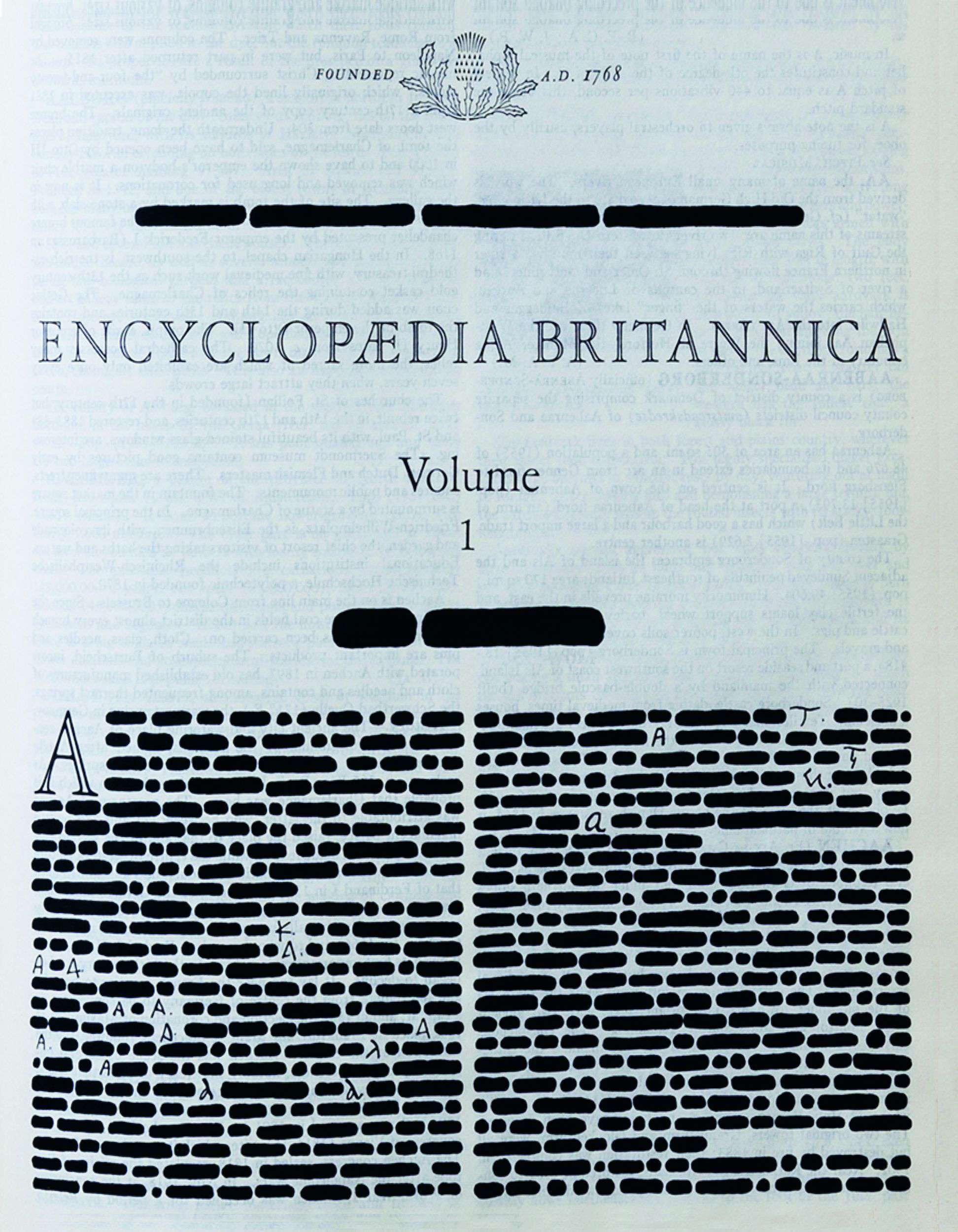
Encyclopedia Britannica, 1969
Installation – Indian ink on book in wood and plexiglass box – 70 × 50 × 8.7 cm.
ArtBasel 2016
Courtesy Tornabuoni Art
Gallery: Emilio Isgrò's work is handled by Tornabuoni Art (055 6812697 / 6813360 – [email protected] (www.tornabuoniarte.it) with offices in Florence, Milan, Forte dei Marmi, London, Paris, and Crans Montana (Ch). He has previously worked with Giorgio Marconi's Galleria Milanese and with Guastalla Centro Arte, also in Milan. The artist's works can also be found in other Italian and international galleries.
Pricing: to purchase one of his works in the gallery, an investment ranging from around 20 to over 150 euros is required, depending on the type, technique and year of construction. The price range for his erased wrasses (among the artist's most sought-after works) ranges from 40 to 100 thousand euros. Just to give an example, at a recent fair his reference gallery offered a canceled book mounted on a 80x40x60 cm panel for 2 euros + VAT. in plexiglass case made in the 80s. Particularly sought after by collectors are works from the 60s and 70s which cost 30-40% more. A separate discussion for the artist's large projects and “historical” installations.
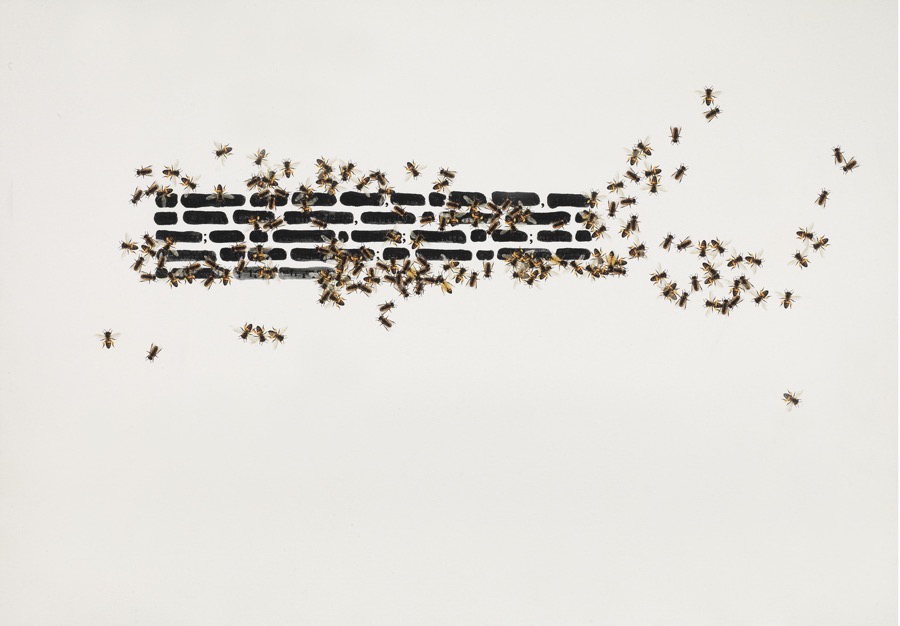
I believe and I don't believe 2010
acrylic on toile on plateau, cm 70 x 100
Courtesy Tornabuoni Art
Top Price in it: "Prologue of the Evangelists According to Matthew/Prologue of the Evangelists According to Mark/Prologue of the Evangelists According to John/Prologue of the Evangelists According to Luke, (From the Bach vigil cycle)", Mixed technique on canvas made in 1985 of 120 x 180 cm. it changed hands from Finarte to Milan for 111 thousand euros (including royalties) in November 2016. “Telex g 6”, ink on canvas in a plexiglass case from 1972, 162×21 cm. it was sold for 71.250 euros (including fees) at Sotheby's Milan in May 2016