

Everything you need to know to stay updated on the financial market. Information, trend and graph in real time on the stock exchange quotations of the major stocks on world stock exchanges.
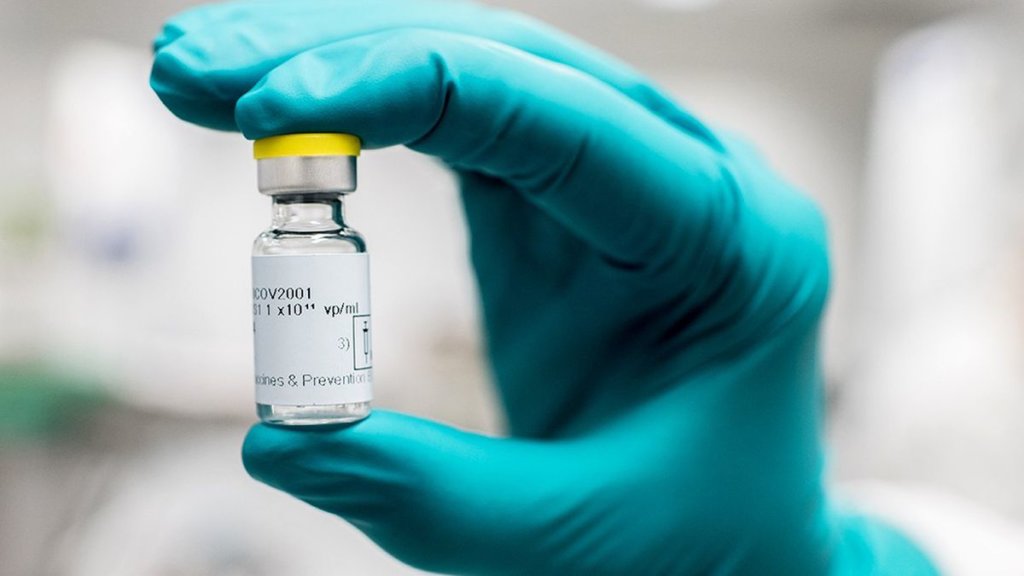
ISIN code: US4781601046
Sector: Healthcare technology
Industry: Pharmaceuticals: major
Le actions of Johnson & Johnson (J&J) are listed on the NYSE New York index under the ticker JNJ.
keepfrom the history of the share price on the NYSE
Company Description
Johnson & Johnson (abbreviated J&J) is an American multinational pharmaceutical company. It produces drugs, medical equipment and personal care products of shampoos and creams.
The headquarters are in New Brunswick (New Jersey). The Italian headquarters and the main production plant are located in Pomezia.
The company is among the leading pharmaceutical companies in the world. It is one of the world's most valuable companies and is one of only two US-based companies to have a first-rate credit rating of AAA, higher than that of the US government. In the list of Fortune 500 of 2021 J&J was ranked 36th of the largest US corporations by total revenue.
Johnson & Johnson has approximately 97 factories located across the United States, Belgium, Brazil, Canada, China, France, Germany, India, Israel, Japan, the Netherlands, Singapore, Switzerland and the United Kingdom. It has approximately 135.00 employees. J&J has approximately 250 branches operating in 60 different states. Between main subsidiaries there are: Acclarent, Actelion, Cilag, Crucell, DePuy Synthes, Ethicon Inc., Janssen Pharmaceutica, Janssen Biotech, Johnson & Johnson Vision, McNeil Consumer Healthcare, Mentor, Synthes and Tibotec.
Johnson & Johnson products are sold in 175 different countries. Between major brands the company includes Band-Aid, Tylenol, Johnson's Baby, Neutrogena, Piz Buin, Carlo Erba, Nizoral, Listerine, Clean & Clear, Acuvue.
Le three business activities are:
- Consumer Health: Focuses on used products for infant care, oral care, skin care, parapharmacy, women's wellness and wound care.
- Medical Devices: Offers products used in the orthopedic, surgical, cardiovascular, diabetes and vision care industries.
- Pharmaceutical: Focused on therapeutic areas including immunology, cardiovascular and metabolic diseases, pulmonary hypertension, infectious diseases and vaccines, neuroscience and oncology. The pharmaceutical arm of Johnson & Johnson is Janssen Pharmaceuticals which was one of the first to produce a (single-dose) vaccine against SarS-CoV2.
In 2020, the largest revenues were achieved by the pharmaceutical sector (55% of the total) followed by the medical device sector (28%) and the consumer sector (17%). Geographically, more than half of total sales come from the United States (51,3%). Johnson & Johnson had worldwide revenues of $2020 billion in 82,6 with net income of $14,714 billion.
In November 2021 Johnson & Johnson has announced a spin-off into two independent companies: One new company will sell over-the-counter medicines while the other, which will keep the old brand name, will focus on pharmaceuticals and medical device research advances.
Johnson & Johnson is publicly traded on the NYSE Index and is a component of the Dow Jones Industrial Average.
Among the major shareholders of J&J there are:
- The Vanguard Group Inc, 8,46%
- SSGA Funds Management, Inc., 5,40%
- BlackRock Fund Advisors, 2,24%
- Geode Capital Management LLC, 1,65%
- Northern Trust Investments, Inc. (Investment Management), 1,33%
- Capital Research & Management Co., 1,24%
- Wellington Management Co. LLP, 1,23%
- State Farm Investment Management Corp., 1,20%
- Norges Bank Investment Management, 1,05%
Economic and financial analysis of the company
Johnson & Johnson was founded in 1886 by pharmacist Robert Wood Johnson I together with brothers James Wood Johnson and Edward Mead Johnson who created a line of ready-to-use medicinal products. Robert Wood Johnson was the company's first president.
J&J sold medicated plasters and was among the first to produce surgical products such as stitches, absorbent cotton and gauze.
In 1894, it began manufacturing Johnson's Baby Powder, the company's first baby product and the world's first maternity kit to help home births.
In 1901, the company released the First Aid Manual, a guide to the application of first aid.
During World War I, the company's factories increased production to meet the demand for sterile surgical products.
In 1916 it acquired the Chicopee Manufacturing Company in Chicopee Falls.
In 1919, the first plant outside the United States opened in Gilmour, Canada. In Europe, the first plant was opened in England in 1924. During the following years it expanded to South America, Australia and Africa.
In 1932 Robert Wood Johnson II, son of the founder of the same name, became president. The new president will become famous under the name of “General Johnson” and will transform the company into the global arena.
In 1935 Johnson's Baby Oil was put on the market.
In 1943, Robert Wood Johnson wrote “Our Creed” (Our Credo), a document underlying the corporate philosophy of J&J.
In 1944 the company was listed on the Stock Exchange.
In 1947, it absorbed George F. Merson's company, renaming it Ethicon Suture Laboratories.
In 1959 it acquired the McNeil Laboratories , Cilag Swiss pharmaceutical company.
In 1961 it entered the Italian market. The first investment of the Group consisted in the creation of the Cilag Chemie Italiana Spa.
The is purchased Janssen Pharmaceuticals which becomes part of Johnson & Johnson Pharmaceutical Research and Development.
In 1992 Ethicon was reorganized and became a separate company.
In 1998 buy the DePuy placing it in the medical services sector.
In 1999 Centocor becomes a subsidiary of Johnson & Johnson.
In 2008 Centocor Inc. and Ortho Biotech Inc. merged to form Centocor Ortho Biotech Inc.. In the same year she acquired friend, developer of in vitro diagnostics. Buy the Mentor Corporation for $1 billion and merges its businesses into Ethicon.
In June 2010 Centocor Ortho Biotech acquired RespiVert, a privately held drug discovery company. In September 2010 announces the acquisition of Micrus Endovascular, manufacturer of minimally invasive devices for hemorrhagic and ischemic stroke. In October it acquires Crucell for 2,4 billions of dollars.
In June 2011 Centocor Ortho Biotech Inc changed its name to Janssen Biotech, Inc. with the aim of uniting Janssen pharmaceutical companies worldwide under a common identity.
In June 2012 it acquires Synthes, a multinational medical device manufacturer for $19,7 billion. Subsequently she founded Synthes with DePuy, born there DePuy Synthes.
In China announces the purchase of Guangzhou Bioseal Biotechnology Co., Ltd..
Between 2013 and 2014 he acquired Aragon Pharmaceuticals, Inc. and Alios BioPharma, Inc. for $1,75 billion.
In 2016, he made two more major acquisitions: he bought the Vogue International LLC, boosting Johnson & Johnson Consumer Inc. and the Abbott Medical Optics from Abbott Laboratories for $4,325 billion, adding the new division into Johnson & Johnson Vision Care, Inc..
In January 2017 Johnson & Johnson announced its largest acquisition in history; for 30 billion dollars he buys the Swiss pharmaceutical company Actelion. Subsequently spun off Actelion's R&D unit into a new company, Idorsia. J&J will control 16% of Idorsia, with the option to increase its stake to 32% through convertible bonds.
In February, he sold the neurosurgery business Codman to Integra LifeSciences for $1,05 billion.
In May 2018, through Janssen, it acquired the BeneVir Biopharm. Instead, he gives LifeScan, Inc. to Platinum Equity for approximately $2,1 billion.
In August 2020, he buys the biotech company Momenta Pharmaceuticals for 6,5 billions of dollars.
Following the Coronavirus pandemic, Johnson & Johnson has committed, through the Janssen Vaccines, to search for a Vaccine spending more than $1 billion on development and research. In January 2021, after passing the various stages of experimentation, it was introduced on the market. In April 2021, the company reported that its vaccine hit $100 million in first-quarter sales, representing less than 1 percent of its total revenue.
In November 2021, J&J announces the spin-off of the company into two separate entities: one will continue the normal health care business (the Consumer Health sector) while the other will focus on the pharmaceutical and advanced research medical devices business, a business capable of generating much higher margins, but also burdened by higher risks.
The latest Johnson & Johnson news
CDP Equity invests €1 billion in Angelini Pharma, acquiring a 23,5% stake to support global growth.
The equity investment accompanies the acquisition of Catalyst Pharmaceuticals, a €3,5 billion transaction that strengthens the Italian group's presence in the United States. Fabio Barchiesi: "A support for the country's economic system."
Wall Street: Tech companies that serve as AI's "picks and shovels" surpass the Magnificent Seven. The surprise also comes from biopharmaceuticals.
While the so-called Magnificent Seven, representing the AI megacaps, are experiencing a period of fatigue, there are companies listed on Wall Street that have achieved stratospheric gains since the beginning of the year. Here are which ones:
Diasorin: quarterly decline, but confirmation of 2026 targets gives wings to the stock
Revenues stood at 287 million, down 3% at constant exchange rates and 8% at current exchange rates, while net profit fell 28% to 38 million.
Angelini Pharma buys Catalyst for $4,1 billion and enters the U.S.
Angelini Pharma acquires Catalyst Pharmaceuticals for $4,1 billion and enters the US market, strengthening its position in brain health and rare diseases.
Trump confirms drug tariffs: up to 100%, but with exemptions and room for negotiation.
Duties of up to 100% on some patented drugs and their components, but with broad exceptions: excluding companies that have agreements with Washington and countries covered by trade agreements, including the EU