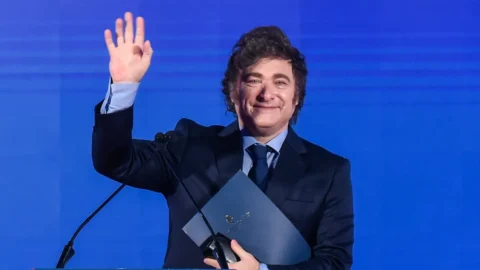
The figure is still very high, to be Argentina a “first world” country, a member of the G20, that is, of the top twenty economies on the planet. However, it is undeniable that the president Javier Milei another success, perhaps the most unexpected of his management: in the first year of his mandate, the contested turbo-liberal also managed to reduce, and not by a little, the poverty rate, bringing it back to pre-Covid levels. And it's not an April Fool's joke: according to official data, after having reached a peak of 52,9% in the first half of last year, at the beginning of the chainsaw shock therapy, the percentage of Argentines in a condition of poverty fell to 2024% at the end of 38,1 (which still means at least 17 million people), and according to preliminary estimates by the Ministry of Economy in the first quarter of this year the figure will further decrease To 34,9% the lowest rate since the second half of 2019. In the last year of Alberto Fernandez's government, of the center-left, the figure had settled at around 42%, before exploding in the first months of the Milei presidency, characterized by immediate cuts in public spending and social benefits.
The Argentine leader did not fail to rejoice in his own way on social media, where he is very popular: in particular on X, owned by his friend Elon Musk, Milei has retweeted various statistics, according to which for example the number of poor citizens in the country would have increased by 9 million between 2020 and 2023, and then decreased by 8,3 million from 2024 to today. The new course would also have eliminated the number of people who have become destitute, that is, ended up in conditions of extreme poverty, during the pandemic: +4,9 million between 2020 and 2023, and -5 million in the last year and a half. In percentage terms, the indicator on extreme poverty has been more than halved from 18,1% to 8,2%. The key to everything is inflation, that Milei managed to crush, reducing the monthly rate by twenty percentage points in a year: in February it was just 2,4%, and according to economists close to the government it would have hit the richest people the most, leaving the prices of basic necessities substantially unchanged. In reality, there would be something to say about this, if one considers for example that Argentines are among the top producers and especially consumers of beef, but that due to the surge in prices the country is finding itself forced to import it from neighboring Brazil.
Child poverty remains high
Furthermore, the issue of the child poverty, which puts the future of the country at stake: the poverty rate among the under-14 population has remained at 51,9%, and the indigence rate still stands at an unacceptable 11,5%. In Argentina, more than one child in ten is hungry, according to the government's own data. And not only that: it could be noted, for example, that in February the domestic consumption have fallen by 10% compared to a year earlier, and that in the capital Buenos Aires Homelessness in 2024 increased of 23,2%, with unemployment growing in the country from 5,7% to 6,4% under Milei.
Argentina gets 20 billion from the International Monetary Fund
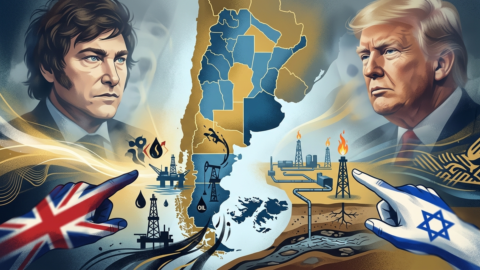
Milei in any case brings home another result, right in the week in which the International Monetary Fund gave the green light for a new loan of 20 billion of dollars and in which Argentina closed a trade agreement with Donald Trump's United States, on the eve of the debut of the duties on April 2. In fact, on April 1, and this was no joke either, while the tycoon was preparing to open hostilities with half the world, the two countries signed a bilateral pact to protect their trade, which was worth $2024 billion in 16. In particular, Argentina sells lithium, wheat and energy to the US. And these days, having good relations with Washington is no small feat.