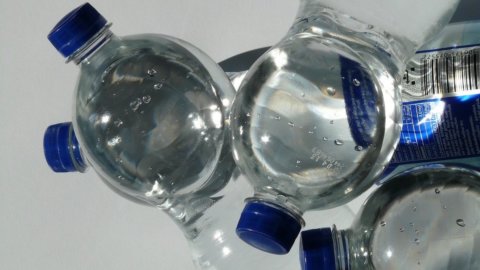
From today it has become mandatory: the manufacturing companies of plastic bottles they will have to ensure that i caps remain attached with a flap (tethered cap). The European measure aims to stem the spread of plastic waste especially in the seas, which have reached the 22 million tons per year. In particular, in more than 30 years, over 20 million bottle caps and lids have been found during beach cleaning activities around the world and they are among the 5 most identified objects. Bad companies some see in the legislation paradoxes which also lead to costs that outweigh the benefits.
The measure, which came into force today 3 July, is part of the Single-use plastics directive (Sup) of 2019, with which Brussels - amid controversy in Italy - banned the sale of disposable plastic products from 2021, from plates to cutlery, from straws to cotton buds. Rome is under EU observation: at the end of May the European Commission launched a infringement procedure against Italy because it had not "fully and correctly" transposed the directive.
Caps and lids among the top 5 objects found on beaches
La new norm concerns the so-called 'solidarity cap' so called because it prevents its dispersion into the environment and should encourage consumers to recycle it together with the bottle once they have finished using both. “Plastic caps and lids are among the single-use plastic items most frequently found on EU beaches,” said the European Commission in the directive, “since they are among the top five objects found during waste cleaning and monitoring operations."
Not just bottles, but all composite packaging
The requirements do not only concern plastic bottles, but also “composite packaging” like milk or fruit juice cartons, but not glass containers. EU states should recycle up to 90% of single-use plastic bottles by 2029 (with an intermediate target of 77% by 2025). The directive aims to especially environmental benefits. La Dutch North Sea Foundation reported in a beach cleanup report that it collected about 2016 bottle caps along the coast in 10.000. The number of bottle caps found per kilometer of beach was between 20 and 128: more than 4 out of 5 came from consumer beverage packaging. However, since some companies started introducing caps attached to bottles, the Foundation itself collected around 2022 fewer bottle caps in 3.000.
The producers: it is the result of an ideological vision
“This directive contains a paradox fruit of one ideological and non-scientific vision of sustainability and this is said by those who represent an industry that has been investing for decades and continues to do so in reducing its environmental impact" he told the Sun 24 Hours Ettore Fortuna, vice president of Mining, the association that brings together the water companies that as bottlers have had to adapt to the provision. “In Italy, for example, we have the lightest PET bottles in Europe, the result of years of investments in eco-design and high technology, which have resulted in weight reduction. Over the last 15 years, despite an increase in market volumes of around 35-40%, we have placed the same quantity of plastic on the market."
The paradox: with the new caps you need more plastic
Fortuna also underlines another aspect: “The European technical standardization bodies have established a minimum resistance force of the cork equal to 25 Newtons, a technical reference value much higher than that which could be applied to our bottles. With this high standard, the tethered cap requirement will create the paradox of having to increase the amount of plastic used (in some cases up to +10% compared to what is currently used), a true contradiction if you consider that the directive aims to reduce plastic consumption".
The costs of adapting machines are growing
Companies in the sector are also seeing an increase in costs incurred to adapt the machines to the new caps. “This measure makes no sense if you evaluate it in terms of the ratio between costs and benefits. The cost for the company is much higher than the benefit that the European standard aims to achieve: from separate waste collection we understand that the vast majority of bottles already return with the cap and therefore the problem of dispersion is overestimated. This is why it is an ideological norm that does not make a direct contribution to sustainability, if not superficially" he says Armando Fontana, CEO of Fonte Tavina, al Sun 24 Hours, and adds “We had to support investments to update capping machines on the lines, not to mention the greater quantity of plastic that we thus place on the market. Sustainability, in which we believe and in which we have already been investing for some time, is the real one that lightens the average weight of bottles, is good for the environment and creates savings opportunities for companies". Furthermore, this new tethered technology "also creates a big problem from an industrial point of view: it is not immediate the supply of new caps capable of meeting the right requirements for efficient use on the line he adds Marco Pesaresi, general manager of Ferrarelle.
22 million tons of plastic waste in the seas every year
Every year they enter'Marine environment 22 million tons of plastic waste, the WWF, and just as many in the terrestrial environment. It's largely about disposable plastic. Furthermore, currently, plastic production is responsible for approximately 3,7% of global greenhouse gas emissions, and this percentage is expected to increase to 4,5% by 2060 if current trends continue unchecked. Again according to what was reported by the WWF, plastic is now the third material produced by man most widespread on Earth, after steel and concrete. Over the last 60 years, over 8 billion tonnes of plastic have been produced: the mass (by weight) of all the plastic on the planet is double the total biomass of terrestrial and marine animals combined