The initiative started a year ago, all Italian and transversal to Pd, FI and FdI: promoters are the MEPs Massimiliano Salini (FI/Ppe), Pina Picierno (Pd/S&D) and Antonella Sberna (FdI/Ecr). Now it has become an initiative of the European Parliament: theAugust 8th be the "European Day of Remembrance for Victims of Work and for the Protection and Dignity of Workers". A date not by chance: that day commemorates the tragedy of 70 years ago in the Belgian coal mine of Marcinelle in which 262 miners died.
Marcinelle, first yes from the European Parliament
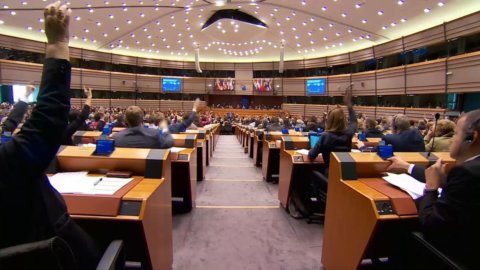
The yes came from the members of the Committee on Employment and Social Affairs of the European Parliament who approved a motion for a resolution calling for the establishment of the Day, together with a greater commitment from institutions to reduce the number of accidents at work, occupational diseases and deaths. No one against: 45 votes in favor, only 6 abstentions. The proposal now goes to the plenary assembly in Strasbourg for a decisive vote.
The resolution aims to strengthen the culture of prevention and job security within public administrations, businesses, and institutions, accompanied by targeted initiatives in schools and workplaces.
Marcinelle, what happened?
On the morning of August 8, 1956, at 8.10 am, a fire broke out fire inside the main duct of the Bois du Cazier coal mine, in Marcinelle, Belgium, at a depth of 975 meters. The fire, probably fueled by the wood of the beams and load-bearing structures of the mine, spread rapidly. A toxic cloud of fumes and carbon dioxide saturated the duct, rendering ventilation systems useless and the air unbreathable up to 1.035 meters deep. Of the 275 miners present, only 13 were saved.; the remaining ones 262 They died of suffocation. Most of the victims were Italian workers, 136 people. Among the victims were 95 Belgians and 31 workers of other nationalities, including one Englishman, five Germans, eight Poles, six Greeks, three Hungarians, three Algerians, two French, a Dutchman, a Russian, and a Ukrainian. Twelve nationalities, one tragedy.