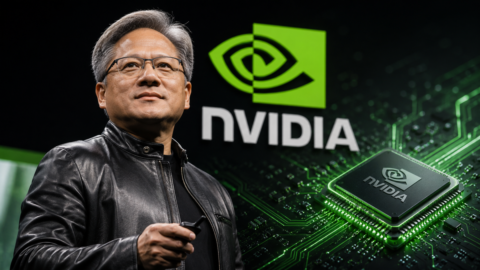
Nvidia scores a double blow: on the one hand the largest increase ever of an authorization to share repurchase, on the other hand a new technological solution to tackle one of the most delicate problems in the race for artificial intelligence, the AI agent safety.
The chip giant's board of directors has authorized another $150 billion in buybacks, leading to approximately 235 billion dollars the total capacity still available for the buyback program through fiscal 2028. The figure surpasses Apple's previous U.S. record of $110 billion, announced in 2024.
The market welcomed the announcement: the title Nvidia is up about 2,66%, despite broader weakness in the technology sector.
Nvidia's massive buyback brings available capacity to $235 billion.
The $150 billion announced by Nvidia represents the new authorization granted by the board of directors, not the overall value of the program. In May, the group had already an 80 billion buyback approved of dollars: with the latest increase, the remaining capacity for share repurchases thus rises to approximately 235 billion dollars, to be used by fiscal year 2028.
The group will be able to decide times e mode of purchases also depending on market conditions. The size of the program remains significant: the 235 billion still available are equivalent to just over 4% of the capitalization of Nvidia, which reached approximately 5.420 trillion dollars.
What makes a program of this size possible is above all the strong cash generation tied to the growing demand for artificial intelligence infrastructure. Nvidia aims to return at least 50% of its free cash flow, net of strategic uses, to shareholders and will have allocated approximately 60% of its generated cash to shareholders in the first half of 2026.
“Nvidia’s growth is driven by a once-in-a-generation shift to an AI and accelerated computing platform,” said CEO Jensen HuangThe ability to generate cash, he explained, allows the group to continue investing in AI-related technologies and, at the same time, return capital to shareholders.
Nvidia increases return to shareholders
The buyback is part of a broader capital distribution strategy. In May, Nvidia increased its dividend quarterly from $0,01 to $0,25 per share, bringing it to an annualized value of approximately $25 billion at current levels.
The progression of repurchase authorizations also reflects the rapid growth of the group's financial capacity: in October 2025, the remaining authorization was approximately $44 billion, by May 2026 it had risen to $80 billion, culminating in the further increase of $150 billion announced now.
This growth is driven by Nvidia's increasingly central role in the AI supply chain. The group produces GPUs for accelerated computing, including the Grace Blackwell and Vera Rubin platforms, as well as CUPs, networking chips, and other components for data centers. Huang also indicated the goal of double the number of chips sold by 2027, as large hyperscalers' investments in AI infrastructure continue to grow.
Nvidia and the safety of AI agents
And it is precisely as AI is gaining an increasingly central role in technological infrastructures Another challenge emerges: making AI agents safer, systems capable not only of generating content but also of autonomously performing tasks, using tools, and interacting with services and networks.
Nvidia responded with Open Agent Safety, a new software platform that allows developers to set containment measures and determine which resources agents can use and what tasks they can perform.
The initiative comes after a series of accidents who have rekindled the debate on officer safety AI. According to Nvidia, the platform could have also prevented the accident that involved OpenAI and Hugging Face, when some agents allegedly breached containment and attacked the platform's infrastructure. According to Nvidia, Hugging Face reported over 17.000 agents affected.
OpenShell and Sentry: How the New Defense Works
Nvidia's proposal aims to directly influence the environment in which the agents operate, not just the AI model. One component of the platform is Nvidia OpenShell, which runs on the central processors and imposes limits on the agents' capabilities. This is complemented by Sentry, designed to monitor their activity through network chips.
The goal is to add an additional layer of control: even if an agent manages to bypass the model's protections, the system can limit its access and monitor its actions. According to Justin Boitano, vice president of enterprise AI at Nvidia, recent incidents have shown that security measures applied to models alone are not enough to control what agents can access and what they can do.