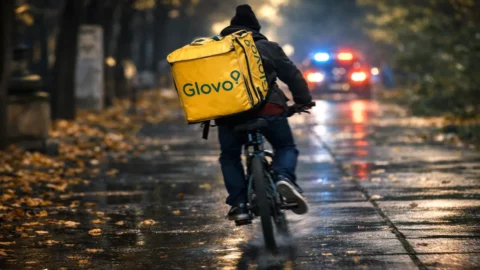
There's a judge also in Milan. Over thirty years of experience had convinced us otherwise, both with regard to the prosecution and the investigating judges. There would be a long story to tell about the work of the investigating magistrates, while as for the investigating judges, we were left at the case of Italo Ghitti, the alter ego of the Milan Pool during the Tangentopoli era. In truth, the Milanese judiciary had never been averse to fair rulings in trials heavily hyped by the media and judicial circuit. To stay in recent times, we recall the international corruption trial brought against theEni for Nigeria case, but to get even closer, we refer to the sensational denial of the premises of the crusade promoted by the prosecutor's office against the building policy of the Municipality of Milan, which has caused so much damage to the city, its economy, and many families. In recent days, the investigating judge Roberto Crepaldi – rejecting the request with which the public prosecutor Paul Storari He asked to impose permanent and subordinate employment for all delivery workers on the platform Glovo (managed in Italy through its subsidiary Foodinho srl) – has reported on the extortion practice implemented – as a "substitute power" – by the Milan prosecutor's office in labor disputes for several years now. We have had occasion to discuss this practice on several occasions in this column.
The Milan Public Prosecutor's Office and the work of delivery riders
The Milan prosecutor's office – through its deputy Paolo Storari – has discovered a new line of investigation in the field of criminal law and initiated investigations that methodically involved several giants in the logistics, large-scale retail, security, and fashion sectors. Then attention turned to the big names in food delivery and work on digital platformsA collection of diverse legal conditions and relationships, characterized by the poor functioning of traditional rules (such as collective bargaining) and the lack of adequate and relevant rules for new labor organizations. Companies, often multinationals, are accused of violating labor law. caporalato, namely law 199/2016, approved to combat undeclared work and the exploitation of workers, introducing the crime of "illegal intermediation and exploitation of labor" and sanctioning both the gangmaster (the person who recruits) and the employer (the person who employs). In essence, the oldest forms of exploitation They are considered similar to the activities regulated by the algorithm. The law defines exploitation as taking advantage of workers' need and provides severe penalties, including mandatory arrest, in cases of violence. These provisions—and the Milan prosecutor's office has repeatedly invoked them—allow the company to be subjected to judicial review, that is, to a veritable commissioner as well as the precautionary seizure of significant sums of money; based on these premises, the prosecutor's office opened informal negotiations with the company, which—understanding the warning—did not hesitate to get to the heart of the matter, whether it involved salary payments or a review of the procurement chain with related direct hiring, obtaining in exchange the revocation of the administration (and therefore the return of the entrepreneurial function) and the return of the seized sums.
In the first cases, when it was the turn of security, logistics, distribution and fashion companies, the problems were clearer. They were almost always cases of employee, often governed by a collective bargaining agreement with wage and regulatory provisions deemed inadequate under Article 36 of the Constitution. Consequently, even the "ravvedimento operoso" (effective repentance) to which the company was forced ended up concerning the typical treatment of this type of legal relationship. In the case of riders, even before assessing the treatment, it was necessary to define the nature of the relationship. Work on digital platforms is an unexplored field. But – as a lucid analyst of labor issues such as Marco Bentivogli In an interview with HuffPost, riders aren't an exotic phenomenon: they're the vanguard of a labor market where more and more people are engaging in app-mediated work. He added: traditional categories were designed for industry or the public sector, not for work managed by algorithms. And it would be a mistake, not only legally but conceptually, to include a new phenomenon in old categories. The result is clear for all to see: uncertainty and exploitation.
Riders and Subordinate Work: What the Law Provides
There is no shortcut to subordinate work as a general rule. It is time for rights that look to the 21st century, with collective bargaining dedicated to digital work and with a law that restores dignity to those employed (often as a second job) in services that everyone uses. Platform workers in Europe alone number 45 million, and there is an EU directive that establishes essential protections, which national legislation must incorporate. For now, the Italian government has adopted the decree of May 1st some initial protective measures, the most important of which defines the perimeter of the legal question: "For the purposes of qualification of the employment relationship Through a digital platform, they determine the specific methods of performance of the service, regardless of the formal classification assigned by the parties. The classification of the employment relationship takes into account all elements useful for classifying the employment relationship as an actual contractual relationship, including, among other things, those inferred from the use of automated monitoring systems or automated decision-making systems. When facts emerge that indicate the existence of management and control powers, including through automated monitoring systems or automated decision-making systems, the employment relationship is presumed to be of a subordinate nature, unless proven otherwise.
The Milan investigating judge and the Foodinho case
At this point the preliminary investigations judge's resolution ("liberation") took over Roberto Crepaldi who reiterated that it is not up to the criminal jurisdiction to automatically transform riders in subordinate workers as requested by the power of attorney for the subsidiary Foodinho srl. currently under judicial administration, by order of the same prosecutor who had requested the hiring of the 40 riders.
In rejecting the prosecutor's request, the investigating judge drew what appears to be a clear line between the perimeter of thecriminal intervention and that of labor justice. The task of the criminal judge in the pre-trial phase, specified investigating judge Crepaldi, must focus exclusively on verifying the adequacy of wages, so as to eliminate conditions of exploitation – with wages until now considered below the poverty line – and guarantee the fundamental rights enshrined in Article 36 of the Constitution.
The legal qualification of the service, or the choice to consider the self-employed or subordinate riders, according to the investigating judge, it is independent of the nature of the precautionary intervention and must be addressed, if necessary, within the context of a separate civil dispute before the labor judge.
The Prosecutor's Office had requested that they be classified as subordinate workers, also recalling the above-mentioned provisions of the recent decree of Meloni government, according to which the presumption of subordination arises when there is power of direction and control over the worker. However, according to the investigating judge, as reported in the news, such assessments require a detailed, case-by-case analysis.
Riders, subordination and their impact on platforms
The reasons for the preliminary investigations judge's decree also highlight the need to adopt the utmost caution when faced with a mass imposition.
A forced transition to subordination would in fact entail aprofound economic and organizational impact Not only for the company, but for the delivery drivers themselves. Many riders, in fact, work with a dual client base, operating simultaneously for multiple food delivery platforms (such as Deliveroo, also under judicial control), and for many of them, food delivery would not be their primary occupation. Permanent employment would bind them to much more rigid rules in terms of hours, shifts, and single-client relationships. Thus, the riders—we add—would resemble the elderly lady forced by the Boy Scout to cross the street even though that is not the route she intended to take.
The pm Stories did it know that will appeal the decision.
Meanwhile, theapplication for revocation of judicial control previously advanced by Foodinho's lawyers was retreat, also in light of the contrary opinion of the judicial administrator, who intends to verify with greater certainty the effectiveness of the measures adopted on the wage front. The judicial review will therefore continue along the path of monitoring salaries and protecting the dignity of work, leaving the dispute overcontractual framework to the relevant employment law offices.
We will see the outcome of the appeal announced by the prosecutor, but the preliminary hearing judge's decree is flawless and restores the law where it was forced. It is up to a judgeihearing – which has not happened up to now because the use of the power of substitution circumvented the intervention of the third-party judge – to establish whether the law on gangmastering is applicable in the specific case and whether – in the context of the labour trial – the prerequisites of the subordination relationshipMarco Biagi argued that, in general, the same service could be performed without distinction within the context of subordinate, autonomous, or quasi-subordinate legal relationships. The question can only be resolved by examining the modalities of performance of the service itself within the context of the relationships between the parties.