The raids of Ukrainian drones on the territory of the Russian aggressor they recently also struck the large AutoVaz automotive industrial complex located on the banks of the Volga, built in the late 1960s thanks to the historic agreement between Fiat and the then Soviet government.
The cars of Togliattigrad
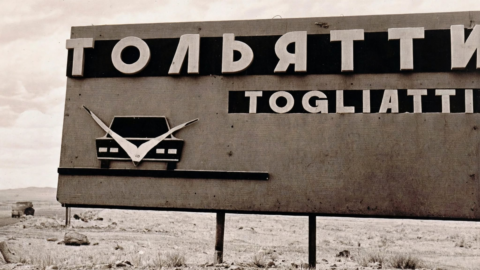
The plant was built on an area double that of Mirafiori, over 5 million square meters, and around the factory grew and expanded. the city of Togliatti (known to us journalistically as Togliattigrad), the former Stavropol on the Volga, renamed in homage to the deceased Italian communist leader.
Over the course of five years, with an investment of around ten billion euros today, Fiat built a factory, AutoVaz, capable of produce more than 600.000 cars a year, of which 400.000 Fiat 124 (sedan and station wagon) and 200.000 Fiat 125, appropriately modified by Fiat itself to cope with the climatic and infrastructural conditions of the Russian territory. These were a “vertical” factory, on the Mirafiori model, with over 60.000 workers, where almost the entire car, with the exception of the tires and glass parts, was produced in-house.
The city of Togliatti changed its face, passing from 60.000 inhabitants to over 300.000 within a few years (today they are just over 700.000), having attracted workers and technicians from all regions of the Soviet Union, especially young people recruited by the Komsomol, the communist youth organization, also because Togliatti was spoken of as a "Western" city and place of work.
Parallel diplomacy during the Cold War and the role of Vittorio Valletta
The construction of the AutoVaz plant is not only an episode of industrial news, but also a Cold War parallel diplomatic operation which called into question, thanks to one of the most representative figures of the Italian industry, the historic head of the Fiat executive for 45 years, Victor Valletta, known to all as the “Professor”, the governments of America and the Soviet Union, in one of the most tense periods of the Cold War, after the downing of an American spy plane, the construction of the Berlin Wall, and the Russian missile crisis in Cuba, which threatened to spark a Third World War, a danger not unknown today.
Valletta had in fact glimpsed the possibility that Fiat could actively contribute to the policy of international détente because, as he revealed at the shareholders' meeting in 1963, "the USSR itself is interested in safeguarding the peaceful development of its immense energies in order to raise the standard of living of its peoples and to participate ever more profitably in international cooperation."
As early as the mid-1950s, Fiat, through Turin native Piero Savoretti, a former partisan and representative in Moscow of Enrico Mattei's ENI, had initiated contacts with relevant Soviet ministries regarding possible economic agreements. Thanks to these contacts, in early 1962 the Soviet government announced plans to organize an exhibition of Fiat products, equipment, and production systems in Moscow, along with an invitation to Valletta for the occasion to visit the USSR.
Moreover, the "Professor" did not intend to take a step toward Moscow without first informing the Americans and obtaining their prior approval. Through Fiat's representative in New York, Vincent Garibaldi, a former American intelligence officer who, from Lugano, had maintained contact with the Northern Italy Liberation Committee during the war,, Valletta met President Kennedy at the White House in May 1962, also present was Franklin D. Roosevelt Jr., who had temporarily left the commercial duties entrusted to him by Fiat to be appointed Undersecretary of Commerce in the American administration.
During the conversation, which projected him into a context of great political relevance and representativeness of Italy as a whole, Valletta (later appointed senator for life in 1966 by the Turin native Giuseppe Saragat) noted the convergence of the President of the United States on FIA strategy guidelinest, which provided assistance to the Soviets in the development of the production of consumer goods and in particular automobiles.
This meeting was followed by others with members of the American executive, and in particular with Secretary of State Dean Rusk and Secretary of Defense Robert McNamara, who were reassured that the new centre-left Italian government would continue to guarantee Italy's western line.
They did not even fail to probe the Parisian industrial and political circles, finding moreover the opposition from President De Gaulle and the nervousness of Renault's Pierre Dreyfus, since the French automobile industry was also interested in opening up that new, enormous market which could not be left, in pure French chauvinism, to a nation like Italy, which had not only lost the war but had even invaded Russia.
The meeting with Khrushchev
On June 9 1962 Valletta left directly from Paris for Moscow, where the next day he met in the Kremlin, accompanied by Piero Savoretti, the powerful secretary of the CPSU, who in the view of the Soviet system was the highest expression of power, Nikita Khrushchev.
Pravda described the meeting as "cordial and friendly," and for Maria Rubiolo, the only woman to hold a top position at Fiat in the 1950s and 1960s as head of External Relations, it almost seemed like a conversation between two retirees in a Moscow park. The discussion of industrial prospects was postponed until the next day for a meeting, again in the Kremlin, with Prime Minister Kosygin.
In the last week of June, Kosygin, accompanied by the Minister of Industry and a host of technicians, visited Mirafiori and the foundations for a basic economic agreement focused on automobile production were laid.
The new Russian plant
On August 15, 1966 in Moscow it was finally signed by Vittorio Valletta, accompanied by his deputy Gianni Agnelli and by Piero Savoretti, and by Kosygin and by the Soviet automobile industry minister Tarasov, the final agreement for the design and construction of a turnkey plant for the production of Fiat cars to be located in the industrial area of the city of Togliatti on the Volga.
The industrial project fully captured Fiat's aspirations to consolidate itself in markets eager to progress also in terms oflight industry(mechanical in particular), in order to create solid bridgeheads for itself before other European manufacturers, and at the same time to best respond to the ambitions of playing a leading role in the global automotive industry.
The wealth of technological and plant engineering skills acquired with the Soviet project will in fact allow us to seize an opportunity in another part of the world, with the construction, in the mid-seventies, of a automotive plant in Belo Horizonte, Brazil, whose production over the following decades will allow Fiat to obtain absolute primacy in the South American market, overcoming competition from other local manufacturers such as Volkswagen and General Motors.
Until the early 1980s the Russians remained in Turin, in the central Piazza San Carlo, with a technical office liaising between Mirafiori and the Russian plant, as stipulated in the contracts; an office which has also been subjected to several investigations by our services due to suspicions of industrial espionage.
The headlights on the AutoVaz plant, which has become manufacturer of Lada cars, once the production of the Russian versions of the 124 and 125 ceased, they were targeted again in the mid-nineties, as part of the project Fiat of the “world car”.
The project envisioned the production and worldwide marketing, excluding Europe, of a vehicle with a displacement and size that could foster mass motorization in rapidly growing economies. The Fiat Palio, already produced with great success in Brazil, was considered, and production was also planned to be extended to South Africa, India, and Russia.
In this regard, contacts and visits to the Russian plant were resumed, but the obsolete state of the technological systems, still those of the 1960s, without the intervention of automation and robotization in the factory that had taken place in the meantime, discouraged the company from considering it due to the costly investments that would have to be made to modernize its plants.
However, the "world car" project was rather unrealistic and was soon abandoned. The Fiat Palio continued to be produced in Brazil, and the Indian plant built in Pune was relaunched, in joint with Tata Motors, by Sergio Marchionne with the production of Jeeps, these true “world cars”.
Finally, some interesting facts. On the occasion of the Fiat-USSR agreement, the Turin city council, with a Christian Democrat majority, unanimously voted to change the name of one of the main streets leading from the city center to Mirafiori from the Savoyard one. Corso Stupinigi to Corso Unione Sovietica. A toponym that remained even after the fall of the Soviet empire and that no one is thinking of changing, precisely in memory of that historic agreement. Even the the toponym of the Russian city continues to be Togliatti, despite the fact that after the fall of the Soviet empire many Russian cities resumed their names from the Tsarist era, such as Leningrad which became St. Petersburg again, or took on new names, such as Stalingrad which was renamed Volgograd.
In 1996, a municipal referendum was held regarding the restoration of the original name, which saw the vast majority of citizens, over 80 percent, want to keep the name Togliatti.