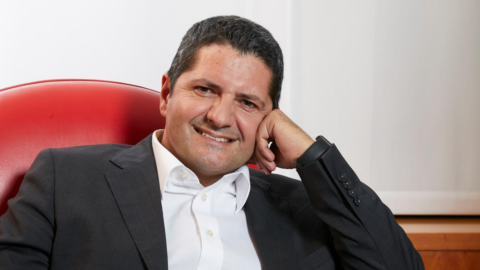
Big tech's alarm about uncontrolled development ofartificial intelligence In recent days, the issue has sparked a flurry of responses, positions, interpretations, and even political reactions. Greater caution is needed, was the shared message. Then, however, US President Donald Trump stepped in forcefully, attempting to describe—in his own way—the game the United States is playing with China. (in primis) and, in turn, with the entire world. The topic, however, continues to present itself as a tangle of statements that are of little help, if not downright discouraging, in understanding the phenomenon. Can AI really threaten humanity? And in the muscular dualism between Washington and Beijing, what path can Europe take? Should it accelerate or slow down in artificial intelligence? But the real problem lies elsewhere, and it's called regulation. Here, in this interview with FIRSTonline, what do you think? Marco Bentivogli, former general secretary of the Fim Cisl and now teacher and Senior advisor of the Graduate School of Management of the Polytechnic University of Milan. An expert in work, innovation, AI and industry, Bentivogli is the national coordinator of Based in Italy and carries out activities of research on the impact of AI on work and on productivity and adoption strategies in the manufacturing industry. "Saying that AI will soon be out of control isn't a confession of weakness. It's a demonstration of power," says Bentivogli. "It's the most effective way to tell the market that your product is so powerful it's scary, and therefore it should be purchased now, before the competition, before it's too late."
Amodei, Altman and Musk: one after the other the CEOs of the big US tech companies have chosen to expose themselves and raise the alarm on AI, as if technology prevailed over humanity's future. Now, it's true that competition with China has reached extremely high levels, thanks in part to Beijing's extensive training based on American models, and it has clearly become necessary to ask the United States to intervene to stop China. But the question is: are these alarms today also "artificial," or, conversely, justified in your opinion? What is their real objective?
An alarm raised by those who build technology needs to be read twice. First for the content, second for the sender. Amodei, Altman, and Musk are not outside observers. They are the protagonists of a race worth hundreds of billions of dollars, and they have an interest in defining the rules before anyone else does. We live in an era where fear has become the most powerful sales tool. This applies to safety, health, finance, and even more so to AI. Talk of apocalypse, the end of human control, and machines escaping their creators serves precisely this purpose.
So is it a show of force?
Saying that AI will soon be uncontrollable isn't a confession of weakness. It's a demonstration of power. It's the most effective way to tell the market that your product is so powerful it's scary, and therefore should be purchased now, before your competitors, before it's too late. No vacuum cleaner salesman has ever warned that his appliance could destroy humanity. Those who sell intelligence do so, because fear certifies power, and power justifies the price. Announcing the catastrophe is the best advertising campaign ever conceived, with the advantage of being free and amplified every day by the newspapers.
And the request to stop its development?
“Even the request to stop the development of AI, which periodically comes up in the open letters of gurus, is technically a boutadeWho would monitor a shutdown? Would it affect all companies? And what would happen in the meantime in the laboratories? There's no answer, because the proposal is a hoax, pure marketing. Let's instead work on widespread awareness of these tools and pay less attention to the gurus. They currently have a serious problem; their business model isn't yet stable. They have enormous financial difficulties to sustain the race, and the ethical problems serve to cover up the financial ones.
What is the political aspect of the whole story?
There's also a second, political objective. Those who publicly declare the danger accredit themselves as the only ones capable of managing it and demand that politicians protect their own interests, with barriers to chips, energy, and data, and with rules tailored to those already inside. The same logic applies on the Chinese front. When American agencies report weakened security protocols in DeepSeek models and the White House accuses Alibaba of supporting Beijing's military apparatus, we're in a battle that's only apparently technical. Like all semantic battles over AI, open, safe, sovereign, uncontrollable, hides a power struggle. The warnings aren't false. They're self-serving. And the real risk isn't technology prevailing over humanity. It's humanity giving up on decisions and delegating direction to those who have already decided for themselves. The danger of AI isn't substitution, it's de-responsibility. This applies to businesses, governments, and even the three CEOs.
Trump said: “We are the leader compared to China, and frankly, I want us to continue to be the leader, because whoever wins in AI wins.” Is that really true?
It's a rallying cry. And it even poorly describes the game the United States is playing. The AI world is organizing itself into two alliances, the Chinese global cooperation initiative Waico on one side and the American-led Western bloc 'Pax Silica' on the other. The former presents itself as universal cooperation and courts the Global South. The latter builds a selective network of allies, with markets for all but a frontier reserved for the faithful. There's a paradox that should give us pause. The open society produces closed models, the closed society distributes the burdens to everyone. But be careful with your words. Chinese models are open weights, Not open sourceDeepSeek, Qwen, and Kimi provide the weights, that is, the trained parameters, and nothing more. No training data, no code, no information about filters and cultural choices. It's a portable black box, better than a black box that lives in someone else's cloud, but still a black box. Neither block is truly open source in the sense established by the Open Source Initiative, and whoever confuses the two things does a gift to both."
So what is the Chinese opening?
“China's openness is not generosity, it is commoditizationThink about bottled water versus tap water. As long as good water is rare, whoever sells it controls the price. If someone makes it free for everyone, the business of those who sold it collapses and power passes to whoever controls the pipes. China can't beat the Americans on the profitability of closed models, so it's trying to eliminate it for everyone, like Google did with Android. Give away the weight, you conquer the standard. Singapore built its national model on Qwen, Huawei brings DeepSeek to the cloud in African countries.
Then?
So no, whoever wins on the model doesn't win everything. The value shifts to chips, the cloud, applications, standards, and above all adoption—that is, the ability of a production system to incorporate technology into processes and work organization. Trump is right about one thing: it's a competition between systems. But the winner is the one who transforms technology into productivity, wages, and public goods. Not the one who owns the largest model.
While the AI race is now characterized as a two-horse race between the US and China, it's true that Europe also has its "continental champions," such as the French startup Mistral. The gap, however, remains undeniable: are we at risk of remaining spectators? Is the game already lost for us?
It's not a losing battle. It's a battle we're sleepwalking through. The greatest risk for Europe isn't delay. It's passive adherence to an industrial model decided elsewhere, with excellent rules for technologies we don't control. Mistral is a great story, but it won't be the European answer if we measure it by American standards. Attempting to replicate OpenAI or Anthropic with a national program is economically implausible. It requires tens or hundreds of billions and a critical mass of infrastructure and expertise that we don't have.
However…
However, the point is different. To gain a leading role between the two blocs, we should at least use technology, and here the European, and Italian, gap is monstrous. Adoption is still very low. According to the latest ISTAT survey, 16,4 percent of Italian companies with at least ten employees use at least one AI technology. This is double the figure from the previous year, but remains below the European average of 20 percent, with a widening gap between large companies, more than one in two, and small and medium-sized companies, just over one in six. Nearly 60 percent of companies that considered an investment and then abandoned it point to a lack of skills. And in manufacturing, we're mostly stuck with pilots. You can't negotiate with AI superpowers from a position of non-use. The first act of sovereignty is learning to use these tools within production processes, not announcing a national model. And there's a more insidious problem because it's daily and invisible.
What?
Who are we training while we work? Millions of companies and workers use cloud-based AI every day. Every prompt, every document uploaded, every correction is material that, in the free versions almost always, feeds the provider's future models. The company pays to use AI and in the same gesture gives it its own knowledge: process know-how, industry jargon, solved cases, errors corrected by experts. Cognitive capital accumulated over decades migrates overseas without anyone having decided to give it away. Our manufacturing industry is a goldmine, and we're letting it be mined for free.
So the European path doesn't exist?
The European path exists, but it's different. Relative independence, not full sovereignty. Infrastructure and computing power, distinctive industrial expertise, the ability to rapidly transition to homegrown open-source models, and negotiated relationships with AI superpowers instead of the illusion of replacing them. And let's stop mistaking announcements for strategies. Many national "sovereign" models emerge without any ambition to compete; they serve to demonstrate that "we too have a model." They're visibility exercises for politicians seeking symbolic results. The most serious gap isn't technological. It's one of managerial and political culture.
Measuring the economic return: According to statements from Silicon Valley figures such as Alex Karp, CEO of Palantir, and Satya Nadella, CEO of Microsoft, it is argued that many companies are paying high prices to use AI language models without achieving productivity gains commensurate with the investment. Is this really the case?
Yes, that's true, and it's no surprise. It's the Solow paradox that recurs punctually with every technological wave. You see technology everywhere except in productivity statistics. Many companies have bought licenses, launched pilots, appointed innovation managers. Then they left everything as it was. Same processes, same hierarchies, same work organization. That's what I call adopting AI without changing anything. What is the ROI of AI? Productivity isn't inside the model. It's in the reorganization that the model makes possible. A company that uses an LLM to write emails faster hasn't gained anything. A company that redesigns the flow between the technical office, production, and maintenance around the data that AI processes is doing something else. AI adoption requires ideas and work and organizational architects to accompany the transformation. Most Italian companies buy licenses at most and then complain that productivity isn't growing. When Karp and Nadella say that companies pay without getting proportionate results, they're telling the truth. truth, but they are pointing to the wrong problem.”
What would be the correct problem to indicate?
The problem isn't the price of technology. It's that there's no one within the company with the mandate and the skills to transform technology into a different way of working. This is why I insist on the role of the work architect and on transition support teams. AI without an organizational plan is a cost, not an investment. And there's also a converse risk, what I call "AI did it," meaning AI used as an excuse for managerial decisions that have nothing to do with AI.
Regardless of the contrast between enthusiasm and skepticism, there is one area that shouldn't be underestimated: the application of AI in healthcare. The doctors' union, Anaao-Assomed, in a report prepared by its research center, emphasized that "the systematic adoption of artificial intelligence and digitalization offers potential savings of up to €22 billion. To save public healthcare, these resources and the time freed up for professionals must be strategically managed through a public and transparent infrastructure, rather than resulting in cuts or privatization." What are your thoughts?
The Anaao report says something right and implies something that deserves discussion. The right thing is that AI in healthcare frees up time and resources, and that time should be returned to the care relationship, not turned into cuts. A doctor who spends a huge amount of their time on documentation and bureaucracy is a waste that AI can reduce. I wholeheartedly agree with this. In advanced countries, doctors have an advanced dashboard for each patient with interoperable data that protects privacy. Here, they write with a pen. The health record system still doesn't work in all regions. What needs to be discussed is the idea that a public and transparent infrastructure is enough to ensure that savings go in the right direction.
In the sense that it's not enough?
No, it's not enough. Infrastructure is the prerequisite, not the guarantee. Freed-up time doesn't redistribute itself. We need a reorganization of healthcare work that no one is currently planning, with professionals involved in the process and not downstream. Otherwise, the savings will end up where they always do: in the budget, and doctors will end up with more patients and the same hours.
Then there's a point that doctors' unions should make before anyone else. AI in healthcare works if clinical data is governed as a public good. The electronic health record, after twenty years, is still a work in progress. Before talking about €22 billion in savings, let's talk about how to make that data usable, secure, and interoperable. Without this, AI in healthcare will remain a mere conference.
According to Bill Gates, the solution isn't to stop but to "prepare to govern" AI. This is always said whenever we encounter a new phenomenon, impressive in numbers and scope. Easy to say, in short, but difficult to put into practice. What must be done to govern AI?
Gates is right, but the statement is so general that it doesn't commit anyone. Governing AI means four concrete things, none of which are laws. The first is governing work. AI changes tasks, skills, and hierarchies. If this change is decided solely by the technology provider, or solely by top management, it will lead to resistance and failure. The transition needs to be co-managed, with workers and their representatives involved in the design process, not informed after the fact.
The second?
The second is data governance, by contract and by organization. Enterprise versions with explicit no-training clauses exist and should be required. The casual use of free accounts by employees, so-called shadow AI, is currently the main channel for corporate knowledge hemorrhage. And be careful not to confuse server location with sovereignty. The OVHcloud case, forced by a Canadian court to hand over data stored in France, demonstrates that who controls the company, what laws apply, and how the infrastructure is designed matter. Digital sovereignty is not a dot on the map.
The third is to manage skills. We don't need millions of programmers. We need people who know how to question technology, interpret the results, and understand where it goes wrong. In Italy, adult education is among the lowest in Europe. No AI governance can stand on this basis."
The fourth is missing.
The fourth is to govern adoption. The AI Act regulates risks, and that's fine. But there's no industrial adoption policy for the hundreds of thousands of small and medium-sized businesses that don't have a data scientist And they will never have it. We need local support and recognized professionals, to open AI Schools, and to focus on technology and skills transfer. The choice between cloud, open weights, and open source is not an IT decision to be delegated to the IT department or to politicians who don't understand the difference. It's a choice about work organization, about the preservation of collective knowledge, about power. Let's not just ask ourselves how open the model is. Let's ask ourselves how open and exploited we remain, without our knowledge.