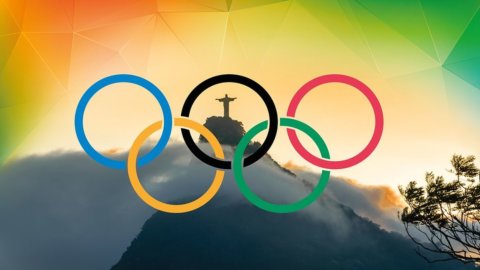
The chronicle of an announced disaster. Or the worst Olympics of modern times. You decide, but the labels affixed to the back of Rio 2016, like on a crumpled shirt in a department store, risk being limiting, unable to convey the human extent of the disaster.
An awaited disaster as one awaits a dawn, as if it were inevitable, because, looking at each other, we know that waste continues to be a habit, in a country which, as the Geography subsidiaries would say, is a giant with feet of clay: politically unstable, corrupt, incomplete.
Unfinished as the infrastructures are unfinished, the Olympic villages falling apart and the plants half-finished, in a lost race against time to produce cathedrals in the center of an urban desert, places of a useless and not practiced, but very expensive cult. And then there's sport, in a discrepancy between the host country and the event that is never strong. Never so jarring. The billionaire stars welcomed into dilapidated structures in a disaster city, for three very long weeks.
But even sport has stopped wearing its best dress. The party dress is crumpled by the end of Russia, whose athletics have been wiped out by an endless scandal, and by the shadow of doping that stretches over the greatest athletes in the world.
But beyond the crumpled suit, sport arrives in Rio a bit humble, subdued. Without a Phelps who attempts to set all records, without the world hype for nine very long seconds of Bolt. Without Lebron and without Federer. It looks like a residual Olympics, the celebration of great old men at the coffeemaker waiting for the next big thing in sport to make its appearance among a sea of glitter, while Brazil's eyes will be focused, as always, on Neymar's low crest, in search of at least that last missing football laurel, with an aftertaste of redemption.
This Olympics seems to be the silver wedding anniversary of a couple who can't help but argue. A necessary and at the same time inopportune event. A glittering bubble in a state that has declared default, and that has only received money for the Games, but not for everything needed to keep them going. A state that buries underground in its shame, in the re-edition of the social dystonia that seasoned the World Cup two years ago and that will furnish these games, between unpaid policemen, noisy "welcome to hell" and a sense of social injustice difficult to reduce to computable form.
But even that noise, if it isn't already, is destined to become background noise, an elusive and distant outline, an echo of distant screams that doesn't prevent guests from smiling during the party. The worst part of any party, though, is when everyone leaves, and you're left alone to clear away the leftovers. Nobody wants to be in Rio the next day.