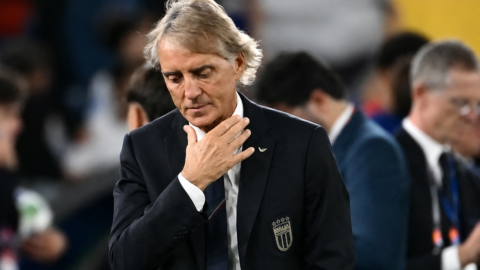
Roberto Mancini's second spell as Italy coach couldn't have started worse. Belgium wins 2-0 at the Olimpico and leaves the Azzurri with a difficult evening, marked by difficulty in building play, a few too many errors, and a certain fragility in decisive moments. The match was decided by goals from Mika Godts in the 20th minute of the first half and Dodi Lukebakio in the second.
Mancini has chosen a young Italy with several new talents. Alessandro Romano made his debut from the start in midfield, while in the second half Issa Doumbia and Mohamed Alì Zoma also entered the team, both making their first appearance with the senior national team. The group called up by the coach included nine players at the first overall call-up: in addition to the three used against Belgium, Massimo Pessina, Daniele Ghilardi, Michael Kayode, Eddy Kouadio, Sebastiano Esposito and Antonio Vergara.
The match unfolded fairly clearly. Belgium dominated, especially in the first half, forcing Donnarumma into several key saves. Godts's goal came after Romano lost the ball in midfield and a counterattack finished by the Belgian striker. In the second half Italy tried to react and he had a few chances with Kean and Pio Esposito, but just when he seemed to be able to get back into the game, Lukebakio doubled the lead.
The calendar, after all, leaves no time for brooding. The next match is already on Monday, September 28, away against Turkey in BursaThen comes the match in Saint-Denis against France on October 2, before the return match in Bologna against Turkey on October 5. In November, the group will be completed with Italy vs. France at the San Siro and Belgium vs. Italy in Brussels.
The group is that of the League A, with Italy, Belgium, France and TürkiyeThe Nations League mechanism provides for the top two teams to advance to the quarterfinals, scheduled for March 2027. The third- and fourth-placed teams, however, can be involved in the play-offs to stay in the league or be relegated. For the Azzurri, therefore, every point will count in the next five matches.
But the Nations League represents above all the first chapter of the journey towards Euro 2028The European qualifiers will begin in 2027 and will be divided into 12 groups of four or five teams. The 12 winners and eight best runners-up will advance directly to the final tournament. The remaining spots will be awarded through play-offs, in which the best group winners of the 2026/27 Nations League who did not qualify directly will also be eligible.
The road, therefore, is long. And for Mancini the first objective will be to transform a national team still under construction in a team capable of holding its own against the major European teams. There's very little time to start doing so, however: Turkey is already on Monday.