

There has been a lot of talk about the territory, for some time now, when the problem of thefood and wine. But when you are at Pompei speaking of the territory, well, this becomes challenging: there is the risk of encroaching on clichés or worse, on the banalities that the massive tourist tradition of the archaeological site consequently brings with it.
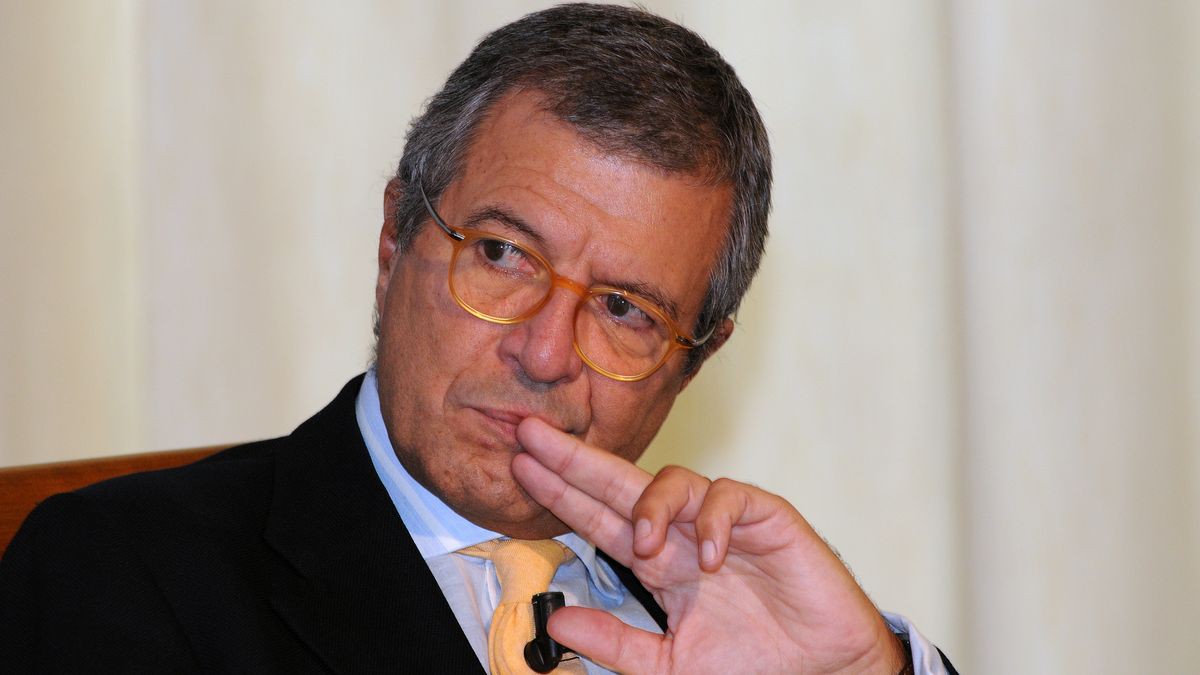
But you certainly don't run this danger if you sit at the tables of the President, an elegant restaurant a stone's throw from the Sanctuary. Number one and also the only haute cuisine restaurant in Pompeii. Masterfully held by Paolo Gramaglia, starred chef who has just passed his fifties, helped in the dining room by his wife, Laila Buondonno, a famous lawyer converted to Food, an expert sommelier and today the perfect hostess in entertaining guests according to the principle that "whoever crosses the President's threshold must be put at ease right from the first instant and listened to even when he is not speaking: our goal is to satisfy his needs, even before they are expressed ".
It will be the closeness and the influence of Vesuvius but it is certain that Paolo Gramaglia is an explosion of all southern sympathy, his eyes speak for him, always in a cheerful attitude whether he speaks of food, of his wife, of the family, of the territory, of Pompeii. In short, what can be defined as a happy man and all of this is transmitted in his cuisine. The meeting with Gramaglia is at least surprising if not overwhelming. One imagines finding a starred chef who celebrates his dishes with an austere and solemn air. No way! Gramaglia, when you take a break from the kitchen, approaches, will look at your plate and from that plate will accompany you on a long journey that from the muffled rooms of the President will proceed backwards in time, in the daily gastronomic life of Pompeii, to the foods that the Romans ate, to the ancient eating habits, to the crops and products of this territory, because different souls live together in Gramaglia.
To explain it, we need to take a few steps back. Meanwhile, studies. His passion at school was mathematics, his address of studies, scientific at Federico II. Then comes the degree in Tourism Sciences. And this is the first important step in his training. Because mathematics made him understand that things must be built according to defined processes, which lead to problem solutions. Then the family, to which he is very close. He can be defined as a son of art. Simultaneously with his studies he starts working in the restaurant that his father and mother had opened near the excavations and he already understands that his future will be next to the stove rather than at his desk. Then the passion for eating evolved. And it is no coincidence that when he received his first salaries, the first thing that came to his mind was to treat himself to lunch in a three-Michelin-star restaurant to see for himself what was happening in gourmet heaven. Finally the passion for Archaeology.
It will be said: easy for a child used to walking among the most famous archaeological ruins in the world. But Gramaglia is not a man of simple contemplation. That world of ancient evidence of life blocked by the eruption of 79, which he had there, a stone's throw from his home, he, with his mentality of mathematical construction of events, wanted to get to know it thoroughly, almost to enter it. To the point that in a short time he is appreciated for his research on the food uses of the Romans also by the Superintendence of Antiquities which calls him to collaborate on various projects. His themed evenings on "the cuisine of the ancient Pompeians", held inside the excavations of Pompeii, are sold out and requests arrive from all over the world. And the historical-gastronomic itineraries of Gramagluia continue in other eras in its restaurant, with evenings dedicated to the Bourbons, the Maritime Republics and aphrodisiac foods.
The big leap comes in 2006. The father and mother take a step back, it is up to him to take up the baton of the family restaurant. And here all those elements that have formed him up to that moment, the experiences lived in the kitchen alongside his parents, mathematical studies, the passion for archeology, the interest in quality cuisine mix together, tell him that there is no one can bask in a management of the ordinary. The desire to build a high quality project pulsates and pushes him to put to use everything he has learned up to that moment. The search for raw materials and niche products becomes imperative for him.
History and archeology also enter into the mathematical construction of his project. Mix all these ingredients, season them with a touch of its Mediterranean radiance, and you will have the result of a restaurant that in a few years manages to conquer the Cappello de L'Espresso, the forks of Gambero Rosso, the high scores of the Touring restaurant guide, the Routard and finally, in 2016, the coveted Michelin star. A goal to which he worked scientifically year after year with an awareness confided to his wife: either I get to conquer the star or I change jobs. In short, the ex-boyfriend knows the thing about him.
Sitting at the President's table gives happiness and the dishes he proposes are happy, combining in a successful equation (ah, the mathematics that returns!) past, present and future because, as he likes to say, "The success of gastronomy is in tradition, it is enough just knowing how to interpret it without nostalgia”. But he also adds a pinch of calibrated modernity and in some cases of exoticism as well as technology which for the Chef “is the bridge that connects the past with the future. And from this bridge you can look out to enjoy a fascinating “The sphere that creates a stone thrown into the sea”, disk of amberjack carpaccio, with concentric centers of lemon emulsion and fruity extra virgin olive oil, chinotto buttons, buffalo mozzarella snow or an intriguing "geographical" dish whose title pays homage to the history-territory relationship: "From Paestum a Cetara”, minced buffalo with coarse pepper, served with salted anchovies, its colatura, mixed salad and cherry vinegar, where you can clearly perceive the passion of this chef in combining experimentation and fusion of culinary cultures with tradition, reaching an incredibly harmonious result.
And we are at the appetizers. You can then continue as “The Chicken Who Thought He Could Fly”i.e. cappellacci stuffed with chicken cacciatore, parmesan mousse, cacciatore sauce, black truffle and ginger. Among the second courses reigns supreme "L'astice drunk in plain sight" steamed lobster in plain sight with hints of wine, caviar sauce, guacamole sauce, palmito and citrus fruits. Among the desserts to try and remember the Cassata Oplontis” a luxurious tribute to the findings of the nearby archaeological site.
In short, at the President you fly high, very high on the panorama of local restaurants which stopped way back in time, not realizing that even the tourist today is more shrewd and asks for quality. And in this regard, you can have fun by participating in the Roman themed dinners, organized from time to time by Gramaglia. The sensation is that of being in a kind of time spaceship that takes you back through the centuries. The first impact is with the bread of the ancients (he also wrote a book about it), you will have the choice between seven types: Panis primarius, was the patrician welcome, made with white flour that arrived from the East by sea and extra virgin olive oil from Magna Graecia, the siligineus: a bread of very white flour, about 3 thousand examples of these were found in the ovens of Pompeii loaves, semidarius, adipatus: made with pig fat, artalaganus: bread with raisins, spices and honey, vulgaris, the name says it all.
We can continue with Gustum, the appetizer made up of various local cheeses that Gramaglia searches for in the countryside favoring the shepherds who still make them as they once did, which is followed by Mensae Primae (middle dishes) among which you can choose “Esica Omentata” (spicy chicken or “Porcellus assus” (roasted suckling pig) and Mensa Secondae (sweets) among which a delicious “Crustum cum caseo, melle" (Cassata oplontis) and the fruit loved by the Romans at the end of a meal, such as dates, dried figs and pomegranate. All while "Prof. Gramaglia" will narrate you with his stories about how they lived and how the Romans enjoyed life at the table.
President restaurant
Telephone : +390818507245
E-mail : [email protected]
Website : http://www.ristorantepresident.it
Booking recommended. Closed 7-28 January, 13-17 August, Sunday evening and Monday


Pingback: Lobster with Lacryma Christi, caviar and "Parthenopean ketchup": Paolo Gramaglia's recipe - First&Food