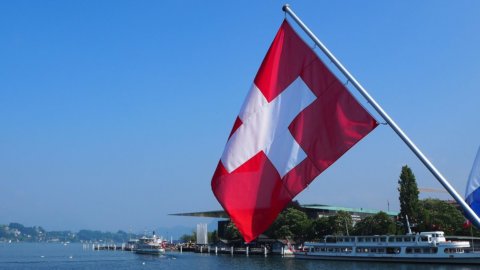
La Swiss neutrality remains, but without becoming more rigid. Swiss voters have rejected with 70,15% of the votes the popular initiative “Safeguarding Swiss Neutrality”, supported by Pro Switzerland and by the 'Democratic Union of the Centre (UDC), the main force of the conservative right in the country. Yes it stopped at 29,85%, with a turnout of 47,06%The No vote prevailed in all 26 cantons, although in Ticino the result was much more balanced: 51,75% No against 48,25% Yes.
The referendum did not call for the abolition of neutrality, which has been enshrined in the Federal Constitution since 1848, but for its application to be significantly more rigid, transforming certain principles into constitutional constraints. This change would have had a major impact on Bern's foreign policy and the possibility of adopting international sanctions.
Swiss neutrality: what the right was asking for
The initiative proposed to establish in the Constitution that the Switzerland's neutrality was "permanent and armed"The country could not join or cooperate with military or defense alliances, except in the case of direct military aggression or preparation for aggression.
The text also provided that Switzerland did not participate in military conflicts between third countries and, especially, did not adopt sanctions against belligerent states. Sanctions imposed by the United Nations and measures necessary to prevent their circumvention would have been excluded from the ban. Finally, the initiative called for using neutrality to strengthen Switzerland's role as a mediator in international conflicts, through so-called "good offices."
This was the crux of the political conflict. The proponents argued that neutrality had been progressively made more flexible and that a clear and permanent definition was needed, capable of keeping Switzerland away from military blocs. The Federal Council and Parliament took the opposite view: according to the authorities, the current system granted Bern the necessary leeway to adapt its foreign policy to international circumstances.
The issue of sanctions against Russia
The issue became particularly concrete after the Russian invasion of UkraineSince 2022, Switzerland has largely adopted the European Union's sanctions against Russia, a choice compatible with the current interpretation of neutrality. The Federal Council decides on the adoption of sanctions outside of those imposed by the UN on a case-by-case basis, based on the Embargo Act.
Had the initiative passed, the situation would have changed significantly. According to the Federal Department of Foreign Affairs, sanctions already in place against belligerent states would have had to be reviewed, and based on the text, those against Russia could no longer be maintained in their current form. The following would have remained possible: measures to prevent sanctions evasion.
It is precisely on this point that the referendum ended up being a vote on the relationship between neutrality, foreign policy and international cooperationThe Swiss government argued that flexible neutrality does not mean giving up neutrality, but retaining the ability to react to rapidly changing situations.
After the referendum, the debate remains open
The result therefore gives Switzerland a less rigid neutrality than that proposed by the initiative of the right, leaving the current constitutional framework unchanged. Political scientist Urs Bieri of gfs.bern observed that the electorate has shown a preference for neutrality that leaves the Federal Council room for maneuver and allows it to decide on a case-by-case basis.
For the promoters, however, the vote does not close the discussionAfter the defeat, members of the UDC argued that the initiative had nevertheless brought the issues of security, neutrality, and Switzerland's relations with international blocs back to the center of the debate.
The political issue remains the same as that which emerged throughout the campaign: how flexible should Swiss neutrality be in an increasingly conflictual international context? Voters chose not to transform a more restrictive definition into a new constitutional obligation. Neutrality remains, but with the room for maneuver that Switzerland has also used in recent years, including sanctions against Russia.