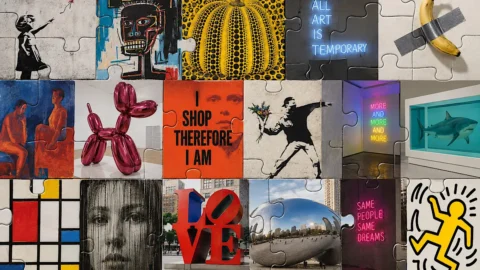
The theme of reproducibility, of accessibility, to the great (but also to the microscopic) heritages of the artistic production of all humanity thus enters the era of globality. The era of private, personal viewing is over, or at least it is redimensioned, and we are quickly entering the era of digital diffusion. Culture and art are inextricably linked to the great industrial revolution which throughout the world, in the previous two centuries, allowed genetic mutation and the evolution from unique and limited "artisanal" production between those who produce and those who benefit from the new dimension "industrial" intended for large consumption.
This is the theme of The industry of the senses, signed by Sergio Bellucci and a few days ago in the bookstore, with a learned and precious introduction by Alberto Abruzzese, a well-known and appreciated sociologist. Let's start with some of his reflections: today it seems objectively complex to face a complete and organic debate on the dimensions that the great social and cultural transformations that cross the whole world assume. All humanity, and therefore in all the ways in which it interacts, manifests and expresses itself and the environment that surrounds it through artistic expressions, is subject and at the same time subject to living in a sidereal speed where it is very complex decipher messages and contents.
Simplifying and perhaps trivializing, our era, our contemporaneity, is defined as the "civilization of images" where every phenomenon assumes relevance only if it is able to become "commodity" and therefore be produced, distributed and marketed with criteria, in fact, "industrial". It is not by chance that we often speak and read about the "art industry". On this front Bellucci, a physicist with great attention to communication technologies, tackles a historical overview thick and full of difficulties and complexities on the industry of the senses. its technological prospects that will increasingly have an impact, perhaps even devastatingly, on the future of the production and distribution of art. It is enough to keep in mind what will happen with the advent of the new "civilization of the algorithm" capable, perhaps, of projecting us towards dimensions that could already be beyond the canonical conceptualizations of "industry". The author writes: “Millions of people exchange services, gifts, suggestions, objects and break old forms of production that seemed immovable. Billions of people are starting to meet, talk, share, get to know new cultures and new ways of living that have not yet been approved by the meaning industry”.
The title of Bellucci's book strongly recalls at least two other texts which in some way helped us to understand, at least in part, what was about to happen (and then happened) around us. The first is an essay by Roland Barthes, The empire of signs, where it is easy to connect and make dialectical the two terms: senses and signs. The second is Apocalyptic and integrated by Umberto Eco where, as far back as 1964, he warned us about the new dimensions of mass communication.
Some sometimes perhaps excessively politicized readings that Bellucci proposes may not always be acceptable, but it remains an intention and a proposition that deserves to be addressed: The industry of the senses deserves more attention, even from politics, than is currently being paid to it.